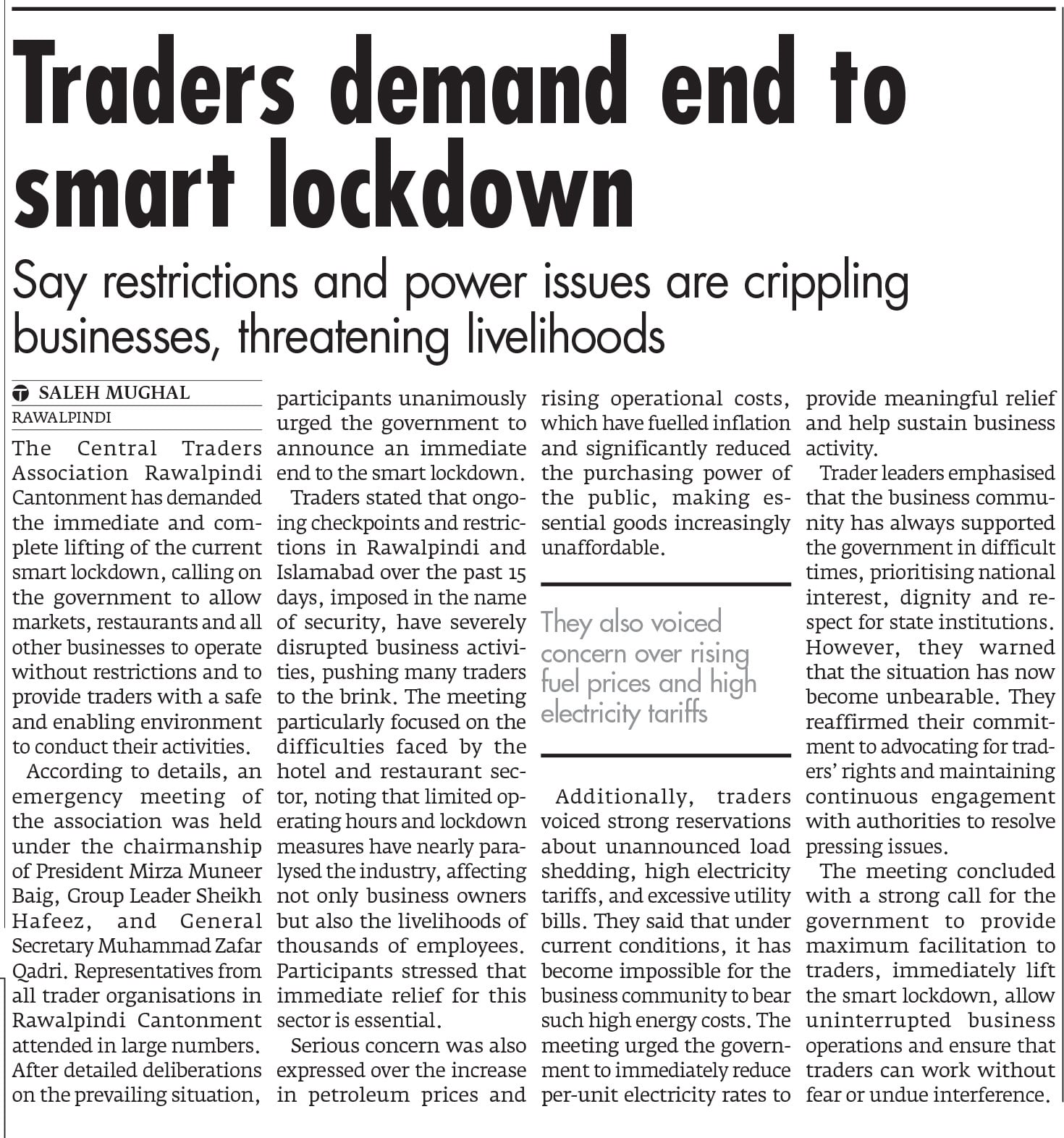
The structural efficiency of a metropolitan economy depends on its ability to synchronize business operations with environmental baselines. Currently, the Karachi smart lockdown represents a friction point between regulatory frameworks and the city’s extreme climate reality. As temperatures surge, Karachi traders have formally called for a recalibration of business hours to prevent a total stagnation of retail commerce.
Rizwan Irfan, President of the Karachi Electronics Dealers Association, has urged Prime Minister Shehbaz Sharif and Sindh Chief Minister Murad Ali Shah to intervene. Consequently, the business community is seeking a calibrated extension of trading windows to align with consumer behavior during the ongoing heatwave.
The Structural Impact of the Karachi Smart Lockdown
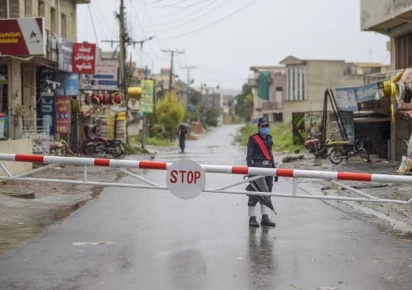
Current data indicates that the Karachi smart lockdown has inadvertently compressed business activity into the most thermally hostile hours of the day. Irfan explained that extreme heat and humidity have shifted the consumer baseline. Specifically, most citizens now prefer to visit markets after 5:00 p.m. to avoid peak solar radiation.
However, under the existing restrictions, businesses are restricted to a narrow four-hour operational window. This misalignment has caused business activity to drop significantly. Traders are now requesting authorities to either lift the restrictions or permit evening operations to match the natural demand cycle of the city.
Climatological Realities and Economic Friction
The Pakistan Meteorological Department (PMD) has forecast extremely hot and dry conditions for the region, with temperatures calibrated to reach 41°C. While sea breezes may provide intermittent relief, the immediate forecast necessitates a more flexible approach to urban management. Furthermore, the persistence of hot northwesterly winds highlights the need for a climate-adaptive economic strategy.
The Situation Room Analysis
The Translation
The current policy friction arises from a \”one-size-fits-all\” lockdown model that fails to account for Karachi’s unique thermal profile. In technical terms, the government is attempting to maintain a standard regulatory baseline while the environmental baseline has shifted. This creates a supply-demand mismatch where businesses are open when customers cannot physically shop, and closed when the market is ready to engage.
The Socio-Economic Impact
This development directly impacts the daily lives of Karachi’s middle-class professionals and daily-wage workers. For the household, it means limited access to essential goods during safe hours. For the small business owner, the Karachi smart lockdown translates to a significant loss in liquidity and the inability to meet fixed overhead costs like rent and utilities during a period of reduced foot traffic.
The Forward Path (Opinion)
This situation represents a Momentum Shift. While the lockdown was likely intended as a stabilization move for resource management, its continuation under extreme heat is counterproductive. A strategic pivot toward \”Climate-Synchronized Trading Hours\” would catalyze economic recovery without compromising public safety. The government must treat urban temperature as a primary variable in economic planning.