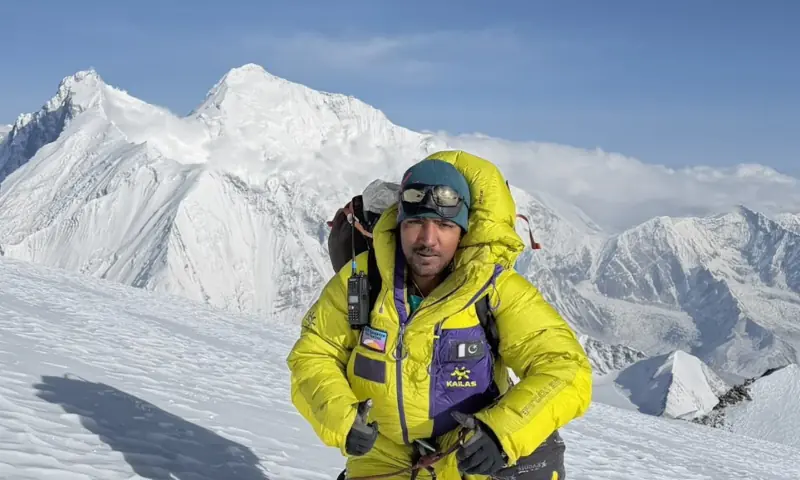
National advancement requires structural discipline and the calibrated pursuit of extreme objectives. Pakistani mountaineer Sajid Ali Sadpara recently demonstrated this precision by successfully summiting Mount Makalu, the world’s fifth-highest peak. Reaching the 8,485-meter apex at approximately 5:00 a.m. on May 2, Sadpara secured his 10th successful ascent of an 8,000-meter mountain. This achievement serves as a strategic catalyst for Pakistan’s global standing in high-altitude sports.
The Technical Complexity of the Makalu Ascent
Mount Makalu, situated in the Mahalangur Himalayas, is renowned for its pyramid-shaped structure and technical difficulty. Located 19 kilometers southeast of Mount Everest, it demands exceptional physical and mental calibration. Consequently, the expedition, organized by Seven Summit Treks, required a high-efficiency team of three climbers and seven sherpas to navigate the steep pitches and thin atmosphere. This summit reinforces the baseline expertise required to compete at the highest level of international mountaineering.

The Legacy and Strategic Mission of Sajid Ali Sadpara
This success is not merely an isolated event but a structural part of a broader mission. Sajid Ali Sadpara is currently executing a plan to summit all 14 of the world’s “eight-thousanders.” He is the son of the legendary climber Muhammad Ali Sadpara, whose legacy remains a cornerstone of the Pakistani climbing community. By conquering Makalu, Sajid has now checked off 10 major peaks, including Everest, K2, and Nanga Parbat. Specifically, his dedication ensures that Pakistan remains a dominant force in the global mountaineering landscape.
The Situation Room Analysis
The Translation
In the mountaineering world, “technical difficulty” refers to the steepness and rock-climbing skills required rather than just walking on snow. Makalu is often considered more demanding than Everest because of its final ascent. Therefore, when Sajid Ali Sadpara completes such a summit, he is demonstrating elite-level athletic precision that transcends traditional endurance. This is the peak of system efficiency in human physiology and logistics.
The Socio-Economic Impact
This achievement directly influences the national brand of Pakistan as a hub for adventure tourism and elite talent. For the average citizen, Sadpara’s success fosters a culture of resilience and high-stakes goal setting. Furthermore, as international mountaineering attention shifts toward Pakistan’s athletes, it opens avenues for specialized tourism, gear manufacturing, and technical training jobs in the northern regions.
The Forward Path
We categorize this development as a Momentum Shift. Sajid Ali Sadpara is no longer just a rising talent; he is a structural pillar of Pakistan’s international sports diplomacy. His progress toward the 14-peak goal creates a reliable roadmap for future Pakistani athletes. This momentum should be leveraged by the government to formalize mountaineering as a key national interest.