

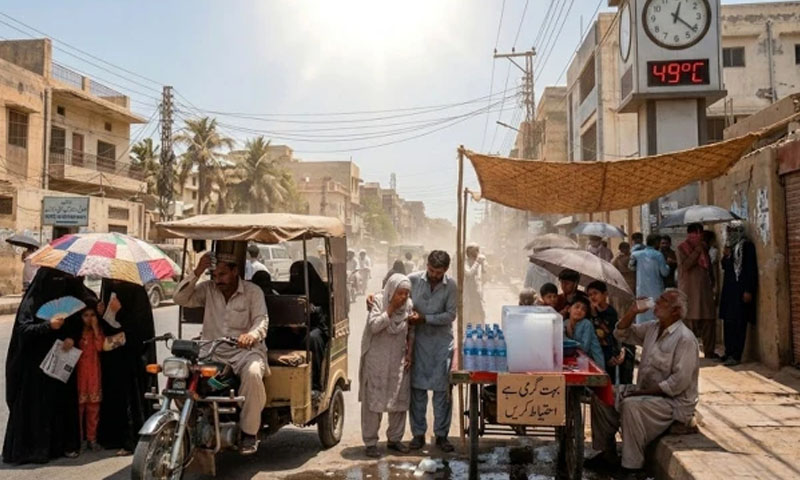
Karachi faces a critical thermal surge today as the Karachi Heat Index is projected to reach a staggering 50°C during peak afternoon hours. This escalation in real-feel temperature represents a structural challenge for urban living in the coastal metropolis, demanding immediate strategic attention from all residents and authorities.
The thermal equilibrium of the city was already under significant strain on Friday, when real-feel temperatures reached 49°C. Consequently, the combination of stagnant air currents and persistent humidity created a muggy environment that lasted well into the night. Experts anticipate that actual temperatures will hover around 39°C, while suburban regions may experience a baseline of 40°C.
Structural Drivers of the Karachi Heat Index
The primary catalyst for this extreme discomfort is the low wind speed coupled with high atmospheric moisture. Furthermore, the lack of a consistent sea breeze during the day prevents the natural cooling mechanism that Karachi typically relies on. Specifically, when humidity levels rise, the body’s ability to cool itself through evaporation is compromised, leading to a higher risk of thermal exhaustion.
The Translation: Decoding Thermal Stress
In “Next Gen” terms, the “Heat Index” is the calibrated measurement of how hot it actually feels to the human body. While the thermometer shows 39°C, the moisture-saturated air tricks the biological system into experiencing 50°C. This disparity is not just a number; it is a physiological threshold where the system’s ability to regulate internal temperature begins to falter under the atmospheric load.
The Socio-Economic Impact: The Cost of Rising Temperatures
This thermal surge directly impacts the daily productivity and health of every Pakistani citizen in the region. For professionals and daily-wage laborers, the risk of heatstroke becomes a precision threat, potentially halting economic activity during peak hours. Urban households will likely see a surge in energy demand, straining the national grid. Most critically, vulnerable populations, including students and the elderly, require specialized care to navigate this climatic volatility safely.
The Forward Path: A Stabilization Move for Urban Resilience
This development represents a Stabilization Move for Karachi’s urban planning. While we must react with immediate precautions—such as aggressive hydration and avoiding direct sunlight—the long-term strategy requires a momentum shift toward “cool-roof” technologies and increased urban forestry. We must treat these heat spikes as a baseline for future city design rather than isolated anomalies. Precision in public health alerts and architectural adaptation remains our strongest defense against the evolving climatic frontier.
- Hydration Precision: Increase water intake to maintain electrolyte balance.
- Exposure Mitigation: Limit outdoor activities between 11:00 AM and 4:00 PM.
- Community Vigilance: Monitor children and elderly family members for signs of heat-related distress.








