

Strategic mobility serves as a catalyst for economic integration, and the launch of new Fly Jinnah domestic flights between Quetta and Lahore marks a calibrated step toward structural connectivity. Starting May 13, the airline will operate three weekly rotations, effectively bridging the provincial capitals of Balochistan and Punjab. This expansion utilizes the high-efficiency Airbus A320 fleet to ensure a baseline of reliability for regional travelers.
Strategic Expansion of Fly Jinnah Domestic Flights
The new flight schedule is engineered for precision and operational fluidity. Flight 9P855 is scheduled to depart Quetta at 2:30 PM, arriving in Lahore at 3:50 PM after a 1 hour and 20-minute transit. Conversely, the return service, flight 9P856, departs Lahore at 4:40 PM and touches down in Quetta at 6:10 PM. These Wednesday, Friday, and Sunday slots are strategically positioned to capture weekend travel demand and mid-week professional transitions.
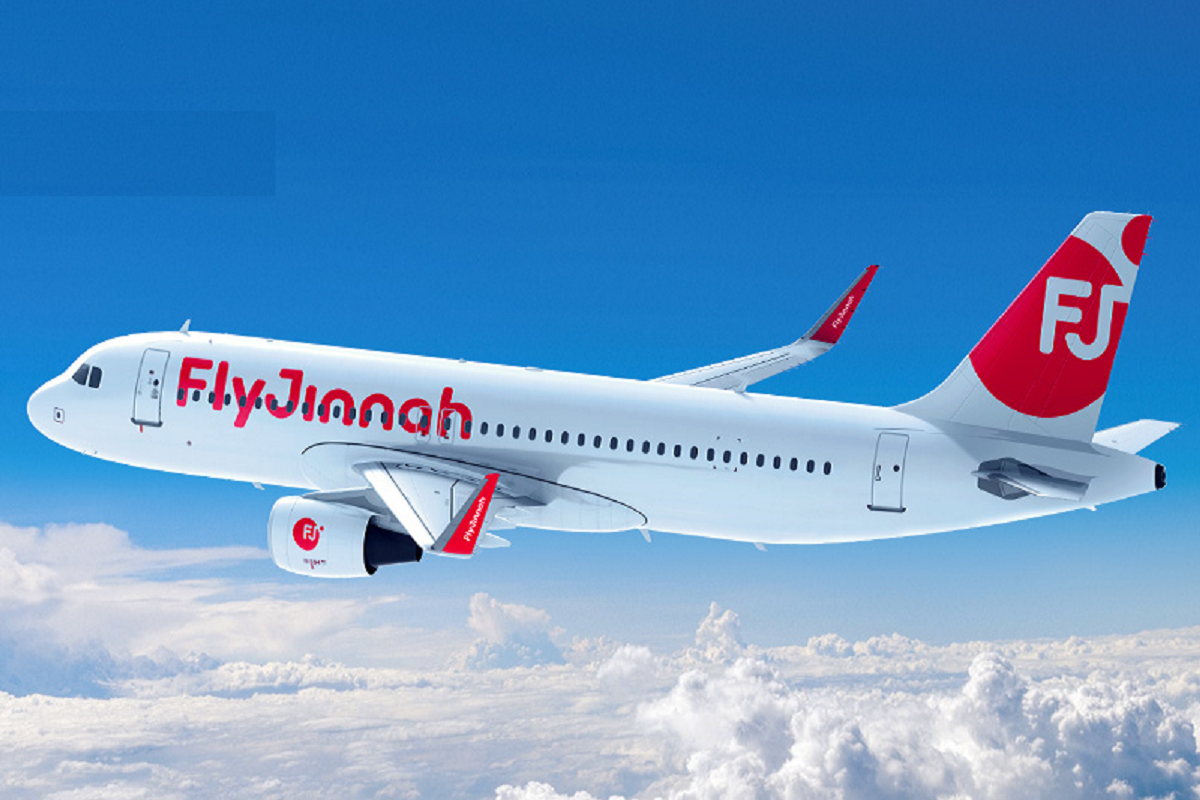
By deploying the Airbus A320, Fly Jinnah maintains a modern standard for domestic aviation. Furthermore, the introduction of this route addresses a historical gap in direct connectivity between these two major urban centers. Consequently, the airline strengthens its domestic network while providing passengers with a low-cost, high-performance alternative to ground transport.
The Translation: Technical Logic and Connectivity
In technical terms, Fly Jinnah is optimizing its fleet utilization by deploying short-haul specialist aircraft like the A320 on high-demand domestic corridors. This move translates to lower operational overheads, which allows for competitive pricing. By establishing a fixed three-day-a-week frequency, the airline creates a predictable “air bridge” that facilitates the movement of human capital and specialized goods between the northern and southern hubs of the country.

The Socio-Economic Impact
The introduction of these Fly Jinnah domestic flights has a profound impact on the daily lives of Pakistani citizens. For professionals in Quetta, the direct link to Lahore—the country’s second-largest economic hub—drastically reduces the friction of doing business. Students from Balochistan studying in Punjab now have a viable, time-efficient transit method. Ultimately, this increased accessibility fosters national cohesion by making the geographical distance between our provinces feel significantly smaller.
The Forward Path: A Momentum Shift
This development represents a clear “Momentum Shift” for Pakistan’s aviation sector. While the industry has faced stabilization challenges, the expansion of low-cost carriers into under-served domestic routes indicates a maturing market. As Fly Jinnah continues to scale its operations, we anticipate a more competitive landscape that will drive down costs for the average traveler. This is a critical building block for a more interconnected and mobile Pakistan.
- Route: Quetta (UET) ↔ Lahore (LHE)
- Frequency: 3 Times Weekly (Wed, Fri, Sun)
- Aircraft Type: Airbus A320
- Launch Date: May 13








