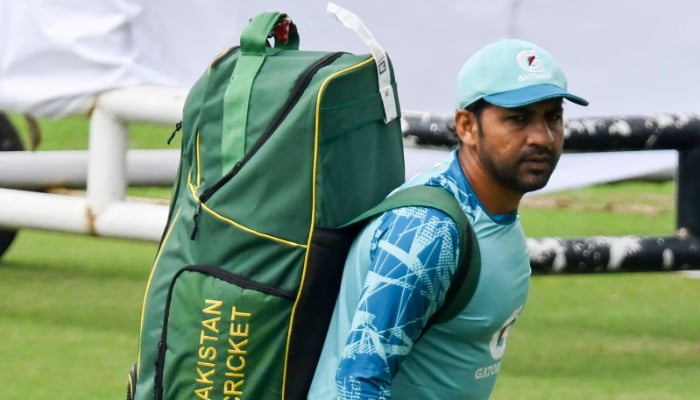
The Pakistan Test coach, Sarfaraz Ahmed, has dismissed recent criticism regarding his appointment, characterizing his new role as a strategic catalyst for national sporting advancement. During a high-performance training session in Karachi, Ahmed emphasized that his primary objective remains the optimization of the national squad’s output. Consequently, he remains unperturbed by external dissent from former colleagues, opting instead to focus on the precision of the team’s preparation for the upcoming ICC World Test Championship cycle.
Structural Alignment for the ICC World Test Championship
Success in international cricket requires more than individual talent; it demands a calibrated management framework. Sarfaraz Ahmed confirmed that his coaching staff, featuring Umar Gul, Asad Shafiq, Grant Luden, and Abdul Saad, operates with total systemic synergy. This collaborative approach aims to elevate Pakistan from its current fifth-place standing in the World Test Championship, where the team currently holds 12 points. Moreover, the squad is currently undergoing rigorous physical and technical conditioning at the Hanif Mohammad High-Performance Centre.
Analyzing the Bangladesh Series Roadmap
The upcoming series against Bangladesh serves as a baseline for the team’s progress. The strategic schedule includes the following key milestones:
- First Test: Sher-e-Bangla National Cricket Stadium (May 8–12)
- Second Test: Sylhet International Cricket Stadium (May 16–20)
- Personnel Integration: Captain Shan Masood and Khurram Shehzad will join the squad post-PSL 11 commitments.
The Situation Room: Strategic Analysis
The Translation (Clear Context)
The appointment of a Pakistan Test coach often triggers a cycle of public debate. However, the logic here is rooted in continuity and technical familiarity. By integrating former captains and specialists like Umar Gul, the Pakistan Cricket Board is attempting to create a “brain trust” that understands the specific pressures of the Test format. This shift moves away from experimental coaching models toward a more localized, veteran-led architecture.
The Socio-Economic Impact
Cricket is a vital socio-economic pillar in Pakistan. A stabilized and winning Test team acts as a catalyst for national morale and boosts the sports industrial complex. When the national team performs efficiently on the global stage, it stimulates local investments in sports infrastructure and provides a disciplined roadmap for aspiring youth in both urban and rural sectors. Structural success in sports often mirrors a nation’s ability to organize and execute long-term strategic goals.
The Forward Path (Opinion)
This development represents a Stabilization Move. While the noise surrounding the appointment is significant, the actual focus on technical comebacks—specifically regarding Babar Azam’s refined batting mechanics—suggests a data-driven approach to improvement. If the Pakistan Test coach can translate this training camp intensity into a series victory against Bangladesh, it will provide the necessary momentum shift required for the subsequent series against England and South Africa.