

The architecture of digital discovery is undergoing a fundamental shift. Google has officially deployed the YouTube AI search feature, titled “Ask YouTube,” as a calibrated experiment for Premium subscribers. This development represents a strategic pivot from traditional metadata retrieval to generative intelligence. Consequently, users can now interact with video content through conversational prompts rather than static keywords.
The Operational Framework of YouTube AI Search
System efficiency begins with user activation. Eligible Premium subscribers in the US must first enable the feature within their account settings to access the tool. Once active, a new “Ask YouTube” button appears directly within the search bar, serving as the primary interface for generative queries.
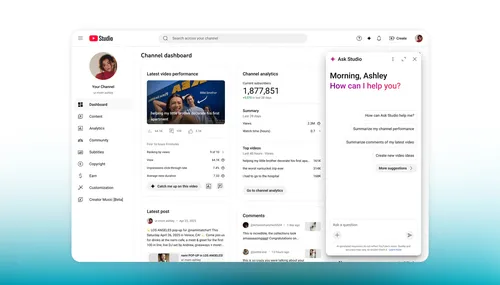
This tool provides precision-driven prompt suggestions to streamline the user experience. For instance, a user might request a detailed three-day travel itinerary. The system then synthesizes relevant video data to produce a cohesive, actionable plan. Furthermore, the interface supports iterative dialogue, allowing for follow-up questions that refine the initial results.
Multimodal Data Synthesis and Precision
The integration of Large Language Models (LLMs) allows the platform to generate text summaries alongside traditional video listings. When a user searches for historical events, such as the Apollo 11 moon landing, the system provides a structured summary and specific timestamps. This granularity ensures that viewers can jump directly to the most relevant segments of a video.

However, maintaining a baseline of factual integrity remains a challenge. Early reports from The Verge indicate that certain technical queries have produced inaccurate data. These factual “hallucinations” highlight the experimental nature of the current rollout. Despite these hurdles, the tool often successfully filters vast amounts of video data into concise, digestible formats.
The Situation Room: Strategic Analysis
The Translation (Clear Context)
In simpler terms, YouTube AI search moves us away from the “search and sift” model. Instead of clicking through five different videos to find a specific fact, the AI watches and reads the content for you. It then compiles an answer based on what it “learned” from those videos, effectively acting as a research assistant for the world’s largest video library.
The Socio-Economic Impact
For the Pakistani citizen—particularly students and freelancers—this feature represents a massive leap in information efficiency. In an environment where time and bandwidth are precious, the ability to extract specific knowledge without watching hours of footage is a catalyst for rapid learning. It democratizes deep research, making complex global data sets more accessible to our local talent pool.
The Forward Path (Opinion)
This development is a definitive Momentum Shift. While the current factual inaccuracies are a concern, the transition to generative search is inevitable. Google is not just updating a search bar; they are recalibrating the human-machine interface. As the precision of these LLMs improves, this will become the standard baseline for all digital interaction in Pakistan and beyond.








