
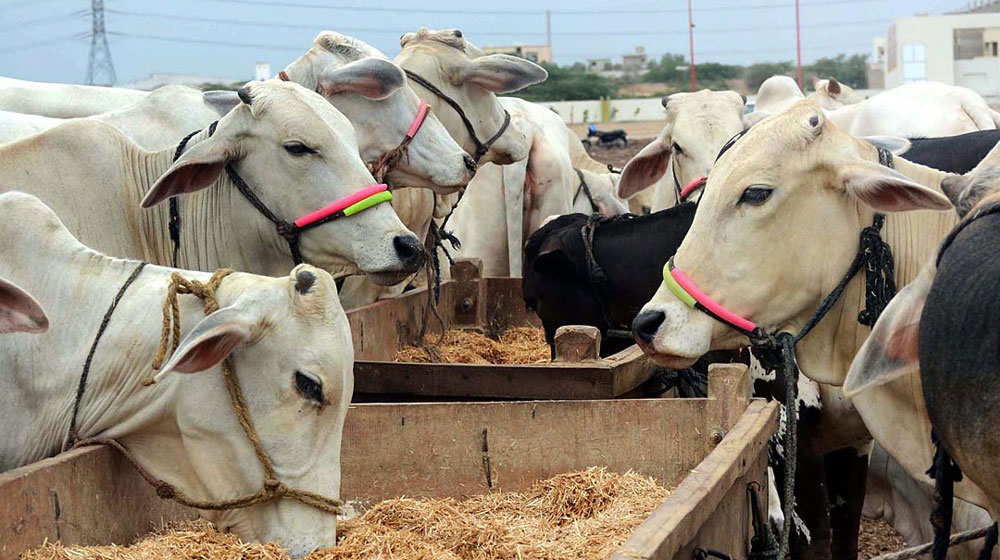
The Punjab government recently launched a structural Punjab Livestock Export initiative, signing a landmark Memorandum of Understanding (MoU) with seven leading institutions to catalyze the province’s agricultural sector. Chief Minister Maryam Nawaz presided over the strategic briefing, finalizing a partnership with the Global Meat Company to facilitate the export of one million livestock. This move represents a calibrated shift toward industrial-scale meat production, leveraging modern technology to meet rigorous international standards.
Scaling the Digital Frontier: Precision Farming and Logistics
To support this high-volume Punjab Livestock Export framework, the government is integrating advanced technology into traditional farming. Specifically, a Chinese-collaboration project will install a modern boiler unit to enable large-scale production of boiled meat for global markets. Furthermore, officials plan to import meat from 300,000 export-ready animals to maintain baseline supply chains. The strategy also includes ambitious development targets: fattening 300,000 buffaloes and cows, alongside 400,000 sheep and goats to ensure a steady export pipeline.
Consequently, the administration is prioritizing traceability and animal health. Authorities will tag approximately two million animals to meet global compliance standards. To sustain this biological asset base, the government will establish state-of-the-art veterinary hospitals in every tehsil. Additionally, four mobile veterinary dispensaries per tehsil will provide precision healthcare directly to the doorstep of rural farmers.
Social Equity and Mechanization
The initiative also focuses on structural social reform by empowering rural communities. Chief Minister Maryam Nawaz has doubled the quota of free livestock for women, distributing 9,255 animals among widowed and divorced women in 12 districts of South Punjab. This strategic move aims to create sustainable micro-economies within vulnerable households. Moreover, the government is introducing mechanization by offering a 60% subsidy on modern farming machinery. This subsidy serves as a catalyst for small-scale farmers to upgrade their operational efficiency.
The Translation
In technical terms, this initiative transforms Punjab’s livestock from a fragmented subsistence model into a standardized export industry. By utilizing “boiled meat” production and “digital tagging,” the government is solving the two biggest hurdles for Pakistani exports: sanitary standards and traceability. These measures ensure that international buyers can verify the health and origin of the product, effectively opening doors to high-value markets that were previously inaccessible.
The Socio-Economic Impact
For the average Pakistani citizen, this development translates into localized economic stability. By decentralizing veterinary care and subsidizing machinery, the government is reducing the “cost of production” for rural households. Consequently, this increases the profit margins for farmers. In South Punjab specifically, providing livestock to women creates an immediate baseline of financial independence, which directly improves nutrition and education outcomes for the next generation.
The Forward Path
This development represents a Momentum Shift. Rather than offering temporary relief, the Punjab government is building the structural plumbing required for a modern agricultural economy. While the success of this plan depends on the consistent execution of the tagging and health protocols, the focus on export-led growth is the precise catalyst needed to stabilize the province’s fiscal baseline.








