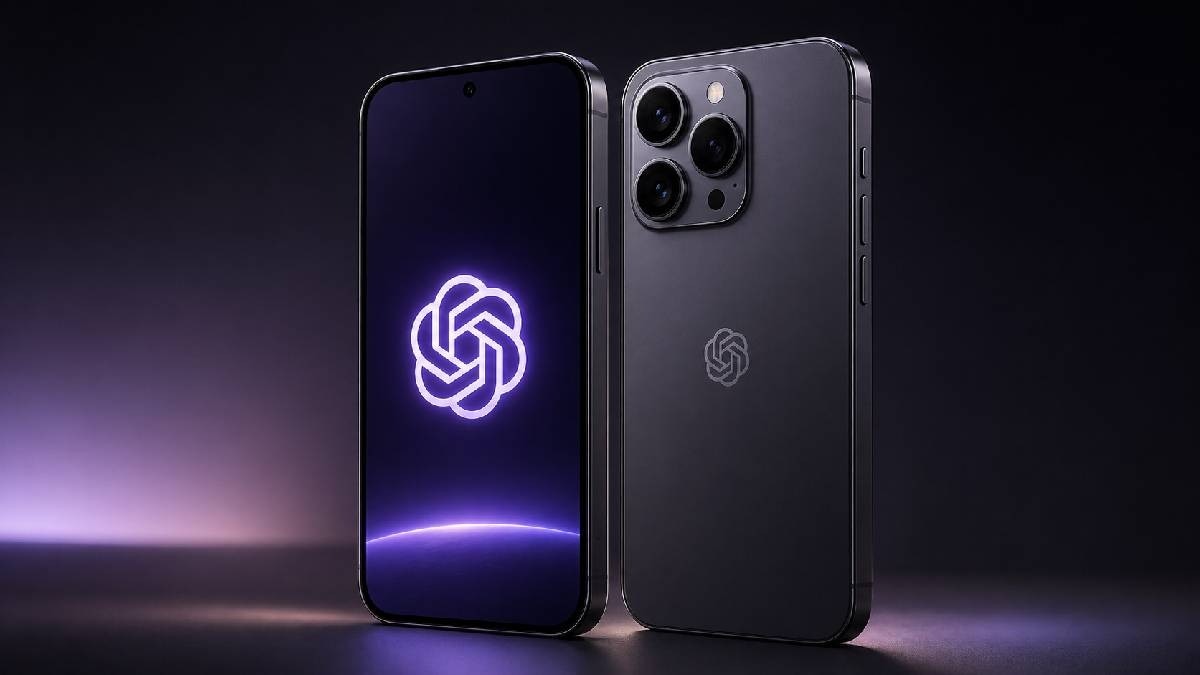
OpenAI is recalibrating the mobile landscape by engineering a custom smartphone processor in collaboration with industry giants Qualcomm and MediaTek. This strategic shift suggests a move away from peripheral AI gadgets toward the core of consumer technology: the smartphone. By integrating deep-level hardware with sophisticated AI models, OpenAI aims to establish a new baseline for mobile efficiency and precision.
The Architecture of a Custom Smartphone Processor
Analysts, including Ming-Chi Kuo, indicate that OpenAI is moving toward a vertically integrated hardware strategy. The proposed custom smartphone processor will serve as the catalyst for “AI-first” computing. In this ecosystem, the device prioritizes real-time AI agent assistance over traditional application-based navigation. Consequently, the hardware must manage intense contextual data and memory resources with calibrated accuracy.
This structural design utilizes on-device processing for immediate tasks while offloading complex computational workloads to the cloud. By leveraging the expertise of Qualcomm and MediaTek, OpenAI ensures its silicon can compete with existing high-performance standards. Luxshare is reportedly positioned as the primary assembler, providing the manufacturing precision required for such a large-scale launch.
Market Displacement and Strategic Scale
The roadmap for this technology suggests that specifications will reach finalization by late 2026. OpenAI targets an ambitious shipment volume of 300 million to 400 million units annually. Such a high-volume entry indicates a direct challenge to the current mobile hierarchy, specifically targeting the high-end segment dominated by established players.

OpenAI’s entry creates immediate pressure for Apple. While Apple currently relies on external models like Google Gemini for Siri enhancements, OpenAI’s dedicated hardware could offer a more seamless, agentic user experience. This competitive friction will likely accelerate the development of localized AI processing across the entire industry.
- Focus: AI-agent centric user interfaces.
- Scale: Up to 400 million units targeted.
- Timeline: Potential market entry in 2027.

The Situation Room Analysis
The Translation
This development signifies the transition from “AI as a tool” to “AI as the operating system.” Instead of opening separate apps for banking, messaging, or navigation, a custom smartphone processor allows a singular AI agent to manage these tasks through a unified interface. OpenAI is effectively building the “brain” of the phone to prioritize logic and reasoning over graphical app icons.
The Socio-Economic Impact
For the Pakistani professional and student, this shift could democratize high-level productivity. If OpenAI successfully scales this hardware, it reduces the reliance on expensive, high-bandwidth cloud services for basic AI tasks. This localized efficiency provides a more stable technological baseline for users in regions with fluctuating connectivity, potentially narrowing the digital divide through smarter, more autonomous tools.
The Forward Path
This move represents a Momentum Shift. OpenAI is not merely maintaining its lead in software; it is architecting the physical future of how humans interact with silicon. By developing a custom smartphone processor, they are ensuring that their software isn’t limited by the hardware constraints of competitors. This is a strategic play for total ecosystem dominance.