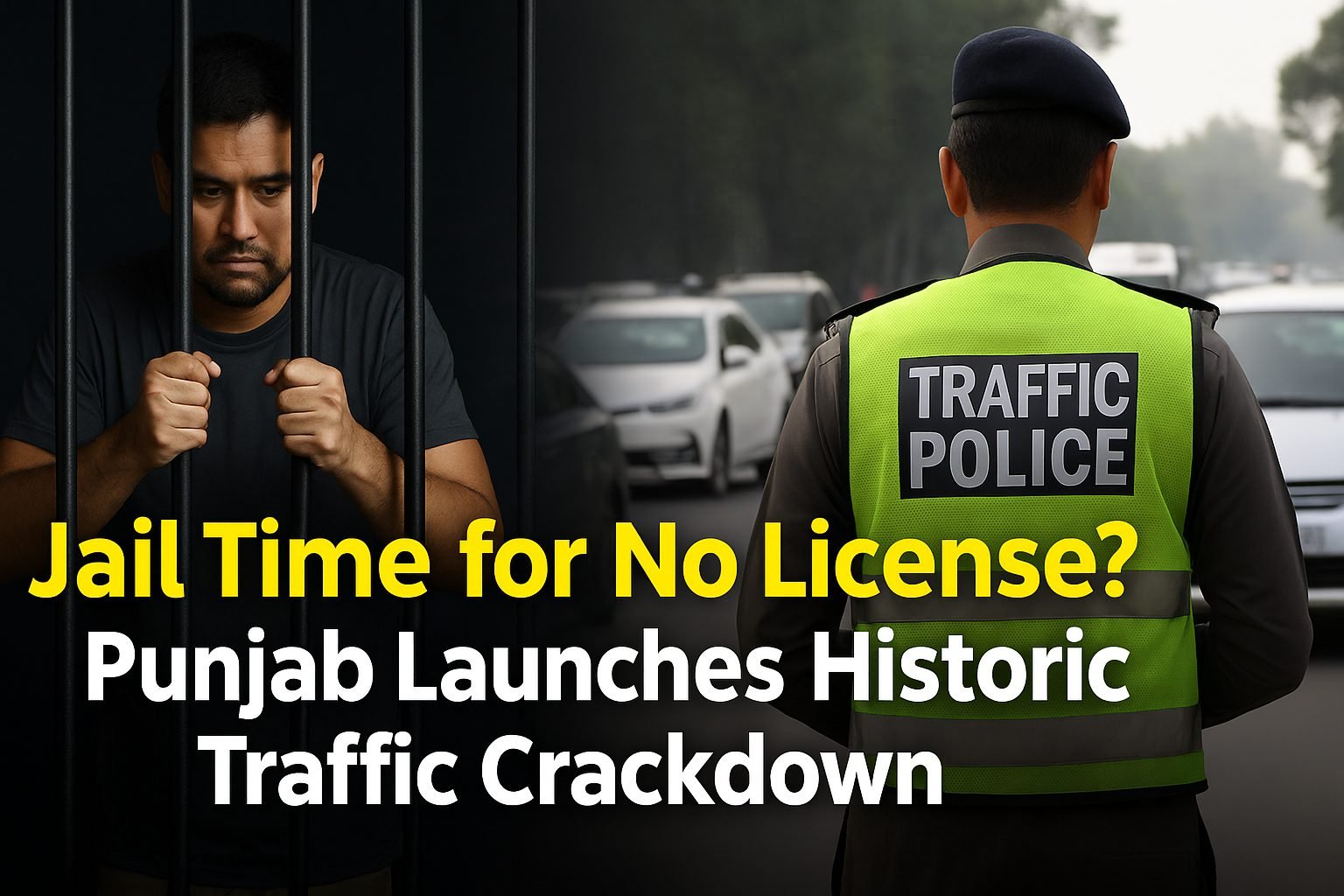
The Punjab traffic crackdown has officially transitioned from a two-week educational awareness phase to a high-precision, zero-tolerance enforcement operation. Following the strategic directives of Punjab Traffic Police DIG Muhammad Waqas Nazir, authorities are now deploying rigorous measures to ensure uniform implementation of road safety laws across the province. This structural shift aims to calibrate public behavior and establish a safer baseline for Pakistan’s transportation ecosystem.
Precision Enforcement of Road Safety Laws
Authorities successfully concluded a massive communication drive where Rahbar squads and safety camps educated citizens in Lahore and surrounding districts. Consequently, the focus has shifted toward punitive actions for common infractions such as lane discipline violations, one-way travel, and the neglect of helmets or seat belts. Furthermore, the deployment of advanced monitoring tools allows for more efficient tracking of repeat offenders.
The Translation: Converting Awareness into Discipline
In the context of systemic reform, this development signifies a move from “passive education” to “active accountability.” The previous awareness campaign served as a catalyst for public knowledge, but the current Punjab traffic crackdown utilizes legal consequences to enforce compliance. By removing the ambiguity of enforcement, the state is creating a predictable environment where traffic laws are viewed as non-negotiable architectural constraints of urban life.
The Socio-Economic Impact: Protecting Human Capital
Unregulated road behavior imposes a significant financial burden on the average Pakistani household through medical expenses and lost productivity. Therefore, stricter enforcement directly protects human capital by reducing the frequency of traumatic accidents in both urban and rural centers. For the working professional or student, these calibrated measures mean more reliable travel times and a drastic reduction in systemic road hazards. Improved safety standards also serve as a baseline for modernized logistical networks that drive economic growth.
The Forward Path: A Momentum Shift
This initiative represents a significant Momentum Shift in Pakistan’s governance of public spaces. Moving beyond temporary safety drives, the commitment to a zero-tolerance policy indicates a stabilization move toward long-term systemic discipline. As citizens adjust to these precision-driven standards, the focus should next shift toward digital integration and automated surveillance to further eliminate human bias in enforcement. We view this crackdown as a necessary catalyst for a more orderly and progressive national infrastructure.
- Strict Lane Discipline: Reducing congestion through spatial awareness.
- Safety Gear Compliance: Minimizing fatalities via mandatory helmet and seat belt usage.
- Zero-Tolerance Policy: Ensuring no violator is exempt from legal consequences.