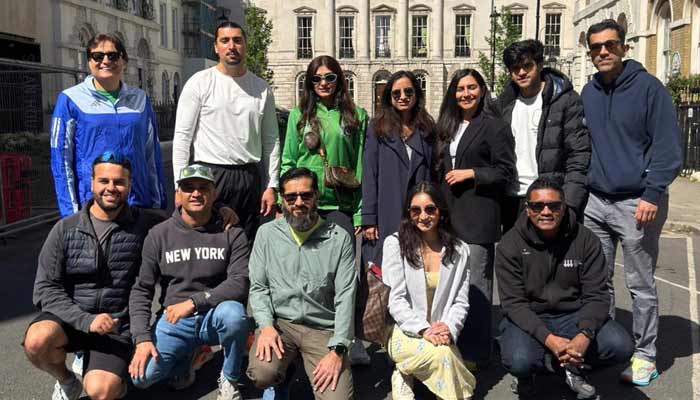
The 46th London Marathon 2026 served as a high-precision proving ground for a calibrated contingent of over 30 Pakistani athletes. These runners, representing both the domestic circuit and the global diaspora, executed disciplined race strategies. Consequently, their performances have established a new baseline for Pakistan’s presence in international endurance sports.
Strategic Pacing and Elite Performance Metrics
UK-based Abdullah Muhammad Athar emerged as the premier Pakistani finisher, completing the course in a strategic 2:39:53. He maintained a baseline pace of 3:43 per kilometer during the initial 10 kilometers. Furthermore, his passage through the halfway point at 1:18:23 demonstrated a highly optimized metabolic reserve. Although splits shifted to 4:00/km in the final segment, his structural discipline prevented a sharp decline in momentum.
Karachi-based Amin Mukaty delivered a similarly controlled performance, finishing at 2:45:02. He adopted a conservative entry strategy, reaching the 5-kilometer mark in 19:08. His consistent pacing between 3:50 and 3:59 per kilometer served as a catalyst for a strong finish, effectively neutralizing the late-race fatigue that typically impacts long-distance runners.
Expansion of the Female Athletic Frontier
In the women’s category, Sara Tahoor Lodhi established the fastest Pakistani female time of 3:25:02. She maintained a steady cadence during the early phases, averaging 4:38 per kilometer until the halfway mark. Despite encountering physiological hurdles after the 25-kilometer threshold, she demonstrated resilience. In contrast to many participants who struggle in the final quadrant, Lodhi recovered to secure a powerful finish.

The broader field reflected significant depth. Rehan Adamjee finished in 3:11:01, while Adnan Gandhi recorded 3:32:32, showcasing year-over-year improvement. Additionally, UK-based Sahil Kumar shattered the four-hour barrier with a time of 3:57:44. These results indicate a growing engagement with distance running as a calibrated discipline across the Pakistani global community.
Data Audit: Complete Pakistani Runner Results
The following table provides a comprehensive overview of the performance data from the London Marathon 2026. These figures represent the structural progress of our national running community.
| Runner Name | Finish Time |
|---|---|
| Abdullah Muhammad Athar | 02:39:53 |
| Amin Mukaty | 02:45:02 |
| Rehan Adamjee | 03:11:01 |
| Sara Tahoor | 03:25:02 |
| Adnan Gandhi | 03:32:32 |
| Faisal Shafi | 03:49:40 |
| Sahil Kumar | 03:57:44 |
| Zeeshan Rab | 04:01:43 |
| Sameen Nassar | 04:04:35 |
| Muhammad Hasan | 04:07:25 |
| Adil Ali | 04:07:51 |
| Hira Diwan Gandhi | 04:12:53 |
| Imran Ghayur Ahmed | 04:13:55 |
| Hadia Kishver | 04:17:37 |
| Yusuf Hassan | 04:21:21 |
| Naveed Hussain | 04:31:03 |
| Wasim Akhtar | 04:45:09 |
| Henna Shabir | 04:55:05 |
| Ahmer Khan | 05:00:02 |
| Javed Hussain | 05:10:42 |
| Sana Habib | 05:18:45 |
| Huzaifa Hashmani | 05:21:36 |
| Araf Mohammed | 05:23:52 |
| Qamar Zia | 05:31:05 |
| Maze Chishti | 05:39:44 |
| Shanzay Ahmad | 06:56:41 |
| Alina Pervez | 07:01:30 |
| Sajid Khan | 07:06:44 |
| Azhar Hussain | 07:07:15 |
| Adam Mohammed | 07:32:15 |
| Shifa Aftab | 08:05:42 |
The Situation Room Analysis
The Translation
In endurance sports, “splits” and “pacing” represent the energy management systems of the human body. The London Marathon 2026 performances show that Pakistani runners have transitioned from recreational joggers to strategic athletes. By maintaining “negative splits” or steady cadences, these runners are applying scientific training principles to maximize physiological efficiency.
The Socio-Economic Impact
The rise of distance running creates a healthier, more disciplined workforce. Specifically, the growing marathon culture in Pakistan fosters global connectivity and enhances the nation’s “soft power” branding. For the average citizen, this movement serves as a catalyst for preventive healthcare, potentially reducing the long-term domestic burden of lifestyle-related diseases.

The Forward Path
This development represents a significant Momentum Shift. The transition of Pakistani runners into the sub-3-hour category at events like the London Marathon 2026 indicates a maturing athletic ecosystem. To sustain this trajectory, we must now focus on building localized high-performance training centers to support domestic talent.