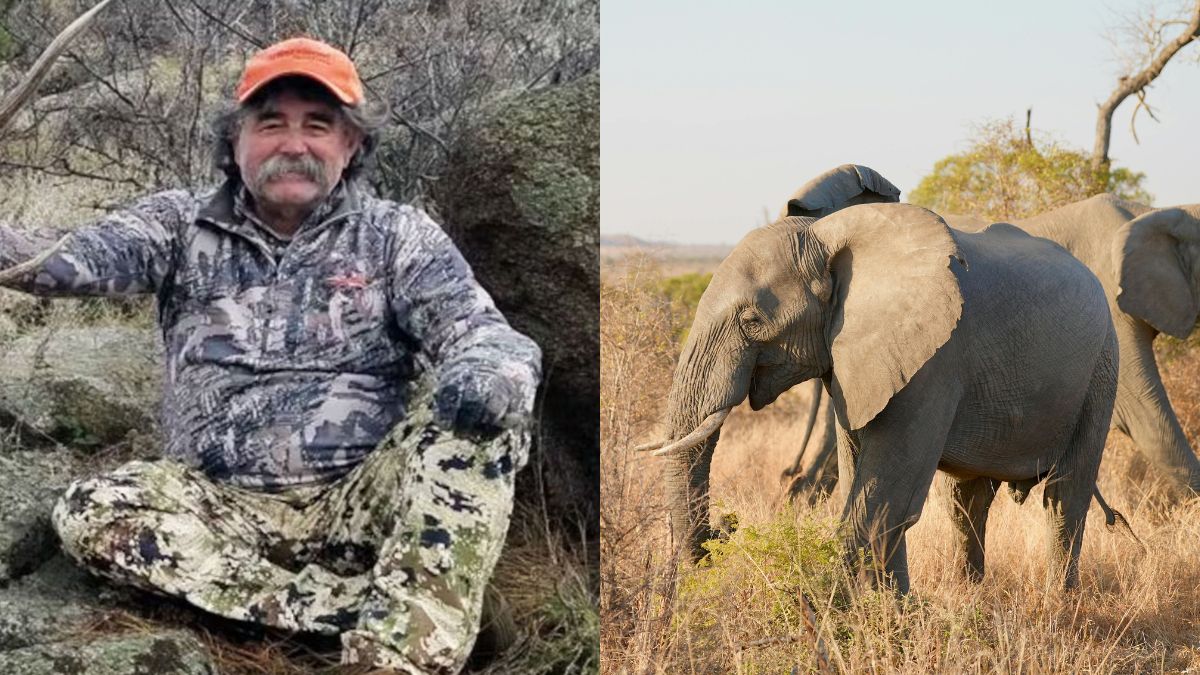
The recent death of American millionaire Ernie Dosio during a big-game trophy hunting expedition in Gabon serves as a stark baseline for evaluating human-wildlife interaction. Dosio, a 75-year-old vineyard owner, was fatally crushed by a herd of elephants while traversing the Lope-Okanda rainforest. This development underscores the inherent volatility present in even the most strictly calibrated conservation environments.
Deconstructing the Gabon Expedition Incident
Dosio was reportedly pursuing a yellow-backed duiker, an antelope species, when his team encountered a group of five female elephants and a calf. Consequently, the encounter triggered a defensive response from the herd. Furthermore, the professional hunter guiding the expedition sustained serious injuries during the confrontation. This event emphasizes that big-game trophy hunting involves unpredictable variables that bypass standard safety benchmarks.

The Profile of Global Hunting Operations
Dosio was a prominent figure within the Sacramento Safari Club, maintaining a vast collection of trophies including elephants and lions. He also served as the owner of Pacific AgriLands Inc., managing over 12,000 acres of vineyard territory in Modesto. Officials confirmed that his activities were licensed and integrated into regulated conservation frameworks. Despite these high-level protocols, the strategic risk remains a constant factor in big-game trophy hunting.

The Situation Room: Strategic Analysis
The Translation (Clear Context)
In technical terms, this incident represents a “failure of spatial distancing” in a high-density wildlife corridor. While Dosio targeted a smaller species, the presence of a calf within the elephant herd created a heightened defensive perimeter. Regulated hunting often funds habitat protection; however, the biological unpredictability of megafauna remains an unmitigated catalyst for danger.

The Socio-Economic Impact
For the average citizen, this event highlights the complexities of global wildlife management. These expeditions generate significant revenue for rural economies in Central Africa, often funding anti-poaching units. Conversely, such tragedies can lead to stricter travel advisories and a reduction in high-value eco-tourism. For Pakistanis observing global safety standards, it serves as a lesson in the precision required for managing natural habitats and wildlife tourism.
The “Forward Path” (Opinion)
This development represents a Stabilization Move. While the incident is tragic, it does not fundamentally alter the economic model of regulated hunting in Africa. Instead, it will likely lead to a recalibration of guide-to-client safety ratios and advanced detection technologies to avoid surprise encounters with non-target species. Precision and awareness remain the only path forward in these complex biological frontiers.