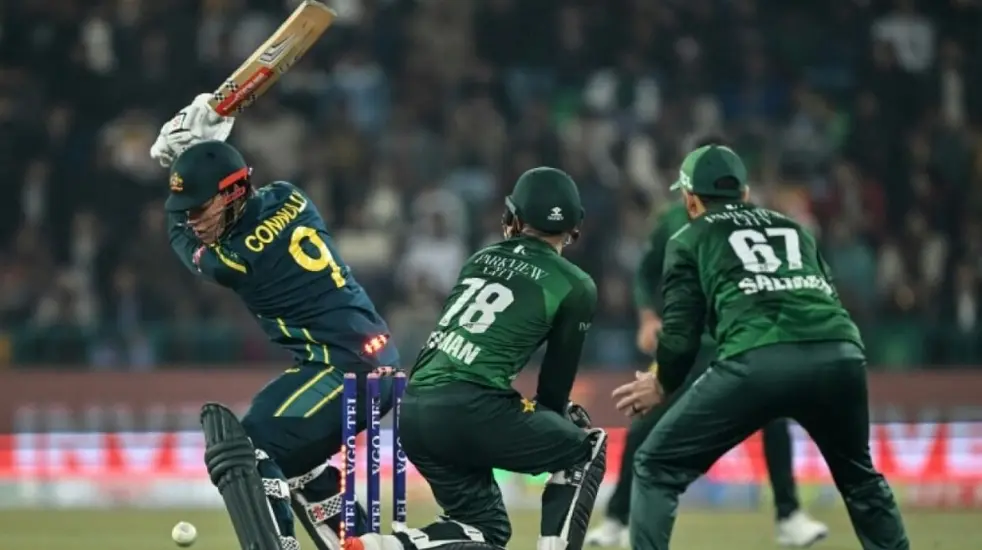
The strategic landscape of the PSL 11 Playoffs shifted dramatically at Gaddafi Stadium as Karachi Kings executed a calibrated nine-wicket victory over Quetta Gladiators. By chasing down a formidable 196-run target with clinical efficiency, Karachi effectively terminated Quetta’s campaign while revitalizing their own post-season trajectory. This performance represents a baseline shift in Karachi’s offensive output, showcasing a level of tactical discipline previously unseen this season.
A Tactical Masterclass: The Warner-Hendricks Catalyst
Consequently, the Karachi Kings’ response to Quetta’s 195-run total was nothing short of architectural. Captain David Warner anchored the innings with a precise 89* off 48 deliveries, demonstrating high-velocity scoring without compromising structural integrity. Simultaneously, Reeza Hendricks provided the perfect counter-balance, contributing a fluent 87* off 48 balls. Together, they neutralized the Gladiators’ bowling attack through a series of strategic boundaries and calculated risk-taking.
Earlier in the chase, Jason Roy provided a sharp baseline with 20 runs before Jahandad Khan secured the only breakthrough for Quetta. However, that single wicket failed to disrupt Karachi’s momentum. The subsequent unbeaten partnership between Warner and Hendricks carried the side comfortably past the 150-mark, eventually crossing the finish line in the 19th over. This victory highlights the efficiency of Karachi’s top-order recalibration.
Quetta’s Early Volatility and Recovery

In contrast, Quetta Gladiators suffered a catastrophic start to their innings. Hasan Ali utilized the new ball with precision, striking twice in the opening over to dismiss both Shamyl Hussain and Khawaja Nafay for ducks. This early collapse forced a total tactical reset for Quetta. Furthermore, the recovery was spearheaded by Rilee Rossouw and Saud Shakeel, who managed a structural rebuild with a massive 147-run partnership for the third wicket.
Rossouw functioned as the primary aggressor, hammering 90 off 54 balls, while Shakeel provided the technical support with a well-timed 57. Despite their efforts, Karachi’s death bowling—led by Abbas Afridi and Rizwanullah—prevented Quetta from exceeding the 200-run psychological barrier. Late-innings wickets proved a significant drag on Quetta’s final momentum, leaving them with a total that Karachi’s batters eventually dismantled.
The Situation Room
The Translation
In technical terms, Karachi Kings utilized a “front-loaded offensive strategy.” By ensuring their highest-caliber anchors (Warner and Hendricks) remained at the crease for over 80% of the chase, they eliminated the variable of a middle-order collapse. Quetta’s inability to generate “lateral movement” or “deceptive variations” during the middle overs allowed Karachi to maintain a scoring rate well above the required baseline without increasing their risk profile.
The Socio-Economic Impact
For the average Pakistani citizen, the sustained intensity of the PSL 11 Playoffs race serves as a catalyst for the local sports economy. High-stakes matches at Gaddafi Stadium drive significant foot traffic to urban centers, benefiting small-scale vendors, the hospitality sector, and transport services. Moreover, the success of international icons like David Warner in local conditions enhances Pakistan’s global brand as a secure and lucrative destination for elite sports tourism.
The Forward Path (Opinion)
This development represents a Momentum Shift. Karachi Kings have moved from a state of survival to a state of active contention. Their bowling unit, specifically the resurgence of Hasan Ali, provides a defensive baseline that can protect their high-performing batting order. If Karachi maintains this level of precision, they are no longer just participants; they are a structural threat to the top-tier teams in the final stages of the tournament.