
Conservation Success: The Chitral Markhor Hunt
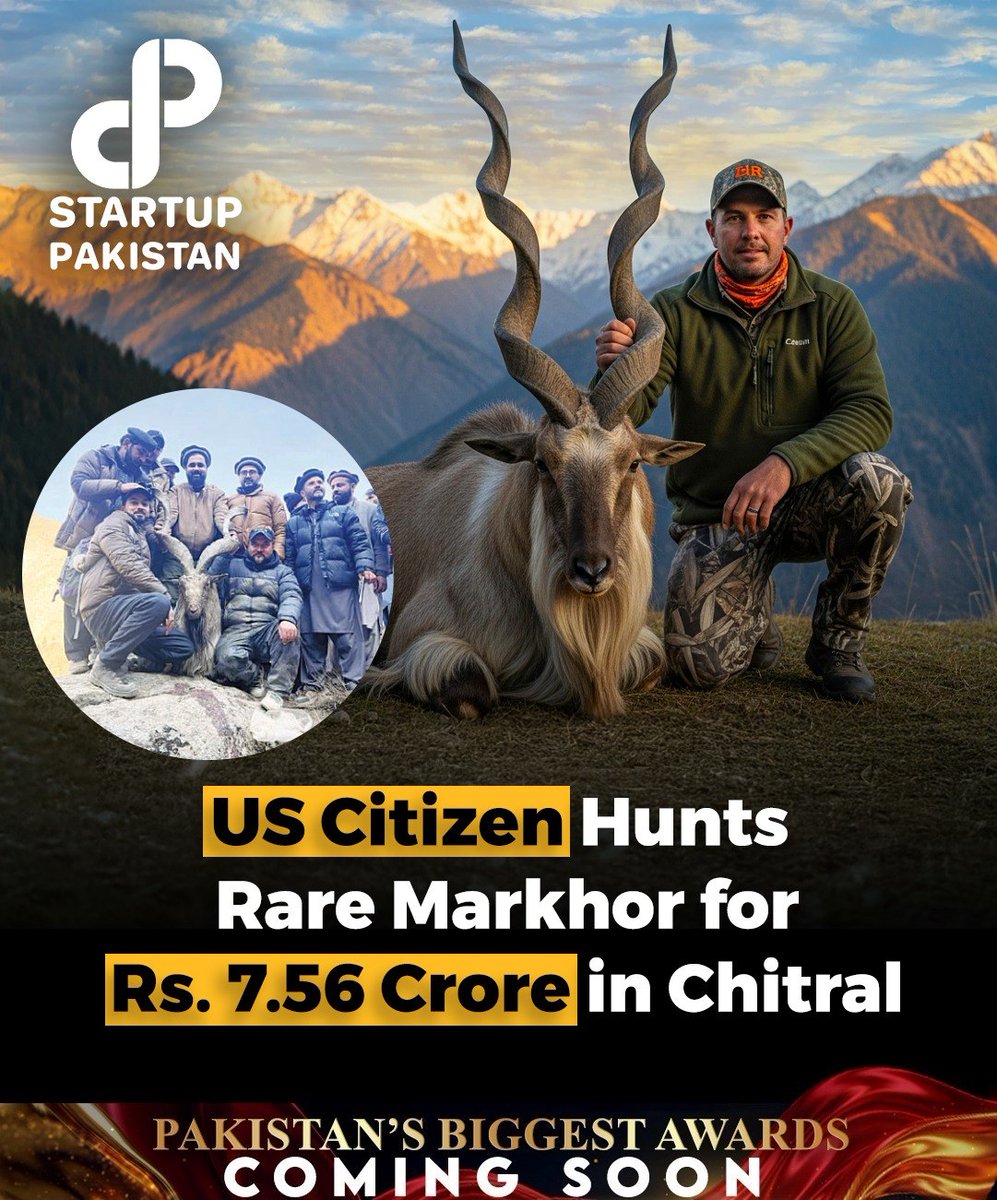
A recent Chitral Markhor hunt by a US national has significantly highlighted Pakistan’s pioneering conservation-driven trophy hunting program. This event, where a Kashmir Markhor was legally hunted in the mountainous region of Chitral, involved a staggering permit fee of $270,000 (approximately Rs. 756 million). Consequently, this hunt underscores the delicate balance between effective conservation and sustainable wildlife management in Pakistan.
Officials from the Khyber Pakhtunkhwa Wildlife Department confirmed the successful hunt. It occurred within the designated Shasha–Thoshi Community Managed Game Reserve. This high-value permit demonstrates international recognition of Pakistan’s commitment to protecting endangered species while also empowering local communities.

Ethical Practices: How the Markhor Hunt Unfolded
The permit for this unique hunt was secured through a rigorous international bidding process. Indeed, this reflects both high demand and the Markhor’s status as a prized trophy. Divisional Forest Officer (Wildlife) Chitral, Farooq Nabi, confirmed that the activity strictly adhered to national laws and international trophy hunting guidelines, ensuring complete transparency and ethical practices.
The anonymous hunter targeted a mature Markhor featuring an impressive horn length of approximately 52 inches. Furthermore, the animal was taken from a distance of about 500 meters, which aligns with the ethical hunting practices stipulated in the approved permit. Throughout the entire process, wildlife officials remained present to guarantee full compliance with conservation rules and permit conditions, thus preserving the program’s integrity.
Community Empowerment: Conservation Through Commerce
Pakistan’s trophy hunting program features a vital revenue-sharing mechanism. Significantly, 80 percent of the proceeds from these high-value permits directly support local communities. These communities reside near the hunting areas. Such funds are crucial for various development projects, including:
- Education initiatives
- Healthcare improvements
- Essential infrastructure development
- Creation of conservation-based livelihoods
This innovative model actively fosters a strong sense of ownership among local residents in wildlife protection. By directly benefiting from conservation efforts, communities are incentivized to safeguard the Markhor population. Moreover, the success of the Chitral Markhor hunt program ensures direct benefits for wildlife and people. They actively participate in anti-poaching initiatives and reduce illegal hunting. This collaborative approach demonstrably strengthens overall conservation outcomes in the region.

Protecting the Markhor: A Conservation Triumph
The Kashmir Markhor, Pakistan’s majestic national animal, is globally classified as “Near Threatened.” However, community-led conservation initiatives in areas like Chitral have significantly stabilized and even increased its population in recent years. Programs like regulated trophy hunting greatly support these efforts.
Farooq Nabi praised the Kashmir Markhor as a true conservation success story. He emphasized that regulated trophy hunting plays a crucial role not only in safeguarding the species but also in improving economic conditions and the quality of life for residents in remote mountain areas. Indeed, this sustainable approach showcases how carefully managed hunting positively contributes to both wildlife preservation and socio-economic development.









