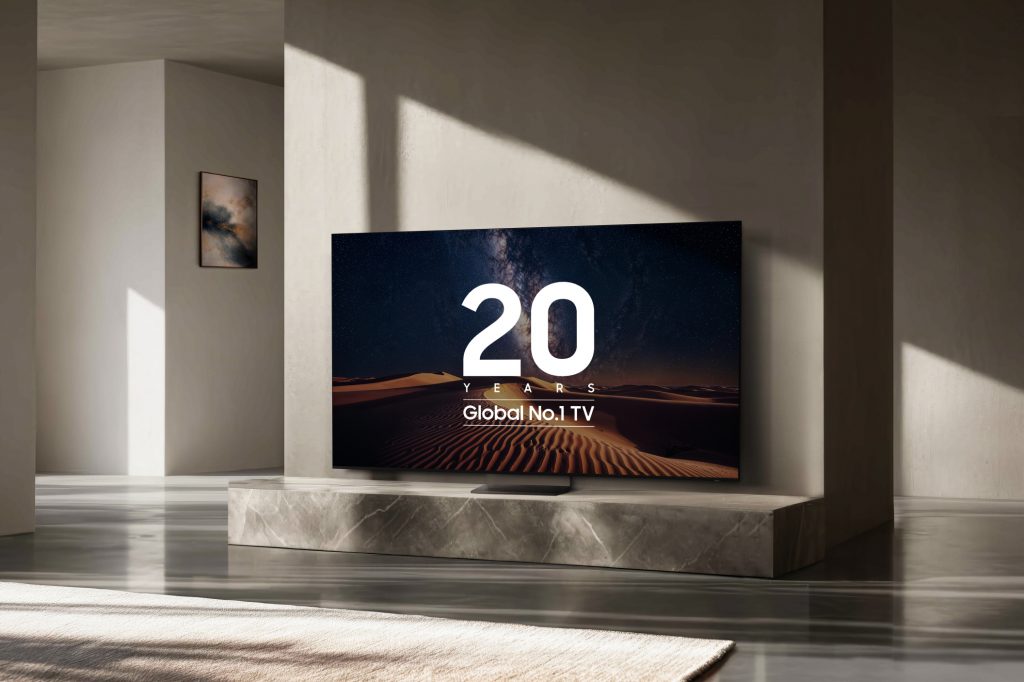
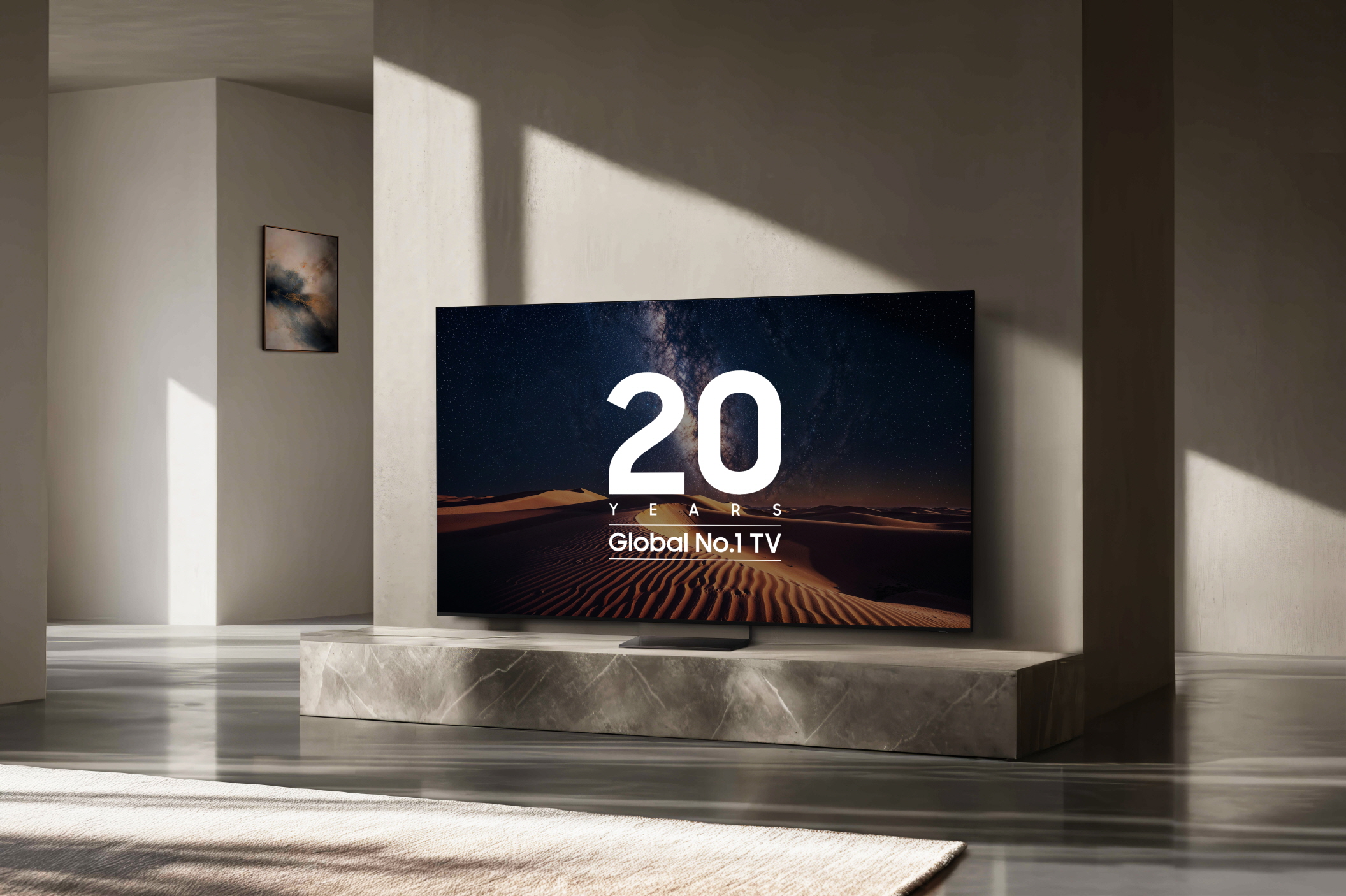
The global television market functions as a baseline for digital consumer infrastructure. Samsung Electronics has strategically calibrated its operations to maintain Samsung TV leadership for the 20th consecutive year, securing a 29.1% global market share in 2025. Consequently, the firm dominates the premium segment with a 54.3% share in the $2,500+ category, reinforcing its status as a catalyst for display innovation.
Analyzing the 20-Year Arc of Samsung TV Leadership
Samsung has maintained its top-tier position since 2006 by prioritizing structural engineering excellence. The company’s strategy focuses on high-performance screens, including Neo QLED and OLED lineups. Furthermore, Samsung leads the $1,500+ market segment with a 52.2% share. According to SW Yong, President of Visual Display Business, this 20-year streak reflects a deep consumer trust built on precision and engineering excellence.

A Strategic Timeline of Display Evolution
To understand the current market position, one must analyze the technological milestones that shaped the industry:
- 2006 (Bordeaux TV): Established the design-centric baseline for modern televisions.
- 2009 (LED Transition): Accelerated the shift toward energy-efficient, slim-profile displays.
- 2011 (Smart TV Launch): Transformed the screen into a connected digital entertainment platform.
- 2017 (The Frame & QLED): Integrated Art TV aesthetics with quantum dot technology.
- 2020 (MICRO LED): Introduced self-emissive technology, setting new standards for contrast and brightness.
The Situation Room: Structural Analysis
The Translation: Systems Innovation
Beyond simple hardware manufacturing, Samsung is developing an AI-driven ecosystem. By integrating advanced processors into Mini LED and Neo QLED models, they optimize picture quality and sound in real time. Specifically, this “AI-powered” shift ensures that the television is no longer a passive receiver but a strategic home hub that adapts to its environment.
The Socio-Economic Impact: Precision at Home
How does this Samsung TV leadership affect the average Pakistani citizen? It provides a tiered entry point into global technological standards. While the premium 8K models serve high-end professionals, the availability of HD and UHD models (starting at Rs. 55,999) ensures that precision display technology is accessible across urban and rural Pakistan. This democratization of tech enhances digital literacy and home entertainment quality nationwide.
The Forward Path: Momentum Shift
We classify this development as a Momentum Shift. Samsung is not merely maintaining market share; they are pivoting toward AI-personalization and ultra-large MICRO LED displays. This move forces competitors to accelerate their R&D cycles, ultimately benefiting the consumer through rapid technological maturation and competitive pricing in the lower tiers.
Local Availability and Pricing Data
Consumers can access the following calibrated models at retail stores across Pakistan. Please note that market retail prices are subject to structural changes based on economic factors.
| Series | Model No | Type | Inch | Price (MRP) |
|---|---|---|---|---|
| F Series | UA32H5000FUSMM | HD | 32 | Rs. 55,999 |
| D Series | UA43DU7000USMM | UHD | 43 | Rs. 116,999 |
| D Series | QA55Q60DAUSMM | QLED | 55 | Rs. 214,999 |
| D Series | QA65LS03DAUSMM | The Frame | 65 | Rs. 492,999 |
| F Series | QA77S90FAESMM | OLED | 77 | Rs. 1,449,999 |
| D Series | QA85QN800DUSMM | Neo QLED 8K | 85 | Rs. 2,311,999 |
*Refer to the official Samsung Pakistan portal for the complete inventory and real-time pricing updates.