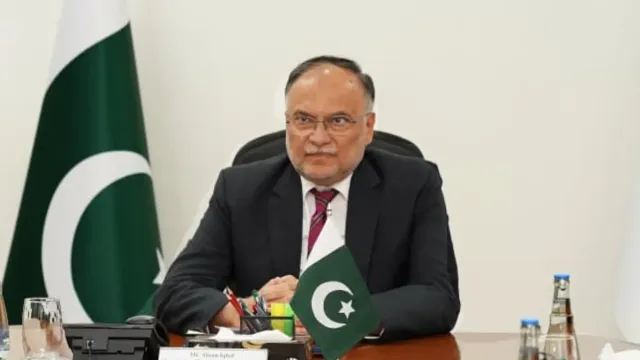
National economic resilience requires a calibrated response to external volatility. Pakistan is currently navigating a significant Pakistan economic slowdown as the government officially recalibrates its growth projections in response to Middle East tensions and internal fiscal adjustments. Planning Minister Ahsan Iqbal confirmed that the initial 4.2% growth target faces intense pressure, necessitating a strategic reduction in development spending to stabilize the broader macroeconomic baseline.
Fiscal Calibration Amid Global Supply Chain Volatility
The government recently executed a structural shift by reducing the Public Sector Development Program (PSDP) by Rs. 173 billion. Consequently, the budget now stands at Rs. 837 billion, down from the original Rs. 1.01 trillion. This precision move reallocates capital to fund fuel subsidies and manage inflationary pressures during the critical harvesting season. Furthermore, global supply chain disruptions stemming from the Middle East conflict have increased oil prices, forcing a tactical retreat from aggressive growth targets.
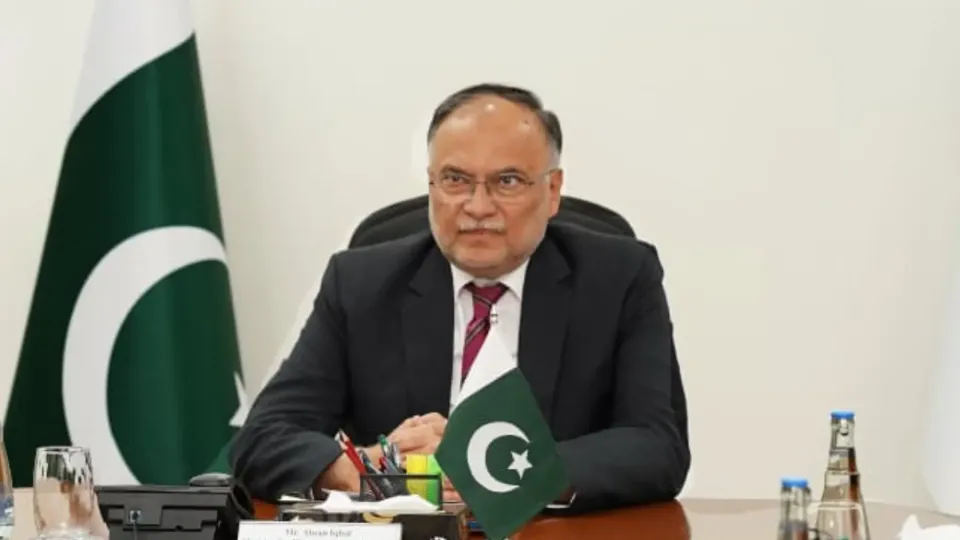
International lenders, including the IMF, currently project Pakistan’s growth between 3.2% and 3.5%. While the economy grew by 3.8% in the first half of the fiscal year, external shocks have decelerated this momentum. Minister Iqbal noted that global supply chains require six to nine months to normalize. Therefore, the economic effects of current geopolitical tensions will likely persist into the first half of the next fiscal year.
The “Situation Room” Analysis
The Translation (Clear Context)
The government is prioritizing immediate “survival liquidity” over long-term “infrastructure growth.” By cutting the PSDP (the national development fund), they are essentially moving money from future projects—like roads and dams—to pay for current necessities like cheaper fuel and farmer subsidies. This logic aims to prevent a short-term social crisis at the cost of slower industrial expansion.
The Socio-Economic Impact
For the average Pakistani citizen, this shift manifests in two ways. First, the Rs. 129 billion fuel subsidy provides temporary relief at the pump and stabilizes transport fares, protecting household disposable income. Second, however, the Pakistan economic slowdown and development cuts mean fewer new jobs in the construction and public works sectors, potentially limiting opportunities for the youth and technical workforce in the coming months.
The “Forward Path” (Opinion)
This development represents a Stabilization Move. While a reduction in growth targets is never ideal, the strategic focus on protecting the agricultural harvest and managing fuel-led inflation prevents a total systemic stall. To transition back to growth, the government must now pivot aggressively toward export-led recovery. Precision in trade policy is the only sustainable catalyst to bridge the foreign exchange gap.
Strategic Mitigation and Export Focus
To offset these external pressures, the government is intensifying its focus on the National Price Monitoring Committee. By collaborating with provincial authorities, the state aims to enforce price controls and reduce transport costs following diesel price adjustments. Ultimately, boosting national exports remains the primary mechanism to ensure long-term structural stability against global shocks.