
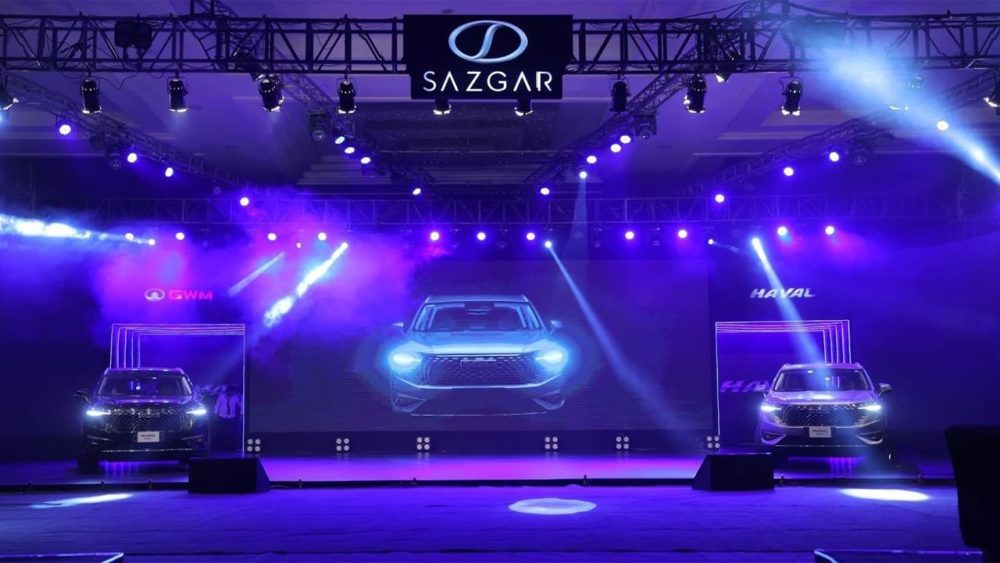
Sazgar Engineering Works Limited (SAZEW) has demonstrated a structural shift in its financial trajectory, reporting a 16% year-on-year surge in Sazgar Engineering earnings for 9MFY26. The company reached a total profit after tax of Rs. 14,879 million, translating to an Earnings Per Share (EPS) of Rs. 246.2. This performance is anchored by a historic quarterly profit of Rs. 6,438 million in 3QFY26, signaling a significant acceleration in industrial output and market demand.
Decoding the Revenue Drivers and Operational Scale
Total revenue for the nine-month period reached a calibrated peak of Rs. 115,202 million, representing a 41% increase compared to the previous year. Specifically, 3QFY26 net revenue stood at Rs. 47,356 million. This growth is a direct result of the precise scaling of Haval volumes. The company delivered 5,420 units during the quarter, reflecting a 47% increase in volume that offset broader economic headwinds.
Consequently, the board declared a cash dividend of Rs. 20.0 per share for the third quarter. This brings the cumulative payout for the nine-month period to Rs. 50.0 per share. Such strategic distribution highlights the company’s liquidity strength, further supported by a 155% increase in other income due to higher cash equivalents.
Navigating Margin Fluctuations and Structural Challenges
Despite record-breaking revenue, Sazgar Engineering earnings faced pressure from shifting cost structures. Gross margins for 9MFY26 declined to 25.6% from a baseline of 30.5% in the preceding year. This compression stems from the removal of concessionary duties and the persistent depreciation of the Pakistani rupee. Furthermore, a shift in product mix toward lower-margin petrol variants influenced the overall margin profile.
Operating expenses also mirrored the increased activity levels. Distribution costs climbed 62% to Rs. 4,171 million as the company managed higher delivery volumes. Simultaneously, finance costs increased by 50% year-on-year, reflecting the broader interest rate environment and operational financing needs. Nevertheless, the effective tax rate remained stable at approximately 39%.
The Situation Room: Strategic Analysis
The Translation (Clear Context)
The “Sazgar Story” is no longer just about three-wheelers; it is about high-tech automotive precision. The decline in margins is a classic industrial adjustment. When the government removes tax concessions, costs rise. Sazgar countered this by increasing volume (selling more units), which protected their bottom line despite earning less “per unit.”
The Socio-Economic Impact
This development impacts the average Pakistani citizen by stabilizing the local high-end automotive supply chain. Increased production leads to job security within the manufacturing sector and more competitive choices for consumers. For the professional investor, the buy stance and target price of Rs. 2,670 suggest that Sazgar is becoming a cornerstone of the national industrial index.
The Forward Path (Opinion)
We categorize this as a Momentum Shift. Sazgar has successfully transitioned from a niche manufacturer to a high-volume automotive powerhouse. While margin compression is a hurdle, their ability to achieve record profits through volume scaling indicates a mature, resilient business model that is ready for the next phase of Pakistani industrialization.








