

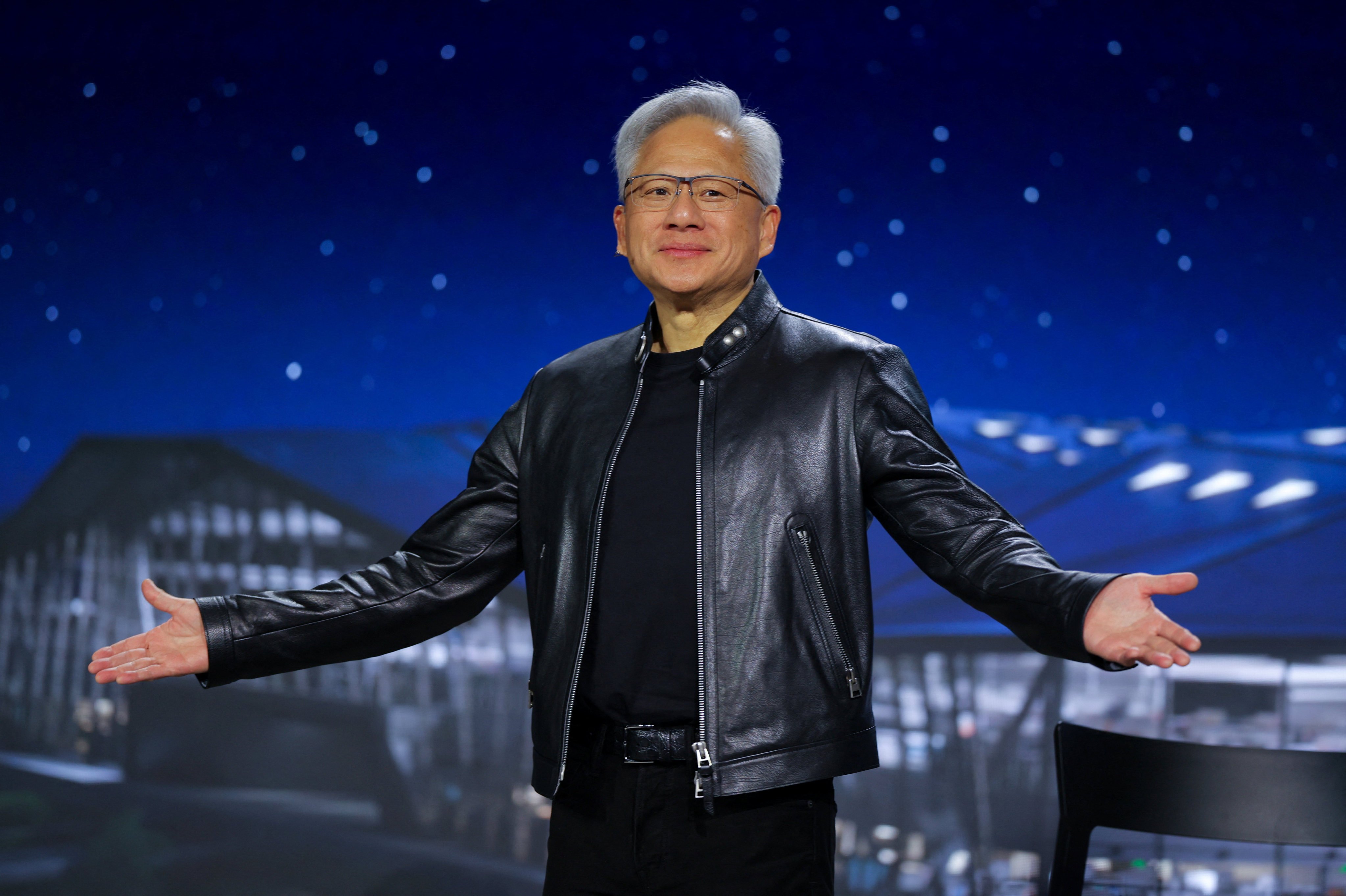
Nvidia CEO Jensen Huang recently issued a precision-calibrated warning regarding the future of US AI dominance. He noted that if the upcoming DeepSeek AI model launches exclusively on Huawei hardware, the United States faces a significant negative outcome. Huang suggested that such a development indicates a structural shift where global AI systems begin to decouple from American technology, potentially eroding the strategic lead currently held by the U.S. tech sector.
DeepSeek V4: The Catalyst for Hardware Independence
Industry analysts are closely monitoring the expected release of DeepSeek V4 later this month. Reports indicate that this model might operate on Huawei’s Ascend chips, completely bypassing the standard Nvidia graphics processors. Although some data suggests the model could still support Nvidia’s Blackwell architecture, a full migration to Huawei hardware would mark a historic milestone. Specifically, it would represent one of the first major global AI models to function entirely outside the established U.S. chip ecosystem.

Strategic Optimization vs. Raw Computing Power
While Huawei chips currently lag behind U.S. alternatives in raw baseline performance, Chinese firms are deploying a different architectural strategy. They are prioritizing software optimization and massive scaling over purely advanced silicon. Consequently, techniques like Mixture-of-Experts (MoE) are improving efficiency across large-scale global AI systems. Furthermore, China utilizes its vast pool of engineering talent and low-cost energy resources to maintain large computing clusters, effectively neutralizing hardware limitations through sheer scale.
The Policy Frontier and Infrastructure Shifts
This development occurs amidst escalating tensions between the U.S. and China over high-end technology. U.S. lawmakers continue to push for tighter restrictions on Chinese AI firms to preserve US AI dominance. However, the competition has evolved beyond hardware. Software efficiency and ecosystem control now define the next phase of the global race. If DeepSeek successfully deploys a top-tier model on Huawei silicon, it will demonstrate that software precision can overcome hardware sanctions.

The Situation Room Analysis
The Translation (Clear Context)
The “hardware gap” is no longer the sole determinant of AI superiority. While Nvidia’s Blackwell chips are faster, China is using “algorithmic efficiency” to do more with less. By utilizing Mixture-of-Experts (MoE), they split tasks among specialized sub-networks, which reduces the computational load. In essence, they are building smarter engines rather than just bigger ones.
The Socio-Economic Impact
For a country like Pakistan, this shift suggests a move toward a multipolar tech world. It reduces the global dependency on a single supply chain. This could eventually lower the costs of AI integration for Pakistani startups and researchers. As alternative hardware ecosystems like Huawei’s mature, localized data centers may become more affordable, accelerating digital transformation in emerging markets.
The Forward Path (Opinion)
This represents a Momentum Shift. We are moving away from a US-centric silicon monopoly toward a diversified global infrastructure. While the U.S. maintains a performance lead, the successful deployment of DeepSeek on non-U.S. hardware proves that technical ingenuity can bypass geopolitical barriers. This is not just a stabilization move; it is an aggressive evolution of the global AI architecture.








