

Optimizing Urban Mobility: The Automated Rapid Transit Project
The Punjab government is engineering a structural shift in provincial mobility through the new Automated Rapid Transit system. This strategic initiative represents a calibrated investment of approximately Rs. 6 billion. Consequently, the project aims to enhance system efficiency and provide a sustainable baseline for mass transit before its scheduled June rollout. Chief Minister Maryam Nawaz recently finalized the approval for this high-density transport corridor.
Authorities have designated a precise route spanning from CBD Kalma Chowk to Istanbul Chowk. The system will navigate through critical urban arteries, including Main Boulevard Gulberg and Jail Road Canal. By utilizing this strategic path, the government intends to alleviate traffic congestion in Lahore’s most saturated zones. Furthermore, the system serves as a catalyst for future infrastructure modularity across the province.
Technical Specifications and Infrastructure
The Automated Rapid Transit system utilizes advanced rolling stock supplied by CRRC. Each three-coach train possesses a capacity for 270 passengers, operating at optimized intervals of 15 to 20 minutes. Therefore, the network will facilitate the movement of nearly 18,000 passengers daily. To ensure operational precision, a local transport company will manage the day-to-day logistics under government supervision.

- Estimated Cost: Rs. 6 Billion
- Energy Profile: Fully electrified and solar-supported
- Rolling Stock Provider: CRRC
- Daily Capacity: 18,000 Passengers
The Translation: What This Means for Our Digital Frontier
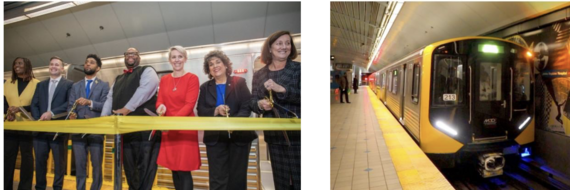
The Automated Rapid Transit (ART) system is essentially a “trackless tram” that operates on virtual rails. Unlike traditional heavy rail, it requires significantly less invasive infrastructure. The system uses high-definition sensors to follow designated road markings, combining the flexibility of a bus with the capacity of a light rail. This precision-guided technology allows Punjab to bypass the lengthy construction timelines usually associated with underground or elevated metro systems.
The Socio-Economic Impact
For the average Pakistani professional and student, this development translates into predictable commute times and reduced travel costs. By shifting toward an electrified, solar-supported model, the province actively reduces its reliance on expensive conventional fuels. Consequently, this lowers the operational baseline cost of public transport. Households in the Gulberg and Jail Road vicinities will experience a decrease in local smog and noise pollution, fostering a healthier urban environment.
The Forward Path: A Momentum Shift
In our expert assessment, the launch of the Automated Rapid Transit system represents a significant Momentum Shift for Pakistan’s urban planning. Rather than maintaining outdated, fuel-heavy bus fleets, this move toward solar-integrated electric transit signals a transition toward global smart-city standards. While the project has faced initial delays, the current execution phase suggests a disciplined approach to modernization. This system serves as a structural blueprint for secondary cities like Faisalabad and Multan to follow.








