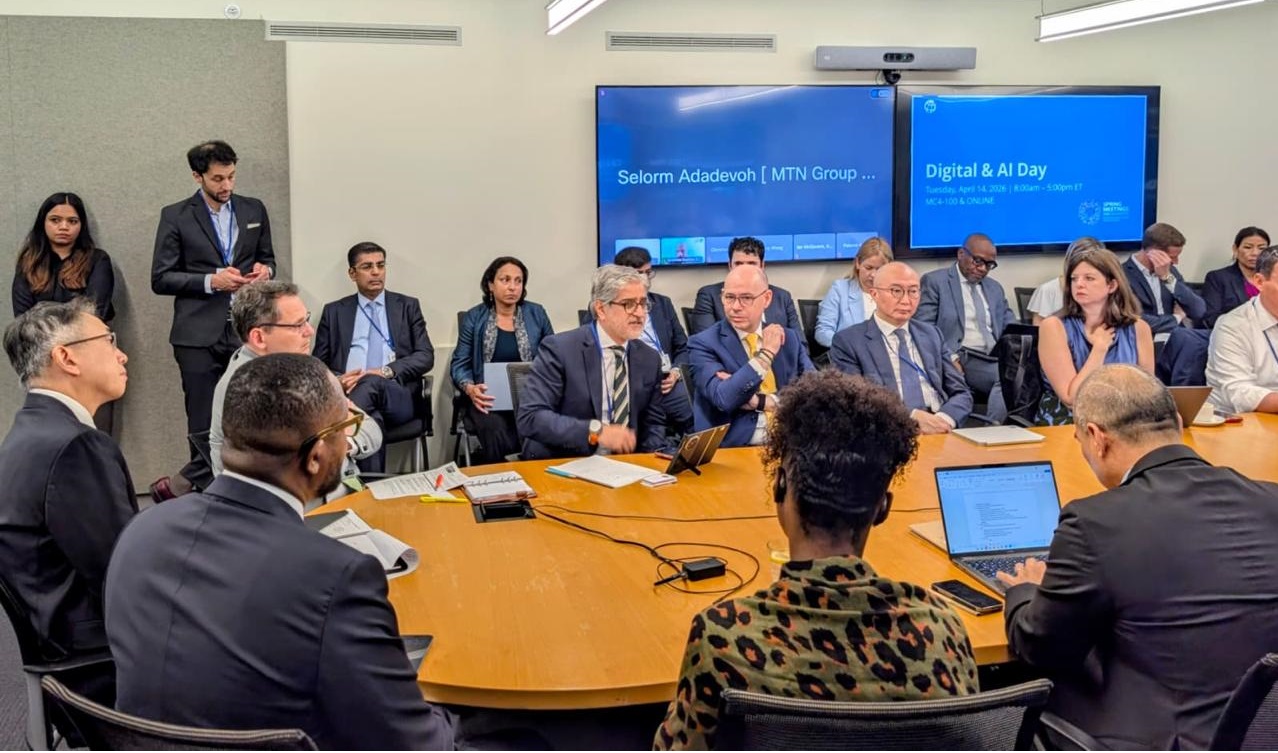
Structural transformation requires a calibrated alignment between national infrastructure and global capital markets. Recently, JazzWorld CEO Aamir Ibrahim presented a strategic roadmap for Pakistan’s digital economy during the IMF–World Bank Spring Meetings in Washington. This delegation engaged with senior leadership from the International Monetary Fund, World Bank Group, and International Finance Corporation to advance Pakistan’s economic agenda. Consequently, these discussions prioritized digitalization as a catalyst for macroeconomic resilience and financial inclusion.
Strategic Scaling of Pakistan’s Digital Economy
The high-level bilateral meetings focused on accelerating investment into next-generation digital infrastructure. Participants examined how data-driven ecosystems and emerging technologies can support transparent and sustainable economic growth. Specifically, the delegation explored pathways to mobilize private capital into high-impact sectors like fintech and cloud computing. These enablers are critical for maintaining Pakistan’s long-term competitiveness in a globalized market. Furthermore, discussions with U.S. stakeholders and the Atlantic Council underscored the role of digital reforms in enhancing investment attractiveness.
The Translation: Beyond the Boardroom
When leadership engages with the IMF and World Bank, they are essentially presenting a “proof of concept” for the nation’s technological stack. In simpler terms, JazzWorld is signaling to global investors that Pakistan possesses the foundational systems—like mobile connectivity and digital payments—necessary for safe and scalable investment. By aligning private sector goals with national reforms, they are building a bridge between local innovation and international liquidity.
The Socio-Economic Impact
For the average Pakistani citizen, these high-level talks translate into improved system efficiency and broader access to opportunities. A more robust Pakistan’s digital economy means that a student in a rural area can access global educational resources, and a small-scale entrepreneur can utilize fintech tools to manage capital. Increased investment in digital infrastructure reduces the “digital divide,” ensuring that urban and rural households alike benefit from enhanced transparency and reduced transaction costs in their daily lives.
The Forward Path: A Momentum Shift
We classify this development as a Momentum Shift. Moving from localized digital initiatives to the global investment stage at Harvard and the IMF indicates a strategic pivot toward institutional maturity. The commitment to digitalization is no longer just a sectoral goal; it is now the baseline for national economic resilience. If these engagements lead to the projected capital inflows, Pakistan will transition from a developing market to a precision-driven digital competitor.