

Strategic urban mobility is a fundamental component of national advancement. Consequently, the proposed Lahore Electric Tram project, designed to alleviate significant traffic congestion and upgrade public transport infrastructure, currently faces substantial delays. Environmental objections, notably from the Lahore Bachao Committee, and considerable financial challenges have collectively stalled its progression, even as widespread public sentiment favors a modern, efficient commuting solution.
Calibrating Urban Mobility: The Lahore Electric Tram Initiative
Government planners initially conceptualized this eco-friendly transport system to operate along Lahore’s vital canal corridor, spanning key city routes. However, this critical initiative has not progressed beyond its preliminary conceptual stages. This persistent delay raises structural questions regarding infrastructure deployment within complex urban environments.
Systemic Hurdles: Environmental and Fiscal Barriers
Opposition from environmental advocacy groups has emerged as a primary impediment. The Lahore Bachao Committee specifically prepares to seek a court stay order, aiming to prevent the felling of trees along the canal. They assert that the project’s current design could significantly degrade the city’s natural landscape. Furthermore, such environmental considerations necessitate rigorous impact assessments and alternative route analyses.

Concurrently, the project involves considerable fiscal outlays. These costs encompass track construction, station infrastructure development, and the acquisition of specialized electric trams, likely imported from international suppliers. Negotiations with entities from China and various European nations have occurred; nevertheless, progress remains calibrated and slow due to both financial and technical complexities inherent in large-scale procurements.
The Translation: Decoding Project Stagnation for Public Transport in Lahore
The project’s “stalled” status precisely reflects a critical intersection of ecological preservation mandates and vital infrastructure development needs. The core logic for this delay centers on balancing the imperative to maintain green spaces with the demands of urban expansion. Moreover, this situation is further compounded by the meticulously calibrated fiscal planning required for such a large-scale public transport initiative.
The Socio-Economic Impact: Daily Life for Pakistani Citizens
Delayed infrastructure projects directly translate into continued inefficiencies for Pakistani citizens. Specifically, residents of Lahore will continue to face escalating traffic congestion and extended commute times. This impacts the daily productivity of students and professionals alike, directly diminishing the quality of urban life. A fully operational Lahore Electric Tram system possesses the structural capacity to fundamentally recalibrate daily mobility patterns, offering a modern, efficient alternative.
The Forward Path: Momentum Shift or Stabilization Move?
From a strategic perspective, this development represents a “Stabilization Move.” While the government’s intent for progressive infrastructure is clear, the current phase prioritizes essential environmental impact assessments and comprehensive financial recalibrations. Therefore, it constitutes a necessary, albeit incremental, re-evaluation designed to ensure a structurally sound and ecologically responsible future implementation rather than an immediate acceleration.
Strategic Review: Addressing Core Challenges for the Lahore Electric Tram
Transport department officials affirm that the project has not been decommissioned; instead, it undergoes rigorous review to systematically address environmental and technical challenges. Furthermore, authorities are actively considering mitigation measures, such as extensive compensatory tree plantation initiatives, to balance ecological concerns with development goals.
Structural Blueprint: Project Scope and Capacity
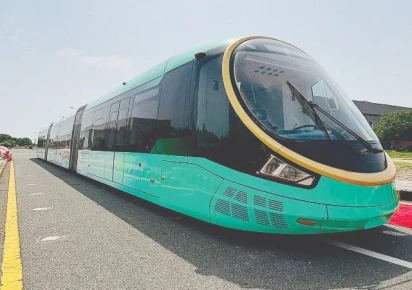
Officials specify the project requires a dedicated track, engineered to span approximately 27 kilometers and feature multiple stations. This system is designed to transport over 300 passengers per trip. Upon securing final governmental approval, the estimated completion timeline for the Lahore Electric Tram is projected to be within one year, signifying a rapid deployment once initial hurdles are cleared.
Via: Express Tribune








