

The Islamabad High Court (IHC) has issued a critical stay order, strategically halting the Capital Development Authority’s (CDA) Saidpur Village demolitions near Daman-e-Koh. This decisive legal intervention protects approximately 128 local residents from immediate eviction, underscoring a structural commitment to due process in urban development projects. The court’s calibrated action ensures that all stakeholders, particularly vulnerable communities, receive proper legal consideration before any demolition activities proceed.
The Translation: Clarifying the Court’s Directive on Saidpur Village Demolitions
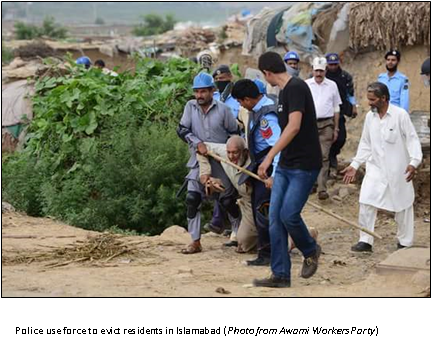
Justice Inam Amin Minhas issued this significant order while presiding over a petition filed by 128 Saidpur Village residents. Consequently, the court directed the CDA to immediately cease any demolition activities targeting these petitioners’ homes until the next hearing. Furthermore, the authority received a formal notice, compelling a comprehensive report on the matter. Advocate Rizwan Abbasi strategically represented the petitioners, articulating their plea for protection against the ongoing CDA operation. This procedural rigor highlights the judiciary’s role in establishing a baseline for equitable urban planning.
Significantly, the court has consolidated these petitions with other related cases already under judicial review, optimizing the legal process for efficiency. Earlier, the CDA initiated operations, asserting that the structures in Saidpur Village constituted illegal constructions, and maintained that prior notices had been issued. In contrast, the IHC’s stay order underscores the imperative for stringent legal verification before executing such actions.

The Socio-Economic Impact: Daily Life and Urban Stability
This judicial intervention profoundly impacts the daily life of Pakistani citizens, particularly those residing in Saidpur Village. For households in this urban-adjacent community, the stay order offers immediate relief from the existential threat of displacement. Students can continue their education without disruption, and professionals maintain their livelihoods, ensuring a degree of stability for these families. Moreover, this action sets a vital precedent for urban and rural populations nationwide, demonstrating that legal avenues exist to challenge unilateral administrative decisions.
The protection of homes against arbitrary demolition is a fundamental aspect of civic security. Consequently, this ruling reinforces the trust citizens place in the judicial system to uphold their rights. It mandates a more transparent and accountable approach from development authorities like the CDA, fostering an environment where public engagement and legal compliance are prioritized. Ultimately, this move contributes to a more predictable and just framework for urban development, benefiting all citizens by stabilizing property rights.
The Forward Path: A Stabilization Move for Urban Governance
This development represents a Stabilization Move for urban governance in Pakistan. It is not a dramatic momentum shift but rather a critical recalibration towards ensuring established legal protocols are precisely followed. The IHC’s intervention functions as a structural safeguard, reinforcing the necessity for development authorities to operate within defined legal parameters, protecting citizen rights. It sends a clear signal that due process is non-negotiable, even when addressing issues of unauthorized construction.
Ultimately, this judgment emphasizes the strategic importance of legal clarity in urban planning. It encourages a more inclusive dialogue between civic bodies and local communities, moving towards solutions that balance development imperatives with social justice. Therefore, while not a revolutionary change, it solidifies the foundation for a more equitable and legally robust approach to managing urban land and its inhabitants, a precision-guided step towards enhanced systemic efficiency.










