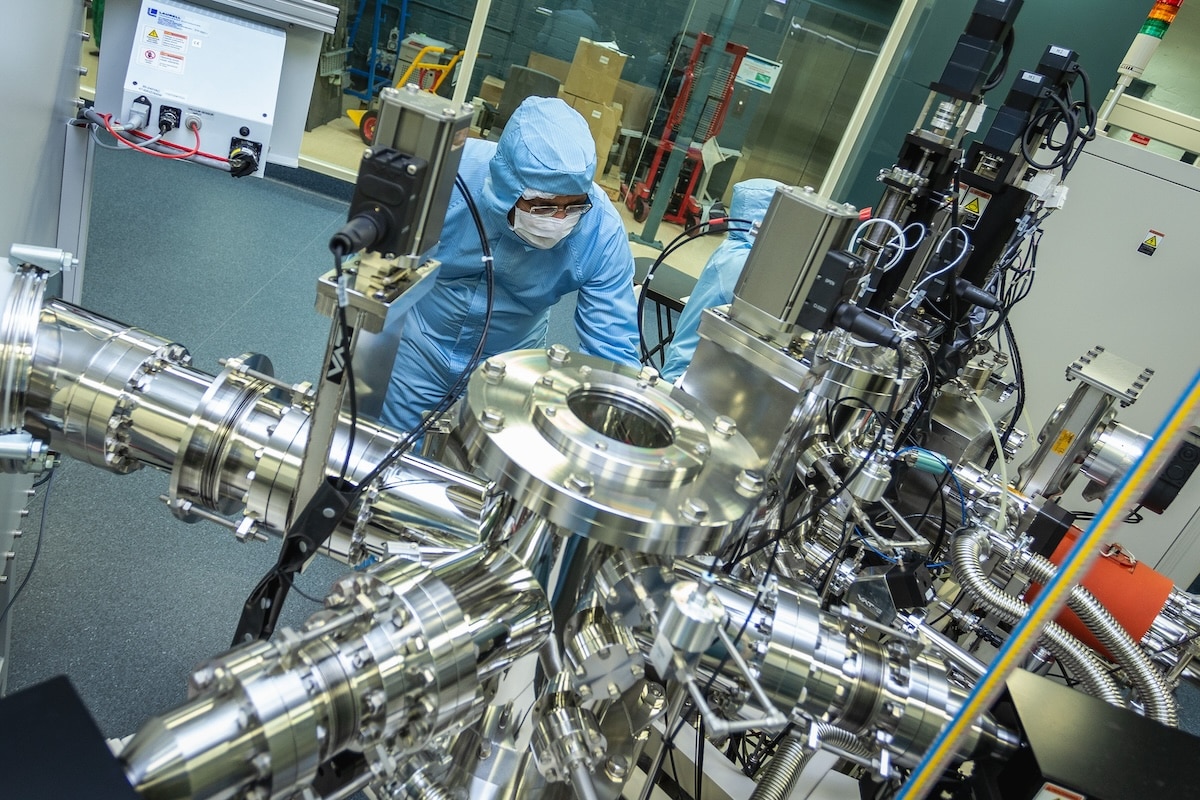
The structural integrity of our national energy grid hinges on breakthrough innovations. Consequently, researchers have engineered a proof-of-concept quantum battery, a foundational step towards next-generation energy storage. This calibrated advancement demonstrates capacity for rapid energy storage and release, crucially leveraging quantum physics principles. Ultimately, this innovation, driven by CSIRO and academic partners, signals a significant quantum battery charging paradigm shift with potential for Pakistan’s energy independence and technological acceleration.
The Translation: Deconstructing Quantum Mechanics for Energy
Unlike conventional electrochemical batteries, quantum batteries operate on fundamental quantum physics principles. Specifically, these systems utilize superposition and intricate light-electron interactions for energy management. Furthermore, this distinct operational baseline suggests a pathway to significantly faster quantum battery charging and superior energy storage capacity. While large-scale deployment remains a future objective, current research meticulously validates these foundational capabilities, thereby establishing a robust framework for subsequent development.
Conceptual Foundations of Quantum Energy Systems
This pioneering research, published in Light: Science & Applications, underscores a strategic departure from traditional energy paradigms. The collaboration between CSIRO, RMIT University, and the University of Melbourne provides a potent example of cross-institutional innovation. Consequently, their work precisely defines the theoretical and empirical underpinnings necessary for practical quantum energy solutions. The objective is to harness atomic-level phenomena for macro-level energy efficiency.

Optimizing Energy Transfer: The Scalable Advantage of Quantum Battery Charging
A key observation from this research reveals an unprecedented scaling advantage. Specifically, the team identified that quantum battery charging speeds accelerate proportionally with system size, a direct inversion of conventional battery behavior. Daniel Tibben, an RMIT PhD candidate and co-author, articulated this critical finding. He stated, ‘Our study found quantum batteries charge faster as they get larger, which is not how today’s batteries work.’ This calibrated efficiency promises to fundamentally redefine energy storage capabilities.
Architecting Hyper-Efficient Energy Accumulation
This inverse scaling characteristic fundamentally challenges established engineering benchmarks. Consequently, quantum batteries possess the structural potential to significantly outperform existing energy storage technologies, particularly in high-demand applications. Tibben further asserted that such behavior could enable these advanced systems to surpass current performance limitations. This represents a strategic leap in energy accumulation science, providing a compelling trajectory for future power systems.

Operationalizing Potential: The Prototype’s Strategic Validation
The research team successfully fabricated a functional prototype, precisely demonstrating core battery operations. This layered organic device effectively charges, stores, and then discharges energy. Co-author Daniel Gómez underscored the prototype’s importance, stating it represents a significant milestone in quantum technology. Furthermore, the device integrates wireless charging via laser, showcasing a highly efficient, non-physical energy transfer mechanism. This structural proof-of-concept is pivotal.
Paving the Way for Wireless Energy Dominance
Lead author James Quach emphasized the broader implications of this work. He remarked, ‘Our proof-of-concept device showcases rapid, scalable charging and energy storage at room temperature, laying the groundwork for next-gen energy solutions.’ This innovative approach could catalyze faster charging for electric vehicles and facilitate long-range wireless energy transfer. Consequently, the strategic groundwork is laid for fundamentally re-architecting energy delivery systems globally, starting with localized deployment.

The Socio-Economic Impact: Energizing Daily Life Across Pakistan
This quantum leap in energy storage will structurally transform daily life for Pakistani citizens. Consider the implications across various demographics and geographical regions.
Transforming Urban and Rural Lifestyles:
- Students and Professionals: Rapidly charged devices, from smartphones to laptops, will enhance productivity and connectivity. Wireless energy transfer could eliminate charging cables in public spaces, streamlining access to educational and professional resources. This calibrated efficiency minimizes downtime, maximizing learning and earning potential.
- Households: Families, particularly in off-grid or energy-deficient areas, could experience consistent power supply. Imagine household appliances and essential devices charging almost instantly, dramatically improving quality of life. The reduction in energy infrastructure costs could also lower utility burdens.
- Electric Vehicles & Industry: Faster charging times for EVs will accelerate adoption, reducing reliance on fossil fuels and mitigating environmental impact. Industrial applications will benefit from highly efficient, scalable power sources, boosting manufacturing output and operational stability.

The Forward Path: A Momentum Shift in Energy Infrastructure
This development undeniably represents a Momentum Shift for global energy infrastructure. The ability for a quantum battery to accelerate its quantum battery charging rate with scale is a transformative characteristic. While challenges remain, particularly concerning charge retention duration, the fundamental principles are now empirically validated. Consequently, strategic investment in this domain promises exponential returns in efficiency and sustainability.
Strategizing for Enhanced Durability and Deployment
Researchers are now prioritizing advancements in charge retention, a critical metric for real-world applications. The precise engineering required for long-duration energy storage demands continued analytical rigor. However, the foundational work firmly establishes that quantum batteries offer pathways to significantly faster charging, unprecedented wireless energy delivery, and superior overall performance compared to current technological baselines. This trajectory aligns Pakistan with the cutting-edge of global energy innovation.