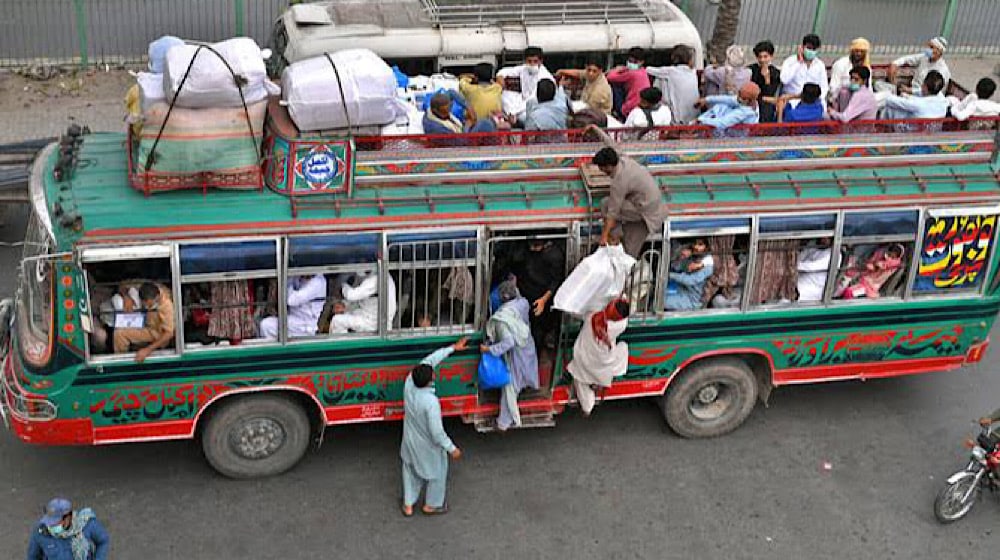
Sindh’s Strategic Intervention: Calibrating Public Transport Fares
The Sindh government has initiated a calibrated Sindh Fuel Subsidy program for public transport, strategically designed to stabilize fares and provide critical financial relief to commuters across the province. This decisive action addresses the escalating petrol and diesel prices that have placed immense pressure on the transport sector. Consequently, this initiative ensures sustained affordability for daily travel, directly reducing the economic burden on millions of citizens.
The Translation: Deconstructing the Targeted Subsidy Mechanism
This program introduces a “targeted fuel differential subsidy,” offering direct financial assistance to transporters. The core logic is clear: by offsetting rising operational costs, the government prevents fare increases, thereby safeguarding commuter budgets. This structural adjustment will channel monthly financial support to transporters who adhere to government regulations, specifically by maintaining current fare structures. This direct intervention bypasses complex market fluctuations, offering a baseline of predictability for both operators and passengers.
For intra-city routes, buses, minibuses, and coaches are eligible for up to Rs240,000 monthly, while vans can receive up to Rs230,000, and Suzuki pickups up to Rs60,000. Furthermore, inter-city transport will see buses receiving up to Rs1.2 million per month, based on specific route parameters. Vans on inter-city routes are allocated between Rs180,000 and Rs750,000, scaled by distance. Additionally, every motorcycle owner registered with the Excise Department will receive a Rs2,000 fuel subsidy, broadening the relief outreach.

Socio-Economic Impact: Stabilizing Daily Life for Pakistanis
This comprehensive subsidy program is projected to benefit an impressive 57 million passengers each month, encompassing over 9,000 intra-city and 1,100 inter-city vehicles. The financial outlay, estimated at Rs2.2 billion per month, translates to an average relief of approximately Rs38 per passenger. For students commuting to educational institutions, professionals navigating urban centers, and families connecting between rural and urban areas, this represents a tangible reduction in daily expenses. It directly improves household budgeting and mitigates inflationary pressures on essential services, fostering economic stability at the grassroots level. Consequently, this move secures mobility as an accessible right, rather than a prohibitive cost, for the average Pakistani citizen.
The Forward Path: A Stabilization Move for System Efficiency
This development fundamentally represents a Stabilization Move. While not a dramatic “momentum shift” towards entirely new transport paradigms, it is a highly critical structural intervention designed to maintain operational stability and prevent systemic collapse within the public transport sector amidst economic volatility. The strategic allocation of resources ensures baseline functionality and affordability. Consequently, it establishes a necessary framework for consistent public service delivery, preventing immediate degradation of commuter access. This precise recalibration secures existing infrastructure, setting the stage for future advancements.
Enhancing Transparency: A Digital Paradigm for Subsidy Management
To ensure stringent transparency and accountability in the distribution of the Sindh Fuel Subsidy, the government has implemented a fully digital, app-based system. This technological integration streamlines the processes for registration, verification, and payment. Payments are meticulously processed through Sindh Bank, while the system itself is structurally linked with critical data repositories from the Excise Department, the Regional Transport Authority (RTA), and the Pakistan Telecommunication Authority (PTA). Furthermore, passenger feedback mechanisms and systematic inspections form an integral part of the ongoing monitoring process. This digital framework represents a significant leap in administrative efficiency and public trust.