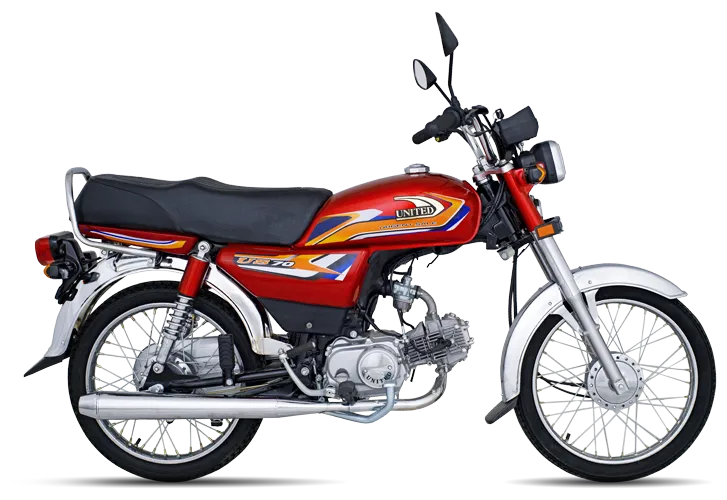
A calibrated adjustment in the national economic framework has been observed as United Auto Industries (Pvt.) Ltd. announces a strategic increase in United Motorcycle Prices across Pakistan. This decision, formalized on April 3, 2026, directly responds to a structural shift in production and raw material costs, aiming to stabilize the supply chain amidst persistent inflationary pressures. Consequently, consumers will experience new pricing tiers, reflecting a precision-driven move to maintain operational viability in a dynamic market.
The Translation: Deconstructing Motorcycle Price Increases
United Auto Industries (Pvt.) Ltd. implemented these new rates after extensive deliberation, as indicated by their official notification. The core logic behind this adjustment is clear: sustained increases in raw material acquisition costs and the fluctuating price of petrol have rendered previous pricing models unsustainable. Furthermore, a company’s capacity to absorb these external economic variables reaches a critical threshold, necessitating a recalibration of consumer pricing to ensure the continuity of manufacturing and supply. This move is not an isolated event but a systemic response to broader economic currents impacting the automotive sector.
Understanding the Revised United Motorcycle Prices
Effective April 11, 2026, all new bookings will adhere to the updated price schedule. This structured price revision ensures that models remain competitive while reflecting the true cost of production. The increases are tiered based on engine displacement, demonstrating a precise cost-benefit analysis per model segment.
- 70cc and 100cc Models: A calibrated increase of Rs. 3,000.
- 125cc Models: A more significant adjustment of Rs. 5,000.

Socio-Economic Impact: Daily Life and the Mobility Imperative
This adjustment in United Motorcycle Prices will undoubtedly have a tangible impact on the daily economic calculus for a significant portion of the Pakistani populace. For students, who often rely on motorcycles for affordable commuting, the increased cost represents a higher barrier to entry for personal mobility. Similarly, professionals and small business owners in both urban and rural Pakistan, who utilize these vehicles as essential tools for livelihood, will face elevated operational costs. In contrast, this stabilization move, while impacting immediate affordability, seeks to prevent more drastic disruptions in the long-term availability and quality of essential transportation options. It underscores the ongoing challenge of balancing consumer access with industrial sustainability.
The Forward Path: A Stabilization Move for the Market
From an architectural perspective, this development represents a “Stabilization Move” rather than a “Momentum Shift.” It is a necessary recalibration to secure baseline operational efficiency for United Auto Industries within the current economic climate. While impacting consumer purchasing power, this decision is a defensive strategy to prevent potential supply chain disruptions or quality compromises that could emerge from prolonged absorption of rising input costs. The precise execution of these price revisions aims to maintain market equilibrium and ensure the continued availability of one of Pakistan’s most critical modes of transport.