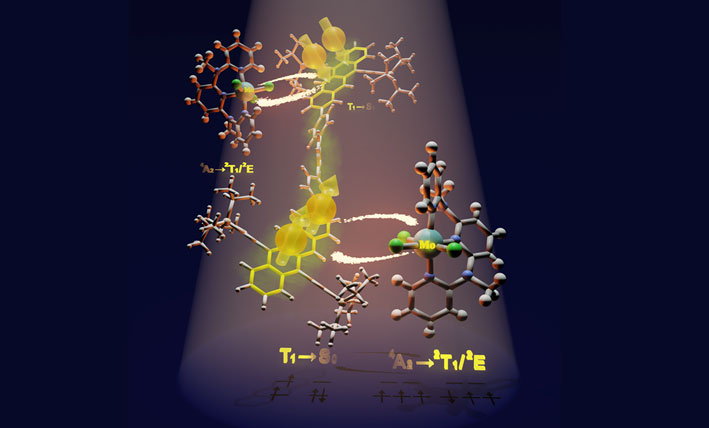
A structural advancement in energy conversion now recalibrates the baseline for solar power efficiency. Researchers at Kyushu University in Japan have pioneered a material using Spin-Flip Solar Technology, enabling solar cells to achieve unprecedented energy conversion efficiencies, potentially exceeding 100%. This innovation fundamentally redefines the theoretical limits of photovoltaic performance, promising a significant catalyst for global renewable energy integration.
Understanding the Calibrated Mechanism: Spin-Flip Solar Technology
This breakthrough centers on a novel “spin-flip” emitter. Conventionally, solar cells lose high-energy photons, particularly blue light, as heat. Consequently, only about one-third of sunlight converts into usable electricity. The Japanese team’s material strategically captures this typically wasted energy. It employs a process known as singlet fission, which effectively splits single high-energy photons into two lower-energy excitons. Therefore, this mechanism fundamentally doubles the usable energy harnessed from light, significantly optimizing the energy capture process.
Associate Professor Yoichi Sasaki precisely outlines the dual strategy: “One strategy involves converting lower-energy infrared photons into higher-energy visible photons. The other utilizes singlet fission to generate two excitons from a single high-energy photon.” This dual approach systematically overcomes historical limitations in solar energy absorption, marking a pivotal moment in renewable energy research.

Pakistan’s Energy Frontier: A Socio-Economic Impact Analysis
How does this structural advancement, fueled by Spin-Flip Solar Technology, alter the daily life of a Pakistani citizen? For urban households and professionals, this translates into a tangible reduction in electricity costs. More efficient solar panels mean lower utility bills, mitigating financial strain. For rural communities, this innovation offers a robust pathway to reliable, off-grid power solutions, bypassing often-fragile traditional infrastructure.
Furthermore, this development directly influences educational institutions and healthcare facilities, providing consistent power for critical operations. Students benefit from uninterrupted access to digital learning tools, while clinics maintain essential medical equipment functionality. Ultimately, a nationwide adoption of such ultra-efficient solar technology would accelerate energy independence, stabilize the national grid, and catalyze a more sustainable economic future for Pakistan.

The Forward Path: A Momentum Shift for Renewable Integration
This breakthrough is unequivocally a Momentum Shift. It is not merely an incremental improvement but a fundamental recalibration of what is technologically feasible in solar energy. Previous theoretical limits, often viewed as immutable, have been demonstrably surpassed. This development serves as a powerful catalyst, propelling the entire renewable energy sector into an era of unprecedented efficiency.
Considering recent advancements, such as the record efficiencies achieved in Switzerland by combining perovskite with silicon for lower-cost, satellite-grade panels, the trajectory is clear. The integration of next-generation solar solutions positions Pakistan to rapidly scale its renewable energy infrastructure, fostering both economic resilience and environmental stewardship. This strategic development provides a structural blueprint for a truly sustainable future.