Optimizing National Connectivity: New Pakistan Toll Rates Announced
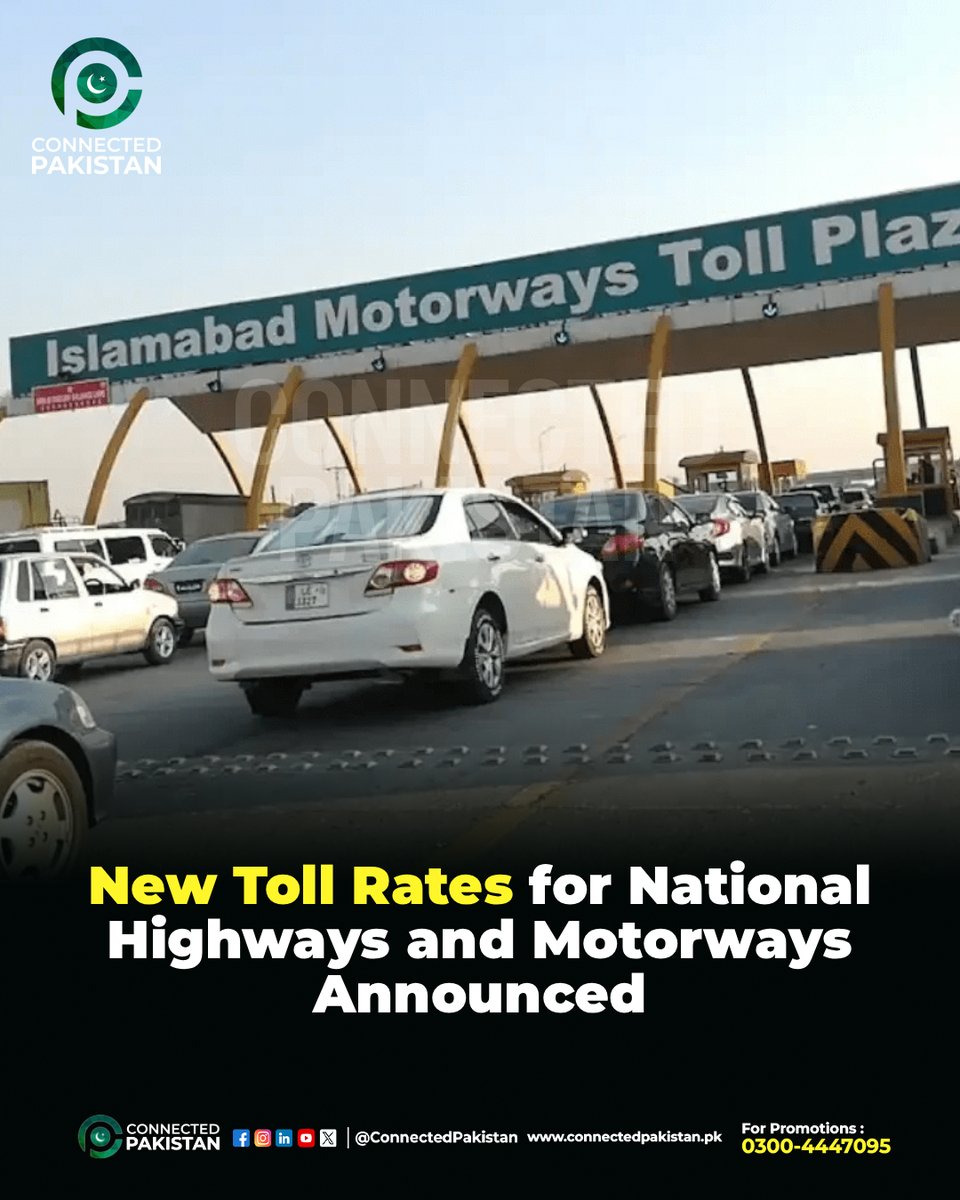
The National Highway Authority (NHA) has enacted a significant structural revision of Pakistan toll rates for national highways and motorways, with these calibrated adjustments taking effect from April 5, 2026. This strategic move aims to optimize revenue generation for infrastructure maintenance and development. Consequently, all vehicle categories, from passenger cars to heavy articulated trucks, will experience updated charges across the nation’s critical transportation arteries, including the Kohat Tunnel and the Islamabad-Mianwali-Dera Ismail Khan Corridor West section. Understanding these precise changes is essential for all commuters and commercial operators.
Furthermore, this comprehensive notification from the NHA’s Finance Wing, specifically its Revenue Directorate, delineates new charges for a multitude of routes. It covers national highways, several key motorway corridors, and specialized infrastructure like the Kohat Tunnel. The impending implementation date provides a baseline for operational adjustments, allowing both individuals and businesses to prepare for the revised fiscal landscape of road travel. Precision in communication ensures stakeholders can adapt effectively to these vital infrastructure policy updates.
The Translation: Deconstructing the New Toll Structure
Converting technical policy into actionable understanding is paramount. The NHA’s recent notification specifies clear financial benchmarks for road usage. For instance, a standard car will now incur a charge of Rs. 100 on national highways. Navigating the Kohat Tunnel (N-55) will cost Rs. 250, while the Islamabad-Mianwali-Dera Ismail Khan Corridor West (E-75) carries a Rs. 300 toll for cars. These specific figures establish a new fiscal baseline for travel.
In contrast, motorway travel presents a different scale of charges, reflecting higher infrastructure costs and operational efficiencies. For example, a car journey on the Islamabad-Peshawar (M-1) motorway is set at Rs. 700. Further south, the Lahore-Abdul Hakeem (M-3) route requires Rs. 1,000, and the Pindi Bhattian-Faisalabad-Multan (M-4) section is Rs. 1,300. The Multan-Sukkur (M-5) motorway, a critical artery, has a car toll of Rs. 1,500. Additionally, the D.I Khan-Hakla (M-14) motorway will cost Rs. 800, and the Hassanabdal-Havelian-Mansehra Expressway (E-35) will be Rs. 350. These differentiated rates reflect the strategic importance and engineering complexity of each route.

Significantly, the updated structure extends beyond light vehicles, encompassing a broad spectrum of commercial and passenger transport. Wagons, buses, coasters, mini-buses, 2 and 3 axle trucks, and articulated trucks face corresponding increases. For heavy transport, the highest recorded toll is Rs. 7,150 for articulated trucks traversing the Multan-Sukkur (M-5) motorway. This detailed categorization ensures equity and fair contribution towards road network sustainability across all vehicle types.
Detailed Pakistan Toll Rates: National Highways and Motorways
National Highways Overview
| Category | National Highways | Kohat Tunnel (N-55) | IMDCW (E-75) |
|---|---|---|---|
| Car | 100 | 250 | 300 |
| Wagon | 200 | 600 | 300 |
| Bus | 300 | 750 | 450 |
| 2 & 3 Axle Trucks | 350 | 750 | 500 |
| Articulated Trucks | 700 | 1100 | 1000 |
Motorways: Northern & Central Routes
| Category | Islamabad – Peshawar (M-1) | Lahore – Abdul Hakeem (M-3) | Pindi Bhattian – Faisalabad – Multan (M-4) |
|---|---|---|---|
| Car | 700 | 1000 | 1300 |
| Wagon upto 12 seater | 1050 | 1500 | 1950 |
| 13-24 seater, Coaster/Mini Bus | 1450 | 2150 | 2850 |
| Bus | 2050 | 3100 | 3950 |
| 2 & 3 Axle Truck | 2850 | 3950 | 5200 |
| Articulated Truck | 3300 | 4900 | 6400 |
Motorways: Southern & Eastern Routes
| Category | Multan – Sukkur (M-5) | D.I Khan – Hakla (M-14) | Hassanabdal – Havelian – Mansehra Expressway (E-35) |
|---|---|---|---|
| Car | 1500 | 800 | 350 |
| Wagon upto 12 seater | 2150 | 1350 | 550 |
| 13-24 seater, Coaster/Mini Bus | 3150 | 1300 | 750 |
| Bus | 4550 | 2750 | 1100 |
| 2 & 3 Axle Truck | 5850 | 3500 | 1450 |
| Articulated Truck | 7150 | 4150 | 1750 |
The Socio-Economic Impact: Calibrating Daily Life
This revision of Pakistan toll rates will introduce tangible shifts in the daily economic calculus for Pakistani citizens. For students and professionals commuting across cities via motorways, increased travel costs could influence budgeting for transportation. Rural households relying on commercial transport for goods will observe potential adjustments in commodity prices, reflecting the higher operational costs for freight services. Consequently, the strategic recalibration of tolls serves as a direct fiscal input into the national economy, impacting both individual spending and supply chain dynamics.
Furthermore, businesses involved in logistics and inter-city transport will need to integrate these new charges into their operational models, potentially optimizing routes or adjusting service fees. The overall effect is a structural adjustment designed to sustain and enhance the national road network. This, in turn, promises improved road quality and safety over the long term, offering a trade-off between immediate expenditure and future infrastructural dividends for all Pakistanis.
The Forward Path: A Stabilization Move for Infrastructure
From a systemic perspective, the updated Pakistan toll rates represent a Stabilization Move. While they signify increased costs, their primary function is to establish a more robust financial baseline for the National Highway Authority. This ensures the sustained maintenance and progressive development of Pakistan’s critical road infrastructure. Without such calibrated adjustments, the long-term viability and quality of these essential arteries would inevitably degrade.
Therefore, this is not a sudden momentum shift towards new expansion, but rather a disciplined, precision-focused effort to secure the foundational integrity and operational efficiency of existing and planned road networks. It’s an essential measure to safeguard public assets and guarantee seamless connectivity, catalyzing future economic growth through reliable transport corridors. This foresight is crucial for national advancement.