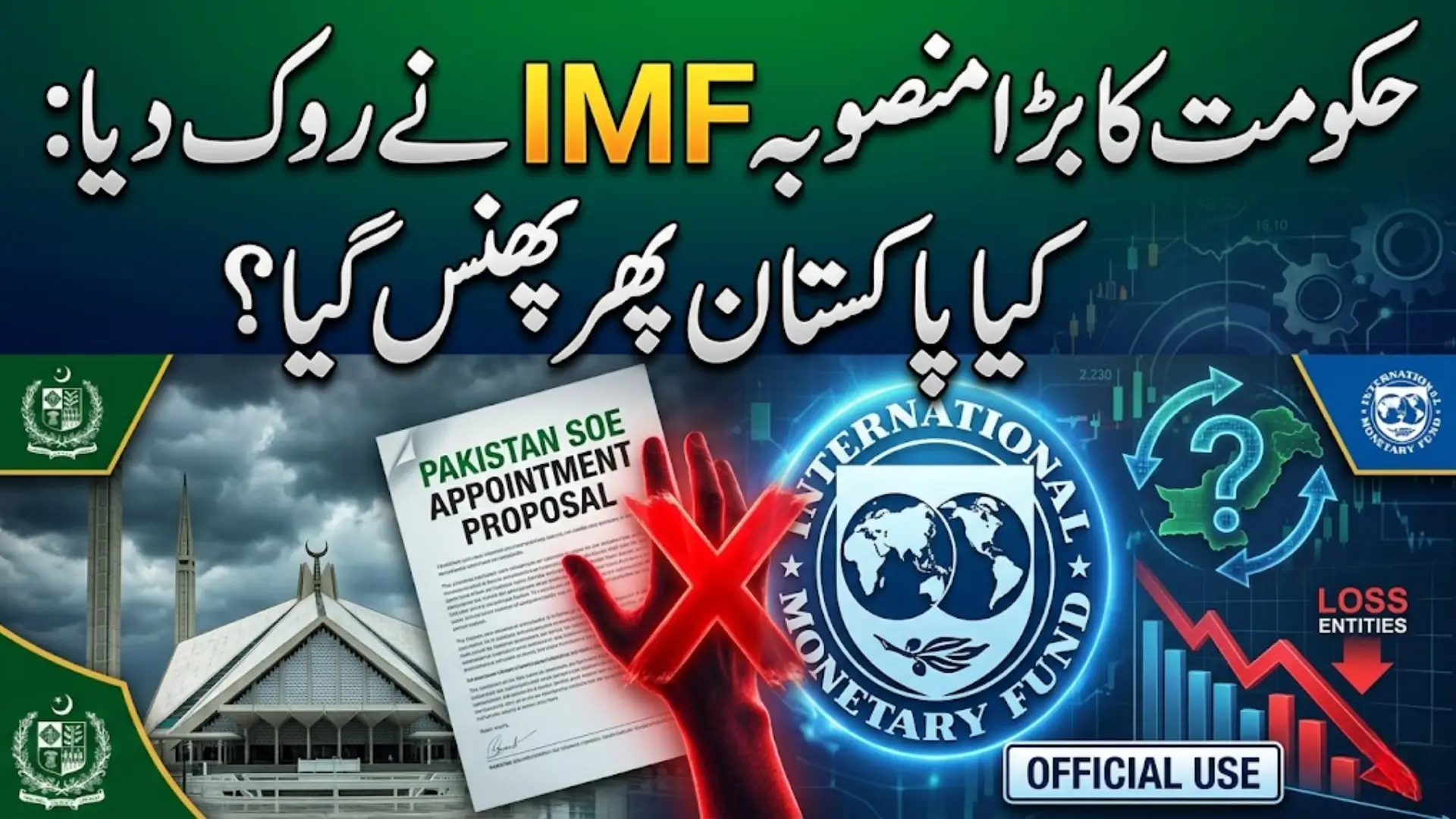
Pakistan’s strategic initiative to consolidate authority over State-Owned Enterprise (SOE) CEO appointments from autonomous boards to the federal government has met with rejection from the International Monetary Fund (IMF). This decision significantly impacts Pakistan’s ongoing efforts to streamline executive control over its substantial portfolio of loss-making public companies, particularly as negotiations for a critical $1 billion loan tranche under the Extended Fund Facility (EFF) continue. The IMF’s stance underscores a structural commitment to independent governance frameworks for national economic stability.
The Translation: Calibrating Governance Structures
The core of Pakistan’s proposal involved amending Section 18 of the State-Owned Enterprises Act. This legislative adjustment aimed to empower the executive branch with direct control over the appointment of SOE chief executive officers, thereby centralizing a function currently vested in company boards. Furthermore, a suggestion to appoint ex-officio board members from outside relevant ministries was also rejected. Consequently, these rejections reinforce the IMF’s baseline requirement for robust, board-driven corporate governance, asserting that such independence is foundational for fiscal discipline and operational efficiency within public sector entities.
Why the IMF Declined
Government officials articulated the necessity for these changes, citing instances where existing boards declined to endorse preferred nominees, creating operational bottlenecks. However, the IMF’s consistent position prioritizes a merit-based, transparent appointment process, insulated from political interference. This structural approach aims to mitigate risks associated with ad-hoc decision-making and ensure long-term accountability. In contrast, the Fund believes that direct governmental appointment powers could compromise the integrity and performance-based mandates of SOE leadership.

The Socio-Economic Impact: Precision in Public Service Delivery
This development directly influences the operational stability and service delivery for Pakistani citizens. Currently, a significant portion of SOEs, including Sui Southern Gas Company Limited and various power generation companies, face prolonged reliance on interim leadership and delays in permanent appointments. Such governance weaknesses weaken essential infrastructure, transport, and energy sectors. Ultimately, a lack of consistent, expert leadership translates into inefficiencies, unreliable services, and a higher fiscal burden on the populace, as evidenced by the Rs. 2.1 trillion in fiscal support directed to SOEs in FY2024-25.
Catalyst for Systemic Reform
The IMF’s mandate for amending laws governing at least 10 SOEs, with an extended deadline to August 2026, presents a critical opportunity. This systematic reform is designed to align SOE operations with best practices for accountability and performance. Moreover, ensuring competent, independent leadership is a direct pathway to improving service reliability for households and reducing the national debt through enhanced SOE profitability, thereby safeguarding public funds and fostering economic stability for all Pakistanis.
The “Forward Path”: A Stabilization Move for Governance
This development unequivocally represents a
Strategic Imperatives for Future Advancement
The finance ministry’s recent performance report highlighted substantial governance weaknesses, including boards lacking technical expertise and independence. Furthermore, the financial performance of SOEs has sharply deteriorated, with net losses escalating by approximately 300%. Consequently, the rejection emphasizes the imperative for Pakistan to: (1) Foster genuine board independence; (2) Implement transparent, performance-based appointment mechanisms; and (3) Systematically enhance technical expertise across SOE leadership. These steps are structural prerequisites for transforming SOEs into engines of national advancement rather than fiscal liabilities.