Calibrating AI for National Advancement: OpenAI’s Strategic Release
The strategic deployment of new AI models by OpenAI marks a significant advancement in digital accessibility for Pakistan’s burgeoning tech landscape. Specifically, the introduction of GPT-5.4 mini to free ChatGPT users represents a calibrated effort to democratize advanced artificial intelligence, fostering innovation across various sectors. Furthermore, alongside this, OpenAI has unveiled GPT-5.4 nano, a high-efficiency model designed exclusively for developers via its API, underscoring a dual strategy to enhance both broad user engagement and specialized AI application development.

The Translation: Empowering Every Pakistani Digital Citizen
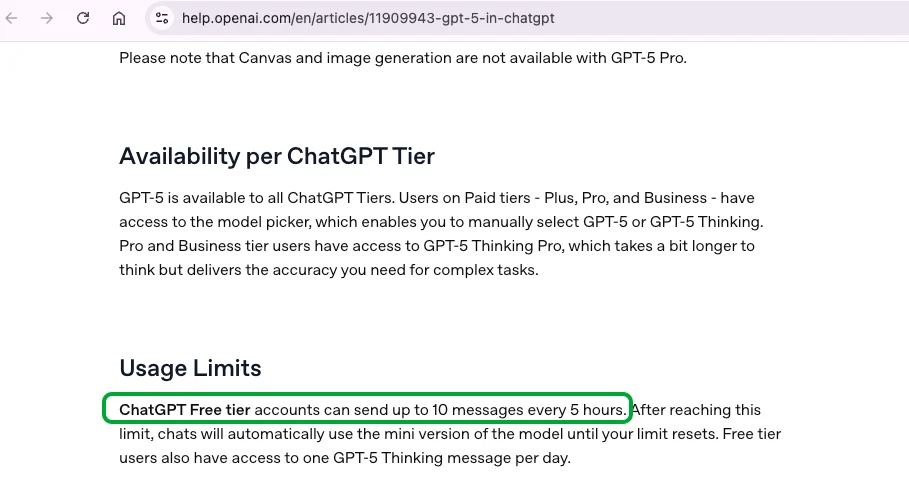
Previously, cutting-edge AI capabilities were often restricted to professional tiers. However, OpenAI has now made GPT-5.4 mini accessible to all free ChatGPT users and “Go” subscribers. This means selecting the “Thinking” option from the interface now grants access to a significantly upgraded AI. Consequently, paid users also benefit, as GPT-5.4 mini serves as a vital fallback when their primary GPT-5.4 usage limits are met. This structural change ensures broader, more consistent access to advanced AI.

A precision audit reveals GPT-5.4 mini delivers superior performance compared to its predecessor, GPT-5.0 mini. Key enhancements span crucial areas including reasoning, multimodal understanding, and the efficient utilization of external tools. This model exhibits an improved capacity to process diverse non-text inputs, such as images and audio, and demonstrates advanced proficiency in complex tasks like web searching. Moreover, the company confirms that GPT-5.4 mini operates at more than twice the speed, ensuring highly efficient processing for all users.

In contrast, GPT-5.4 nano is engineered for distinct enterprise applications. This model is not integrated within the ChatGPT interface; instead, it is exclusively available through OpenAI’s API, targeting developers who prioritize extreme speed and stringent cost efficiency. Ideal use cases include data classification and precise information extraction. Developers can strategically leverage larger models to assign tasks to AI agents powered by GPT-5.4 nano, with pricing beginning at a highly competitive $0.20 per million input tokens, optimizing large-scale operations.
Socio-Economic Impact: Fueling Innovation Across Pakistan
This expansion of AI accessibility fundamentally alters the daily operational baseline for Pakistani citizens, from students to seasoned professionals. For instance, university students now possess a more capable tool for complex research and problem-solving, enhancing academic output and critical thinking. Conversely, entrepreneurs can leverage advanced AI for market analysis or content generation without significant upfront investment. This democratized access reduces barriers to entry for digital literacy and innovation.

In rural Pakistan, where educational resources may be sparse, these upgraded AI capabilities could serve as a virtual mentor, providing accessible learning support. Furthermore, small businesses in urban centers gain a cost-effective assistant, improving efficiency in areas like customer service automation or data organization. The improved multimodal understanding ensures the AI can process diverse local inputs, bridging potential language or format gaps. Consequently, this initiative directly contributes to a more digitally empowered society, fostering skill development and economic participation.
The Forward Path: A Strategic Momentum Shift for Pakistan
This development undeniably represents a Momentum Shift for Pakistan’s digital future. OpenAI’s decision to provide GPT-5.4 mini to free ChatGPT users is not merely an update; it is a foundational enhancement of our national digital infrastructure. It lowers the entry barrier for millions, enabling wider experimentation and application of advanced AI technologies. This strategic maneuver accelerates our collective journey towards a knowledge-based economy, providing citizens with precision tools for unprecedented innovation and problem-solving. It’s a clear step towards building a more technologically resilient and adaptive society.