The evolution of digital rendering technologies is a critical parameter in advancing Pakistan’s burgeoning gaming and creative sectors. Recent industry previews of NVIDIA DLSS 5 have generated significant debate, highlighting a fundamental tension between advanced generative AI capabilities and artistic integrity within video games. This pivotal development prompts a comprehensive analysis of its implications for visual fidelity and the broader landscape of interactive digital content. Consequently, understanding the community’s response is essential for stakeholders in Pakistan’s rapidly expanding tech ecosystem.
Understanding the Core Discrepancy with NVIDIA DLSS 5
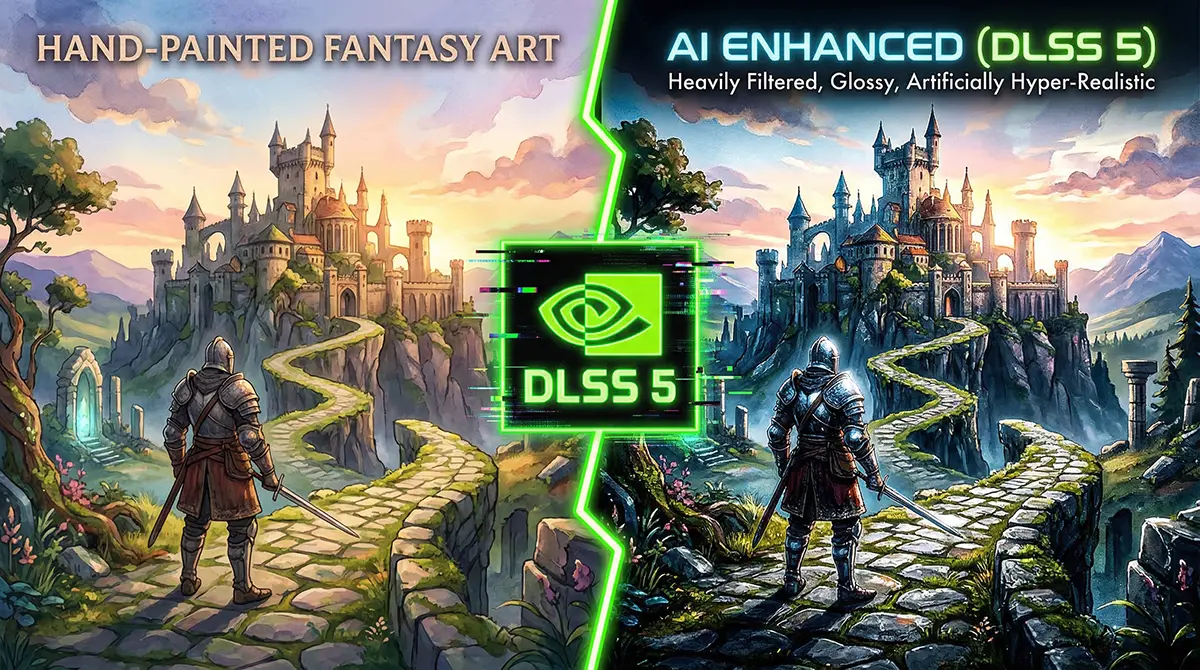
Nvidia’s imminent DLSS 5 technology, despite its advanced framework, has encountered substantial negative feedback from both the gaming community and industry professionals. Specifically, an Ars Technica report meticulously detailed the strong adverse reactions following initial previews. Developers and players largely perceive the technology as fundamentally altering the intended visual style of games. Characters, once processed by NVIDIA DLSS 5, exhibit unintended changes, diverging from their original artistic design.
For instance, critics observed that Grace Ashcroft from Resident Evil Requiem, when rendered with DLSS 5, appeared distinctively different, drawing comparisons to actress Amber Heard. This phenomenon underscores a core concern: the system’s propensity to introduce an “AI slop” or a uniform, overly processed aesthetic. Furthermore, observers noted reduced contrast and a generalized appearance, often equated to heavily filtered imagery, which can diminish the artistic direction meticulously crafted by game designers.
Expert Perspectives on AI’s Impact on Artistry
Industry leaders have voiced structural concerns regarding the technology’s influence. Game developer Mike Bithell explicitly stated that DLSS 5 seemingly eradicates intentional artistic design elements from games. Likewise, Jeff Talbot, a senior concept artist at Gunfire Games, highlighted that the results introduced superfluous detail while concurrently diminishing the unique character of visuals. This raises a pertinent question: What is the strategic value of sophisticated face capture technology if the subsequent AI processing fundamentally transforms character appearances?
New Blood Interactive CEO Dave Oshry also articulated criticism, expressing apprehension that future generations of players might normalize such significant visual alterations. Consequently, this collective expert consensus underscores a critical dilemma for the industry: balancing technological innovation with the preservation of creative vision.

The Translation: Deconstructing NVIDIA DLSS 5’s Technical Framework
At its core, NVIDIA DLSS 5 represents a significant architectural shift from its predecessors. Nvidia clarifies that this system leverages a game’s internal color and motion data to augment scenes, ensuring consistent lighting and material properties. This methodology enables the neural rendering model to intelligently interpret complex elements such as character models, hair textures, fabric dynamics, translucent skin, and environmental light conditions with calibrated precision.
Nvidia’s strategic intent behind this approach is to mitigate inherent limitations observed in existing generative video models, which often lack the necessary predictability and granular control required for high-fidelity interactive experiences. Since its 2018 debut with the RTX 2080, Deep Learning Super Sampling (DLSS) has been instrumental in performance enhancement through image upscaling and frame rate amplification. However, DLSS 5 introduces a paradigm where generative AI directly influences lighting and textures, rather than solely focusing on upscaling or frame generation.
Real-Time Neural Rendering: A New Frontier
Nvidia characterizes DLSS 5 as a real-time neural rendering model, integrating generative AI with established traditional rendering techniques. The company asserts that this hybrid method can deliver photorealistic visuals, potentially rivaling those found in professional film production, while meticulously preserving creative control for developers. The technology’s autumn release is anticipated, marking a new chapter in how AI interfaces with real-time graphical rendering.

The Socio-Economic Impact: Gaming Innovation and Pakistani Talent
The introduction of advanced technologies like NVIDIA DLSS 5 carries direct implications for the daily life of a Pakistani citizen, particularly within the burgeoning tech and creative sectors. For students and aspiring game developers in urban centers like Lahore and Karachi, this development represents a dual-edged sword. On one hand, it signifies access to cutting-edge tools that can elevate local game production to global standards, potentially fostering new economic opportunities and attracting foreign investment.
On the other hand, the controversy around “AI slop” necessitates that Pakistani developers cultivate a refined understanding of AI integration, prioritizing artistic intent over raw computational enhancement. This calibration is vital for professionals aiming to create culturally resonant and visually distinctive games. For households, the debate highlights the increasing sophistication of gaming, urging a balanced perspective on technology’s role in digital entertainment and its potential impact on visual media consumption.
Strategic Adaptation for Pakistan’s Digital Frontier
Rural Pakistan, while seemingly distant from high-end gaming debates, can also indirectly benefit. Enhanced graphical fidelity, even if debated, drives hardware innovation and accessibility, eventually making advanced gaming more feasible. Moreover, the discourse around AI in creative fields empowers Pakistani educational institutions to structure curricula that address both the technical prowess and ethical considerations of generative AI. This prepares a workforce that can critically engage with advanced digital tools, ensuring that Pakistan remains competitive in the global digital economy.

The Forward Path: Navigating Generative AI in Creative Industries
The critical reception of NVIDIA DLSS 5 positions this development as a **Stabilization Move** rather than an immediate Momentum Shift. While the underlying generative AI technology is undeniably revolutionary, its current iteration appears to disrupt established artistic baselines, prompting a necessary recalibration within the gaming industry. The observed visual discrepancies, where AI-driven enhancements inadvertently diminish character or artistic intent, indicate that the technology requires further refinement to achieve seamless integration.
Consequently, this period necessitates a strategic pause and iterative development. The industry must prioritize mechanisms that afford developers granular control over AI-generated visual modifications, ensuring that technological advancement serves, rather than supplants, creative vision. For Pakistan’s emerging tech landscape, this serves as a crucial learning curve: embracing innovation must always be coupled with a disciplined assessment of its qualitative impact on user experience and artistic output. The objective is not merely speed or photorealism, but precision in enhancing the player’s intended experience.