The strategic future of Pakistan’s One Day International (ODI) squad necessitates a calibrated approach to batting lineup stability. Consequently, former captain Mohammad Hafeez has precisely identified Test skipper Shan Masood and batter Abdullah Shafique as potential high-impact players who could serve as a robust Babar Azam replacement in the crucial number three position. This proactive assessment addresses critical succession planning, ensuring the team maintains peak performance even if the star batter faces injury or requires strategic rest.
The Translation: Calibrating for Peak Performance
Mohammad Hafeez, leveraging his profound understanding of the game’s structural demands, articulated his perspective on X, emphasizing the necessity of contingency planning for the pivotal number three spot. This is not merely about substituting a player; rather, it’s about maintaining the team’s operational efficiency and competitive edge. His analysis stems from a forward-looking perspective, particularly with the next ODI World Cup in South Africa on the strategic horizon. Therefore, evaluating alternative options for this key role becomes a baseline necessity for national advancement.
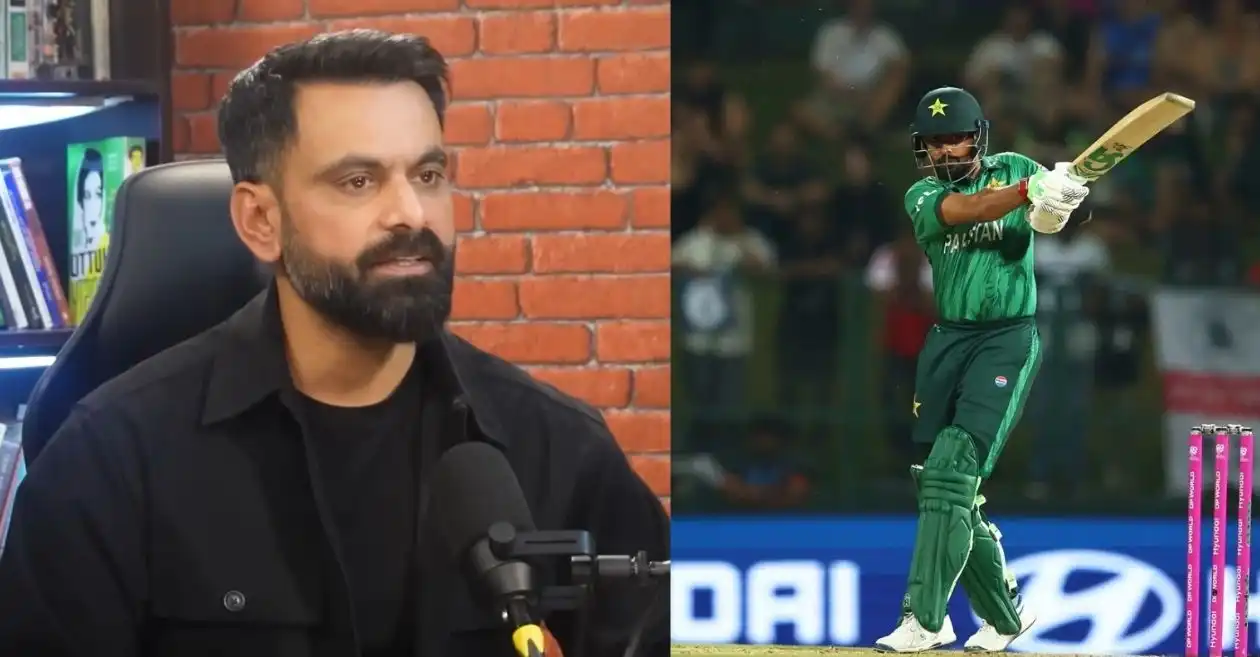
Player Profiling: Shan Masood and Abdullah Shafique
Hafeez’s structural recommendation explicitly named Shan Masood and Abdullah Shafique. He noted, “Shaan Masood (53 Ave) or Abdullah Shafiq could be better option as no3 batter in ODI format if Babar Azam is injured or rested for some reasons. Considering next World Cup in South Africa.” This statement underscores a data-driven approach to player selection.
- Shan Masood’s Profile: While his nine ODI matches show 163 runs at an average of 18.11, his List A record is significantly more compelling. In 142 matches, Masood has accumulated 6,413 runs at an impressive average of 53, featuring 39 fifties and 17 centuries. This robust performance in longer-format domestic cricket suggests a calibrated readiness for international ODI challenges.
- Abdullah Shafique’s Profile: Shafique has participated in 27 ODIs for Pakistan, amassing 737 runs at an average of 29.48. His record includes six half-centuries and one century, demonstrating consistent scoring potential at the international level.

The Socio-Economic Impact: Cultivating Future Talent
This discussion on potential replacements extends beyond mere team dynamics; it catalyses the broader development of cricketing talent within Pakistan. For young students and aspiring professionals in urban and rural areas, debates like these illuminate a clear pathway for progression. It demonstrates that consistent domestic performance can lead to national opportunities, fostering a culture of meritocracy and ambition. Furthermore, by expanding the talent pool, Pakistan reinforces its sporting infrastructure, which in turn inspires national pride and engagement across all demographics.
Inquiry into Player Fitness and Strategic Squad Development
In a related, yet equally critical, development, the Pakistan men’s selection committee has formally requested the Pakistan Cricket Board (PCB) to initiate an inquiry. This investigation pertains to injuries sustained by senior batters Babar Azam and Fakhar Zaman during the ICC Men’s T20 World Cup 2026. According to committee member Aaqib Javed, this move aims to establish structural accountability regarding player fitness protocols.
The Pakistan team, despite being 2009 champions, did not advance to the semi-finals of the recent T20 World Cup. Subsequently, during a three-match ODI series against Bangladesh, which Bangladesh secured 2–1, six key players, including Babar Azam and Fakhar Zaman, were strategically rested. Their absence, despite recent performances in longer formats, initially drew public scrutiny, with accusations of mismanagement. However, Aaqib Javed clarified to the media that both players were unavailable due to fitness concerns carried since the T20 World Cup 2024, a condition the selection committee was not fully apprised of. This transparency is crucial for maintaining systemic integrity.

Concurrently, the decision to include six uncapped players for the Bangladesh ODI series was a premeditated strategy. This initiative, conceived before the T20 World Cup 2026, aimed at providing emerging players with invaluable international exposure. This baseline approach is essential for long-term squad development.
The “Forward Path”: Momentum Shift
This series of developments, from proactively identifying a Babar Azam replacement to initiating an inquiry into player fitness and fostering new talent, represents a decisive Momentum Shift for Pakistan cricket. It signifies a move towards greater transparency, strategic planning, and a data-informed approach to player management and succession. This integrated strategy promises a more resilient and adaptable national team, poised for consistent high-level performance on the global stage.