Google Adjusts Risky AI Medical Advice After Critical Inaccuracy Investigation
Google has recently removed its AI Overviews from many health-related search results. This decision follows a major investigation. It revealed that the search engine’s Google AI Medical Advice feature provided potentially dangerous and misleading medical information to users. Consequently, this incident has reignited the debate surrounding the reliability of AI-generated summaries. This is especially true when they involve critical health data. Effectively, the core of the issue lies in how Google’s AI simplifies complex medical information into quick, “at-a-glance” answers. While the company aimed to streamline the search experience, critics argue that healthcare nuances often get lost, leading to concerning results for patients. Such outcomes could cause unnecessary alarm or offer false reassurance.

The Guardian’s Findings: Flawed Liver Test Information
The Guardian conducted a thorough investigation, which acted as the main catalyst for Google’s recent removals. Specifically, the report highlighted issues with medical queries, such as “what is the normal range for liver blood tests.” The AI Overview, unfortunately, presented static numerical ranges. However, these ranges were fundamentally flawed. They failed to consider crucial biological factors. These factors include age, sex, ethnicity, and nationality. Therefore, medical professionals quickly noted that “normal” is a relative term in clinical diagnostics. A liver function result considered healthy for one demographic might indicate a serious pathology in another. Ultimately, by offering a single, unified range, the AI provided medical advice without necessary clinical context. This could potentially lead users to misinterpret their own laboratory results. Experts define this lack of nuance as a “high-risk hallucination.” In these cases, the AI presents confident but incomplete or incorrect information.
Google’s Prompt Response and Tactical Removals
Following the report’s publication, the specific queries identified by The Guardian no longer triggered AI Overview panels. Initially, some variations, like “lft reference range,” still produced AI summaries. Yet, these were also phased out within hours as the story went viral. This reactive approach suggests that Google is either manually or algorithmically “blacklisting” certain high-stakes health topics from its AI generation engine. Furthermore, a Google spokesperson stated that the company typically avoids commenting on individual Search changes. Nevertheless, they emphasized their constant work on broad system improvements. Interestingly, Google’s internal team of clinicians reportedly reviewed the examples. They claimed the information was “not inaccurate” generally and came from high-quality websites. Despite this defense, the feature’s removal clearly indicates a cautious retreat from offering direct medical interpretations.

Concerns from Health Advocacy Groups About AI Medical Advice
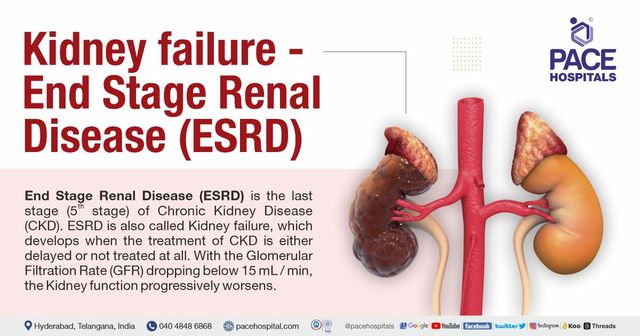
Many in the healthcare community welcomed the removal of these AI panels. However, this relief is tempered with significant long-term concern. Vanessa Hebditch, Director of Communications and Policy at the British Liver Trust, called the removal “excellent news.” She stressed, however, that the problem extends beyond a few specific search queries. The risk remains that Google AI medical advice could still generate summaries for other equally sensitive conditions. These include kidney function or chronic disease management. Consequently, advocacy groups argue that health information demands empathy and professional oversight. AI currently cannot provide this. For example, explaining symptoms and causes of kidney failure involves complex risk factors. A search summary might oversimplify these. The primary worry is that users might skip a doctor’s visit if AI labels their symptoms as “normal” based on a generic summary.
The Future of Google AI Medical Advice in Healthcare Search
Google has invested heavily in health-focused AI models, aiming to become a key resource for medical information. Last year, for instance, the tech giant announced several features. These were designed to improve healthcare queries, including more sophisticated overviews and partnerships with medical institutions. Nevertheless, this recent setback highlights a significant gap. This gap exists between generative technology and clinical accuracy. For conditions such as fibroadenomas or other lumps, diagnosis requires a physical examination and specialized imaging. It is not simply a list of symptoms found online. As Google continues to refine its algorithms, the medical community strongly urges a “safety-first” approach. For now, the key takeaway for users is clear. While AI can serve as a valuable tool for general research, it cannot replace the specialized knowledge of a healthcare professional. The removal of these AI Overviews offers a stark reminder: in medicine, context is as vital as the data itself.