

The United States has structurally announced the permanent closure of its US Consulate Peshawar, a strategic diplomatic mission near the Afghan border. This calibrated decision, confirmed by the US State Department to Congress, is projected to yield approximately $7.5 million in annual savings. Furthermore, this move is framed as an optimization of operational efficiency, not a diminution of US national interests within Pakistan. This long-considered shift began during the Trump administration’s drive for federal agency reduction, predating current regional conflicts.
Architecting Diplomatic Efficiency: The US Consulate Peshawar Transition
The Translation (Clear Context): This significant diplomatic recalibration involves winding down operations at the Peshawar mission, a facility that served as a critical operational and logistical hub during the 2001 US invasion of Afghanistan. The State Department’s notification to Congress explicitly states the closure will save approximately $7.5 million per year. Consequently, this strategic divestment seeks to enhance overall resource allocation without compromising the advancement of core US interests in Pakistan. This decision has been under consideration for over a year, initially emerging from the Trump administration’s broader mandate to streamline federal agencies. Importantly, this structural change is distinct from any current regional geopolitical tensions involving Iran.

Operational Transition and Asset Reallocation
The shutdown of the Peshawar consulate is projected to cost $3 million. Over half of this budget is specifically allocated for the relocation of armored trailers previously utilized as temporary office spaces. The remaining capital will strategically cover the transfer of essential equipment, furniture, and the consulate’s motor pool fleet. These vital assets will be systematically integrated into the existing infrastructure of the US Embassy in Islamabad and the consulates in Karachi and Lahore.

The Socio-Economic Impact: Navigating the US Consulate Peshawar Closure
For the Pakistani populace, particularly residents of Khyber Pakhtunkhwa, the closure of this diplomatic facility represents a tangible shift in accessibility. Citizens previously relying on the Peshawar mission for visa applications, consular services, or educational exchange programs may now face increased travel and logistical considerations. This necessitates a calibrated adaptation for students, professionals, and families who must now route their engagements through Islamabad, Karachi, or Lahore. Ultimately, this structural change underscores the need for proactive awareness regarding revised service protocols and geographic centers for diplomatic interaction.

Security Posture and Regional Dynamics
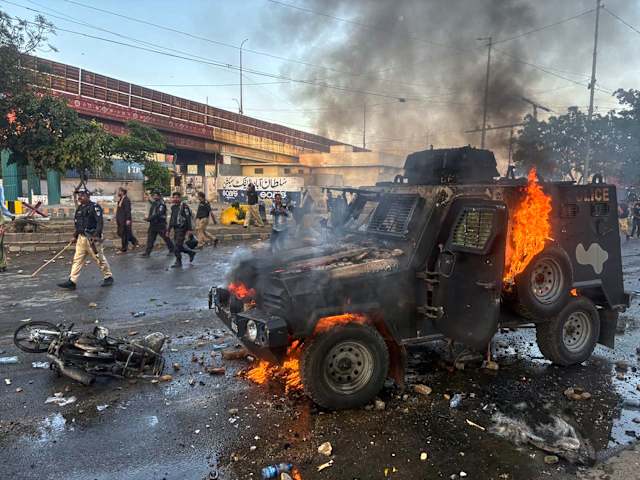
Earlier advisories from the State Department ordered non-emergency personnel and their families to evacuate US consulates in Karachi and Lahore due to security concerns. Subsequently, the US mission noted a temporary suspension of operations at the Peshawar consulate. While these security measures underscore a dynamic regional environment, the permanent closure is explicitly stated as a long-term fiscal and strategic decision, separate from these immediate security assessments.
The “Forward Path”: A Strategic Outlook Post-Peshawar Closure
From a national advancement perspective, the permanent closure of the Peshawar consulate appears to be a “Stabilization Move.” It reflects a strategic consolidation of diplomatic resources, streamlining operations to achieve fiscal efficiency rather than signaling a direct expansion or contraction of engagement. Pakistan must adapt its logistical frameworks to this recalibrated US diplomatic footprint, ensuring citizens retain efficient access to essential services. This move serves as a baseline for future bilateral engagements, emphasizing a lean yet robust diplomatic presence.









