

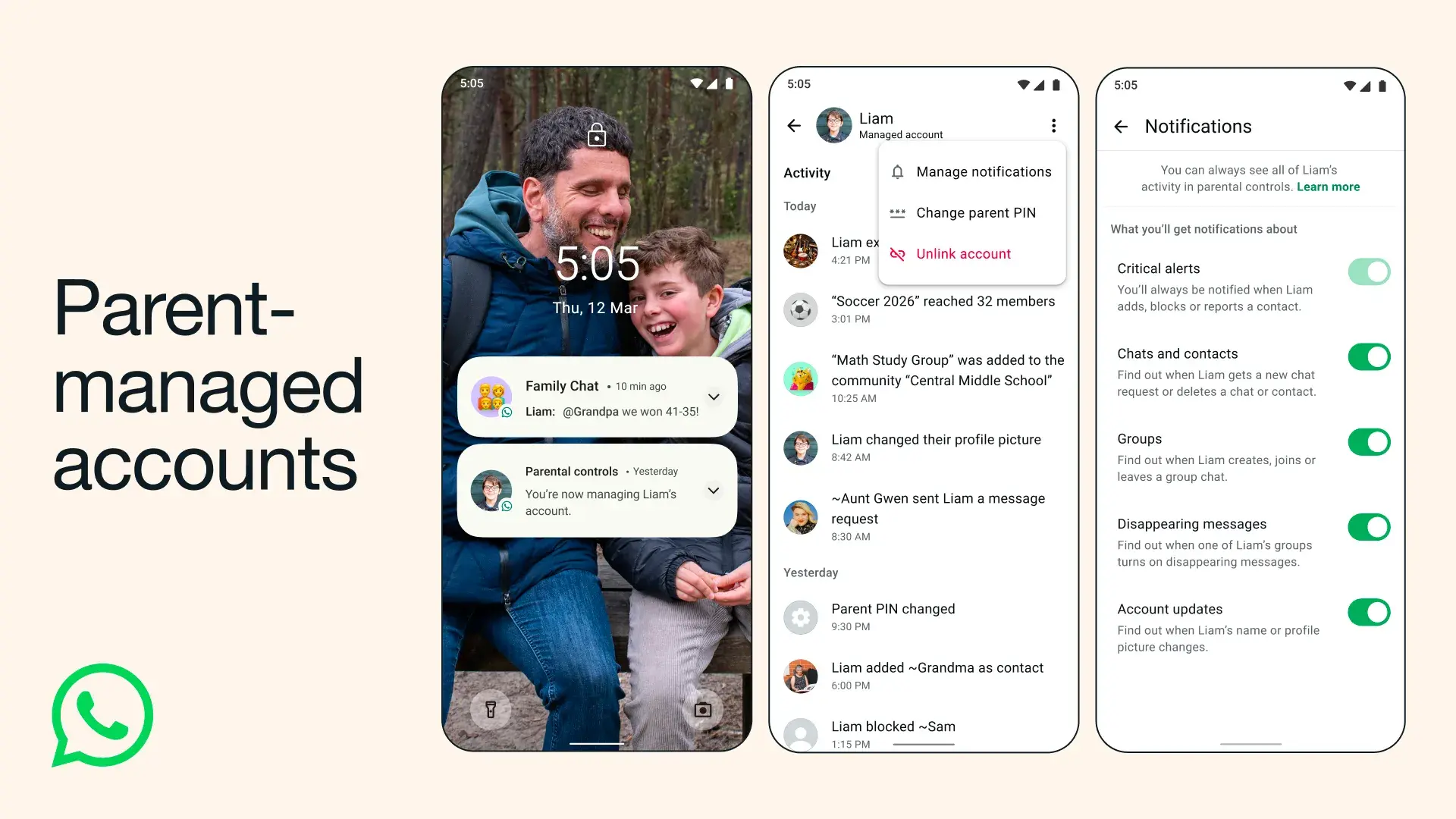
In a strategic move to fortify digital environments, WhatsApp has introduced parent-managed accounts specifically designed for pre-teen users. This global rollout calibrates robust new WhatsApp parental controls, systematically limiting younger individuals to core messaging and calling functionalities. Consequently, parents gain granular control over their children’s digital interactions, establishing a more secure baseline for online engagement and significantly enhancing child online safety.
The Translation: Deconstructing Parental Control Mechanisms
This initiative structurally empowers parents to orchestrate their child’s digital presence on WhatsApp. Fundamentally, parents are tasked with account creation and ongoing management. They can precisely define contact parameters, determining who is authorized to communicate with the child’s account. Furthermore, parents retain the authority to approve or deny group invitations, ensuring controlled social integration within the platform. Explicitly, this system permits parents to review all incoming message requests from unknown contacts, thereby preemptively mitigating potential risks. They also possess the capacity to fine-tune privacy settings, aligning them with family-specific guidelines. Each of these critical WhatsApp parental controls is systematically protected by a unique parent PIN, which is mandatory for any administrative adjustments to the supervised account.

Architecting Account Setup: A Step-by-Step Protocol
The implementation protocol for a parent-managed account is designed for structured efficiency. Initially, WhatsApp must be installed on the child’s designated device. During the account registration phase, parents access the “More options” menu to select the dedicated feature for creating a parent-managed account. Subsequently, the parent proceeds to register and verify the child’s phone number, accurately inputting the child’s birthdate to confirm age eligibility. The pivotal concluding step involves scanning a unique QR code displayed on the child’s device, establishing a secure link between the child’s account and the parent’s primary WhatsApp account. Ultimately, parents configure a six-digit PIN, securing the entire framework of parental oversight and operational controls.
The Socio-Economic Impact: Fortifying Pakistan’s Digital Youth
This advancement directly impacts the daily digital life of Pakistani citizens, particularly students and young professionals navigating online spaces. For urban households, these WhatsApp parental controls offer a critical layer of security, allowing parents to confidently introduce their pre-teens to digital communication without exposure to unsolicited content or contacts. In rural Pakistan, where digital literacy might vary, this feature simplifies secure online integration, fostering safer digital identities from a foundational stage. It mitigates risks associated with unrestricted access, ensuring that children can leverage communication tools for educational and social development within a curated, protected environment. Consequently, this promotes responsible digital citizenship and parental engagement across all demographics.
The Forward Path: A Strategic Momentum Shift
This development undeniably represents a Momentum Shift for digital safeguarding. It moves beyond reactive measures, establishing a proactive, structural framework for protecting younger users within a ubiquitous communication platform. By empowering parents with precise tools, WhatsApp is contributing to a more mature and secure digital ecosystem. This move is a catalyst for promoting safer digital interactions and fostering greater trust in online platforms, aligning perfectly with the national objective of responsible technological integration and digital parenting tools for Pakistan’s youth. The calibrated implementation underscores a commitment to evolving digital safety standards.
-images-2.jpeg)








