
The strategic advancement of Pakistan’s economic stability requires precise fiscal management, yet a definitive Pakistan IMF Agreement on the latest bailout review remains pending. Officials confirm that discussions are set to continue, underscoring the complexity of current global economic dynamics. This ongoing dialogue between Pakistan and the International Monetary Fund is critical for solidifying the nation’s financial framework amidst evolving geopolitical landscapes and their profound implications for future economic projections.
Structural Analysis: The Ongoing Pakistan IMF Agreement Dialogue
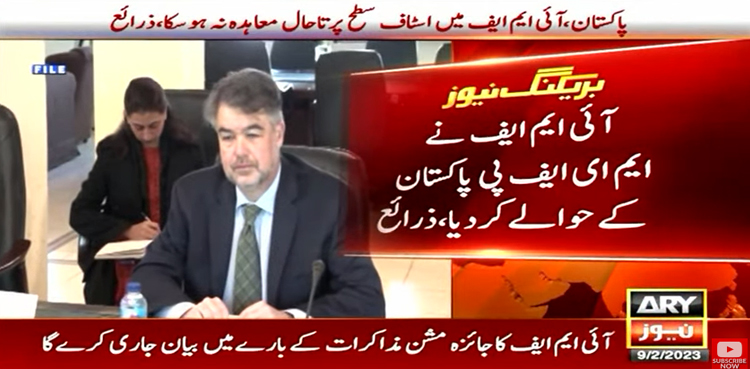
An IMF mission, led by Iva Petrova, engaged with Pakistani authorities to calibrate the nation’s financial path. These discussions specifically covered the third review of the 37-month Extended Fund Facility (EFF) and the second review of the Resilience and Sustainability Facility (RSF). The talks, conducted both virtually and in person across Karachi and Islamabad from February 25 to March 11, 2026, aimed to establish a robust framework for sustained economic progress.

The Translation: Decoding Economic Imperatives
The IMF has formally acknowledged substantial progress within these discussions, affirming Pakistan’s adherence to program commitments through February 2026. Fundamentally, these talks prioritize maintaining fiscal consolidation to strengthen public finances. Concurrently, a strict monetary policy is essential to stabilize inflation within the State Bank of Pakistan’s target range, ensuring price stability for citizens. Furthermore, advancing reforms in the energy sector is crucial for improving its long-term viability and operational efficiency.
Moreover, the dialogue critically emphasized structural reforms designed to accelerate national economic growth. These reforms are meticulously planned to simultaneously bolster social protection initiatives and strategically increase spending on vital sectors like health and education. The continuous nature of these discussions reflects a shared commitment to a comprehensive economic transformation.
Geopolitical Volatility and Economic Projections
The global economic landscape presents considerable challenges, particularly due to the evolving geopolitical situation. Consequently, precise forecasting for Pakistan’s economic outlook has become increasingly complex. The ongoing conflict in the Middle East introduces significant uncertainty, especially concerning fiscal and monetary projections for the remainder of the current financial year and their implications for the next cycle. This external volatility directly impacts Pakistan’s financial planning.
Specifically, the nation’s oil import bill faces extreme unpredictability. Rapidly shifting global energy prices, coupled with inherent supply risks, preclude precise estimations. Similarly, the potential impact on export orders remains ambiguous. A prolonged Middle East crisis, or sustained disruptions to shipping via the Strait of Hormuz—a globally critical oil transit route—could severely affect Pakistan’s trade dynamics. Therefore, current account, trade balance, and fiscal position projections remain exceptionally fluid despite advanced forecasting models.
The Socio-Economic Impact: Daily Life Repercussions
For the average Pakistani citizen, the ongoing negotiations and global uncertainties translate directly into palpable economic pressures. Firstly, sustained inflation targets, driven by tight monetary policy, aim to preserve purchasing power, benefiting households by stabilizing consumer prices. Secondly, energy sector reforms, while potentially leading to initial adjustments, promise more reliable and affordable power over the long term, directly impacting both urban and rural households and industries. Furthermore, increased allocations for health and education are calibrated to enhance public services, fostering a more skilled workforce and healthier populace.
Conversely, the fluidity in economic projections due to geopolitical factors introduces a measure of systemic risk. Businesses face heightened uncertainty regarding trade and supply chains, potentially affecting employment and investment. Students and professionals observe an economic environment where long-term planning demands increased adaptability. Ultimately, the successful culmination of these crucial economic dialogues is a structural prerequisite for predictable national growth, directly influencing daily economic stability across all demographics.
The “Forward Path”: Momentum Shift or Stabilization Move?
This phase of discussions represents a crucial *Stabilization Move*. While significant progress has been achieved in aligning with program commitments, the inability to finalize a staff-level agreement immediately underscores external vulnerabilities. The geopolitical landscape necessitates a calibrated approach rather than an immediate acceleration. This strategic pause allows for a more precise assessment of global impacts, ensuring that any forthcoming agreement is structurally sound and resilient to unforeseen shocks. Therefore, it is a period of meticulous recalibration, aimed at solidifying existing gains and preparing for sustainable future growth under challenging international conditions.








