

Pakistan calibrates its national strategy for energy conservation. Prime Minister Muhammad Shehbaz Sharif has strategically implemented an additional Pakistan weekly holiday on Friday, a decisive measure to enhance energy conservation and fortify economic stability. This directive emerged from a high-level review meeting focused on optimizing government austerity measures amidst dynamic regional challenges. The structural adjustment aims to embed fiscal prudence across federal operations and drive a more efficient national resource allocation.
The New Pakistan Weekly Holiday: A Strategic Shift for Efficiency
The Prime Minister, in a recent session, mandated an additional weekly holiday to bolster energy-saving efforts. Furthermore, a specialized committee, under the calibrated leadership of Ishaq Dar, has been established. This committee’s core mandate involves daily progress reviews and regular reporting on austerity and energy conservation measures. Consequently, this precise oversight mechanism ensures accountability and agile adaptation. The government is making every effort to maintain economic stability despite global challenges, employing robust frameworks.

The Translation: Calibrating National Operations
This directive translates into a structural re-engineering of the federal work week. The additional Pakistan weekly holiday on Friday signifies a proactive step to reduce energy consumption across government offices and associated infrastructure. Furthermore, the establishment of a high-level committee and the mandate for a third-party audit underscore a commitment to transparent and data-driven policy implementation. This move is not merely a holiday; it represents a systemic recalibration of operational efficiency, aiming for tangible energy savings and expenditure reduction.
Socio-Economic Impact: Daily Life and Future Trajectories
How does this change the daily life of a Pakistani citizen? For urban professionals, particularly those in federal government roles, this initiative offers an extended weekend, potentially reducing daily commute costs and energy consumption at home. Moreover, the emphasis on work-from-home policies, evidenced by directives for ministries to report on their implementation, could foster greater flexibility. Rural households might indirectly benefit from the broader national energy savings, potentially contributing to more stable energy supply. Conversely, businesses reliant on continuous government operations might need to adjust their engagement schedules. Overall, this policy introduces a new baseline for work-life integration and resource management across various sectors.
The “Forward Path”: Stabilization Move with Momentum Potential
This development fundamentally represents a Stabilization Move. It is a precise, immediate response to economic and energy imperatives, rather than a radical reorientation of policy. However, its structural nature, coupled with stringent oversight and third-party auditing, imbues it with the potential for a long-term momentum shift. By instilling a disciplined approach to resource management and fostering a national dialogue on efficiency, this initiative could serve as a catalyst for more sustainable practices. The data-driven review process will be critical in evaluating its efficacy and informing future policy iterations for national advancement.
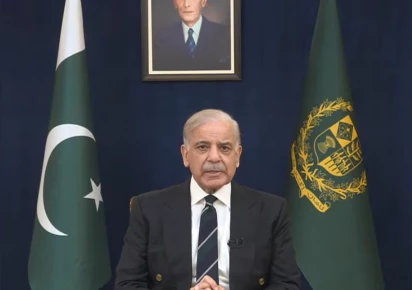
Operational Mandates for Federal Entities
Prime Minister Sharif issued explicit instructions for all federal ministries and divisions to strictly implement austerity policies. This includes specific measures targeting energy conservation. Ministries have received directives to submit photographs of vehicles parked under austerity measures to the Cabinet Division. Additionally, they must provide comprehensive reports on the implementation of work-from-home policies. This rigorous reporting structure ensures accountability and provides a clear baseline for performance assessment. Daily and weekly reports on austerity, energy conservation, and workforce management will be submitted to the special committee for continuous monitoring and strategic adjustments.
- Vehicle Austerity: Ministries must document adherence via photographic evidence.
- Work-from-Home Implementation: Comprehensive reports are mandatory.
- Continuous Monitoring: Daily and weekly updates to the special committee.








