The ICC meeting postponement of its critical board sessions in Doha, originally scheduled for March 25-27, underscores the significant impact of evolving Middle East geopolitical dynamics on global sports administration. This structural adjustment, officially communicated to member nations, highlights the International Cricket Council’s calibrated response to regional tensions. Consequently, the organization is now strategically searching for an alternative Asian venue by April, ensuring the continuity of vital governance discussions.
Strategic Adjustments in Global Cricket Governance
The International Cricket Council (ICC) strategically deferred its board meetings, initially slated for Qatar’s capital. This decision, conveyed to all member nations, was a direct consequence of escalating regional instability. Furthermore, these gatherings are crucial for ICC Board Directors, Chief Executives, and Committee Members to establish baselines for the sport’s future trajectory. The ICC is actively seeking an alternative Asian location, demonstrating a flexible operational model for global cricket governance.
The Translation: Logistical Implications of ICC Meeting Postponement
The deferral reflects a measured organizational response to external security parameters. Technical jargon often obscures the practical challenges; in essence, the ICC prioritized the safety and operational efficiency of its leadership. This involved assessing travel advisories and regional stability, leading to a proactive rather than reactive decision. Therefore, the deferral ensures that critical discussions on global cricket development can occur without unnecessary logistical overheads or security concerns.
The Socio-Economic Impact: Ripple Effects on Pakistani Cricket
For Pakistani cricket enthusiasts and professionals, such postponements introduce a degree of systemic uncertainty. Decisions made in these high-level meetings frequently calibrate international fixture lists, funding allocations, and developmental programs that directly affect local cricket boards, including the Pakistan Cricket Board (PCB). Delays could potentially slow the strategic implementation of grassroots initiatives or professional league enhancements. Consequently, this impacts the livelihoods and opportunities of urban and rural Pakistani cricket stakeholders, from aspiring athletes to sports administrators.
The Forward Path: A Stabilization Move for Prudent Governance
This development fundamentally represents a Stabilization Move. The ICC’s priority is undeniably the safety and logistical feasibility of its governance processes. While a deferral might appear to slow operational momentum, it is a pragmatic decision to ensure future discussions occur under optimal, secure conditions. This precision in prioritizing operational stability over adherence to a fixed schedule, exemplified by this ICC meeting postponement, safeguards the long-term structural integrity of the sport.

Concurrent Operations: T20 World Cup Final in Ahmedabad
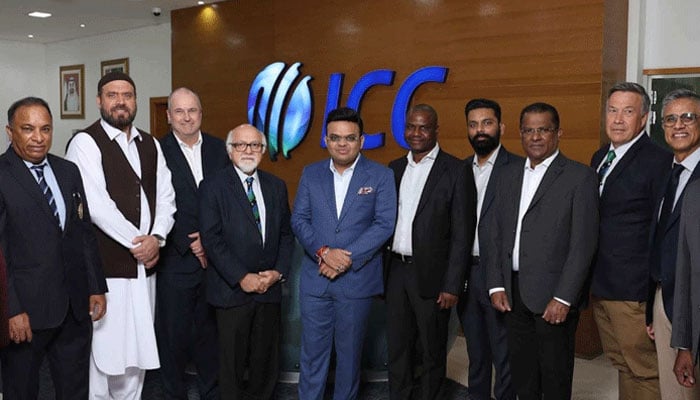
Notably, key ICC officials gathered in Ahmedabad for the T20 World Cup final. This concurrent activity highlights the dual operational tracks within the ICC: immediate event management and long-term strategic planning. Prominent figures, including New Zealand Cricket (NZC) chairman Roger Twose, Zimbabwe Cricket (ZC) chairman Tavengwa Mukuhlani, and Cricket South Africa (CSA) chairman Dr. Mohammed Moosajee, attended this significant event.
However, the absence of Pakistan Cricket Board (PCB) chairman Mohsin Naqvi and Bangladesh Cricket Board (BCB) president Aminul Islam from the final underscored varying logistical priorities among member nations during this period of adjustment.