
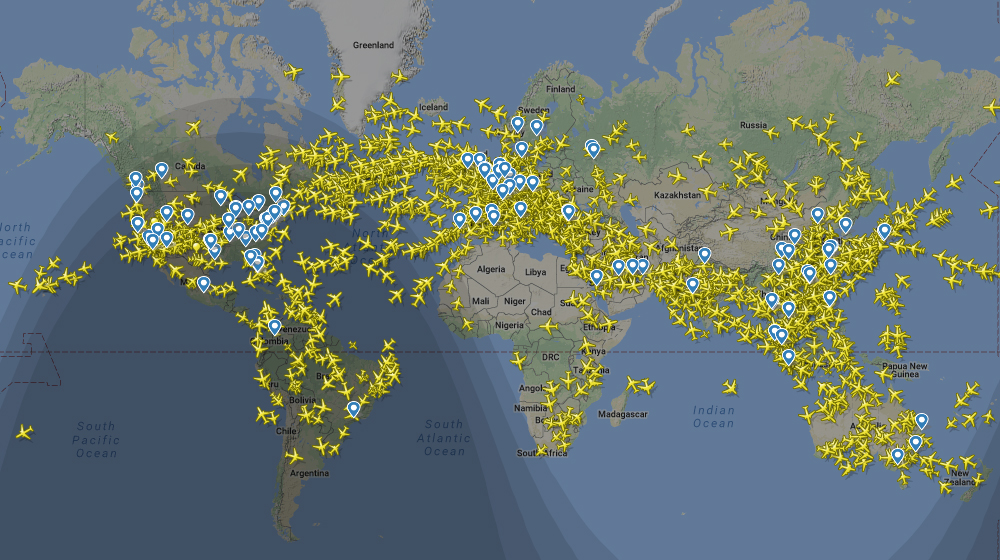
The Pakistan Airports Authority (PAA) has precisely rejected media claims alleging a substantial surge in Pakistan airspace traffic and a daily earning of approximately $800,000. These reports, frequently linking the increase to Middle East tensions, are deemed inaccurate. The PAA clarifies that while a temporary rise in air traffic occurred, it was efficiently managed and aligns with normal operational fluctuations, maintaining the strategic integrity of Pakistan’s airspace.
The Translation: Calibrating Overflight Data for Clarity
Erroneous media reports suggested regional security dynamics compelled international airlines to reroute flights through Pakistan, indicating a 15% increase in Pakistan airspace traffic and over 700 daily flights. This narrative painted a picture of significantly boosted PAA revenues. Consequently, the PAA’s official statement provides a crucial recalibration. Before recent escalations, Pakistan’s airspace managed around 650 overflights per day. Fluctuations of this nature are considered a standard operational aspect rather than an anomalous surge. Furthermore, overflight revenue generation is a complex model, dependent on variables such as flight volume, distance covered, and established navigation charges, rather than a flat per-flight fee.

Socio-Economic Impact: Stabilizing Pakistan Airspace Traffic and Aviation Sector
How does this directly affect the daily life of a Pakistani citizen? The accurate reporting of Pakistan airspace traffic ensures economic stability and confidence in our aviation sector. Misinformation regarding sudden revenue surges can lead to unrealistic expectations or, conversely, erode public trust. For professionals working within aviation or related industries, accurate data underscores a predictable operational environment. For Pakistani households, a well-managed and transparent national airspace signifies sustained connectivity and secure travel options, particularly as international carriers like Etihad Airways resume operations. This structural clarity supports predictable pricing and service reliability, benefiting travelers and logistics networks across urban and rural Pakistan.
The Forward Path: A Stabilization Move for Airspace Integrity
This development fundamentally represents a “Stabilization Move.” The PAA’s proactive rejection of unverified claims reinforces the baseline operational parameters of Pakistan’s aviation infrastructure. It is not a momentum shift driven by external crises but rather a strategic maintenance of data integrity and operational transparency. The resumption of flights by major carriers like Etihad Airways, coupled with the PAA’s assurance of safety and full operational capacity, demonstrates a calibrated response to regional fluidity. This strengthens Pakistan’s position as a reliable and secure transit corridor, ensuring sustained functionality rather than reactive adjustments.
Etihad Airways confirmed it will restore operations at Jinnah International Airport in Karachi, Allama Iqbal International Airport in Lahore, and Islamabad International Airport. In addition, Etihad is resuming flights to over 50 destinations globally, including key cities in Europe, the United Kingdom, and Central Asia. The airline finalized its flight schedule from March 6 to March 19, ensuring passengers can travel safely despite ongoing regional tensions.








