Calibrating Pakistan’s AI Future: The Strategic Imperative of Data Governance
Pakistan’s recent Indus AI Week marked a significant pivot, recognizing artificial intelligence (AI) as a strategic tool for national advancement. This pivotal moment underscores a critical structural requirement: robust Pakistan AI governance. To construct effective, trusted, and sustainable AI systems, establishing a foundational framework for data governance is paramount. Without this calibrated approach, the nation’s ambitious AI agenda risks instability, undermining the very progress it seeks to achieve.

The Translation: Decoding AI’s Data-Centric Architecture
AI is frequently characterized as an algorithmic breakthrough. However, its practical manifestation is fundamentally a data breakthrough. Algorithms do not independently generate intelligence; instead, they learn intricate patterns from meticulously prepared data. Consequently, their accuracy and utility are directly proportional to the reliability, representativeness, security, and lawful acquisition of the underlying data. Should the data prove flawed, biased, incomplete, or inadequately protected, any AI system built upon it will be unreliable at best, and potentially harmful at worst. Therefore, data governance transcends being a mere technical consideration; it forms the bedrock for trustworthy and responsible AI.
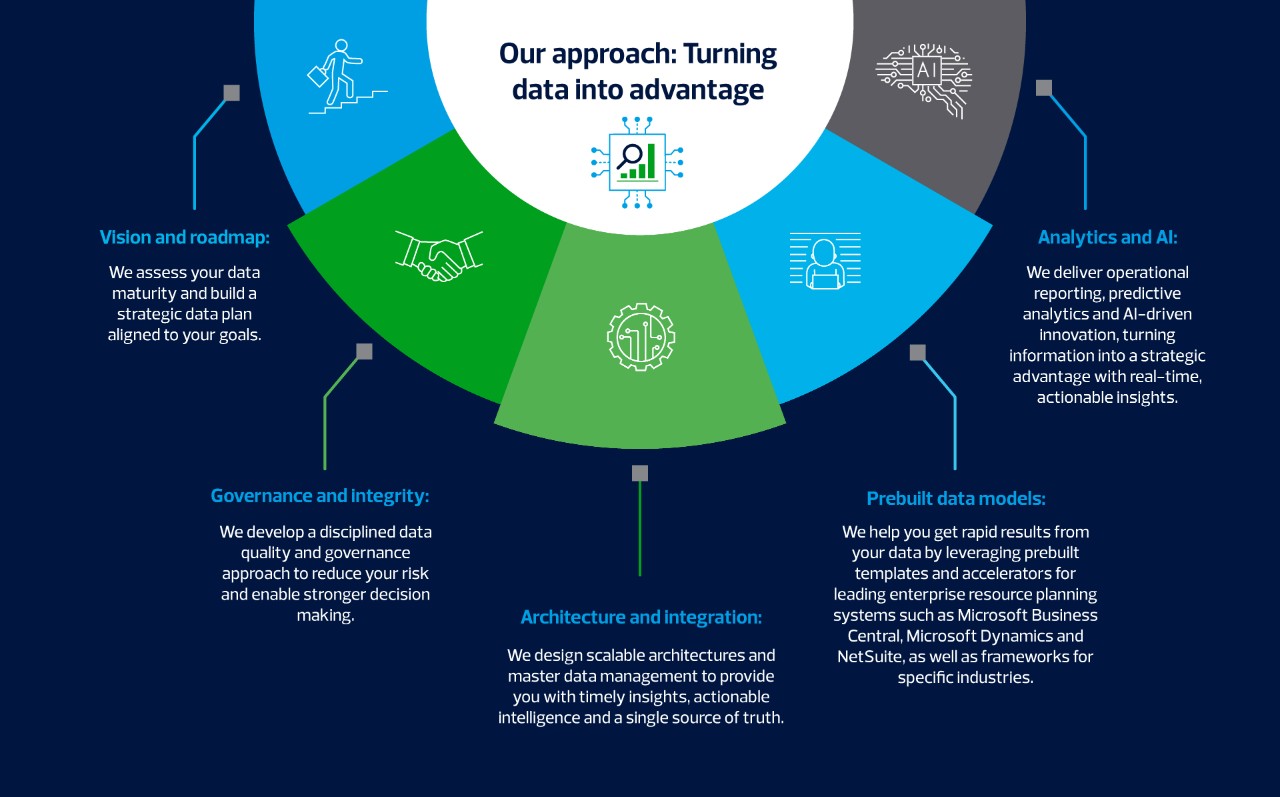
This urgency is amplified within Pakistan’s context, where critical datasets reside predominantly within state entities and regulated sectors. From identity-linked information to extensive telecom metadata, and from financial records to vital education and health data, Pakistan’s data ecosystem is undergoing rapid expansion. A strong vision for Pakistan AI governance is essential here. Indus AI Week correctly highlighted the transformative potential of leveraging such information to optimize public services and modernize administrative processes. Yet, in the absence of precise regulations governing data collection, sharing, retention, and auditing, these initiatives could inadvertently precipitate rights violations, institutional overreach, and erode public trust.
The Socio-Economic Impact: Calibrating AI for Citizen Well-being
Poor data governance carries tangible risks, potentially embedding systemic discrimination into automated systems. AI models, when trained on biased datasets, can inadvertently reproduce and amplify existing social inequalities. For example, such systems might disproportionately disadvantage women, informal sector workers, rural communities, or individuals with incomplete documentation. This underscores the critical need for comprehensive Pakistan AI governance. In a nation where social exclusion remains a significant challenge, automating these disparities would constitute a severe policy failure, directly impacting the daily lives of countless Pakistani citizens.

Furthermore, accountability poses an equally critical challenge. Should a government agency deploy AI to flag citizens for tax audits, fraud investigations, or welfare eligibility assessments, errors are inevitable. Consequently, robust governance protocols determine the subsequent actions. Can citizens comprehend the rationale behind being flagged? Are they empowered to rectify inaccurate data? Can they formally challenge an automated outcome? Can they seek effective remedy? Thus, a transparent framework within Pakistan AI governance is essential for citizen recourse. If the answers are negative, AI transforms from an efficiency tool into an opaque decision-making system, fundamentally undermining principles of basic fairness for all Pakistanis.
Data governance is also intrinsically linked to privacy, a constitutional principle in Pakistan. However, constitutional recognition alone does not guarantee practical protection. In the absence of a mature and enforceable data protection framework, personal data can circulate across various agencies and corporations with limited transparency and weak safeguards. AI magnifies these stakes; it can infer sensitive information, combine disparate datasets in unprecedented ways, and scale decision-making across millions. Therefore, weak governance in the AI era represents not merely a legal gap, but a profound structural vulnerability.

Beyond citizen rights, Pakistan’s AI aspirations confront a competitiveness challenge. AI ecosystems do not evolve in isolation. International investment, collaborative research, and market access are increasingly contingent upon established data protection and responsible AI standards. Nations that align with global norms are strategically better positioned to engage in cross-border digital trade and technology partnerships. Conversely, if Pakistan constructs AI systems upon a weak governance foundation, it risks becoming an unappealing partner for significant international cooperation. Even Pakistani enterprises seeking to export AI-enabled services will encounter compliance hurdles if the domestic governance environment remains uncertain.
A national security dimension also warrants heightened attention. AI systems are susceptible to attacks, datasets can be deliberately poisoned, and sensitive information is vulnerable to leaks. In a complex security landscape, weak governance inherently increases exposure to cyber risks and insider misuse. Thus, data governance must be integrated as a core component of national resilience. Its scope extends beyond individual privacy; it critically involves safeguarding national institutions and ensuring the unwavering reliability and security of AI systems deployed for public functions.
The “Forward Path”: Structural Reforms for AI Momentum
Following Indus AI Week, the calibrated response is not to decelerate innovation, but rather to construct essential guardrails in parallel with AI deployment. A pragmatic strategy commences with the recognition that Pakistan AI governance is a foundational infrastructure. This necessitates legal clarity, robust institutional oversight, defined technical standards, and a pervasive cultural shift within organizations.

- Comprehensive Data Protection Framework: Pakistan requires a comprehensive and enforceable data protection framework applicable across both public and private sectors. Citizens must possess substantive rights: to understand how their data is utilized, to access and correct it, and to seek effective remedies for misuse. Concurrently, organizations must adhere to clear obligations, including purpose limitation, data minimization, stringent security safeguards, and accountability for breaches or improper usage.
- Independent Oversight Capacity: Pakistan needs to cultivate independent oversight capacity. Governance cannot maintain credibility if it remains solely internal. Whether through a dedicated authority or an augmented institutional mechanism, oversight must be empowered, technically proficient, and insulated from political interference. Without rigorous, independent review, even well-intentioned AI initiatives will struggle to secure public trust.
- Investment in Data Quality and Interoperability: Pakistan must strategically invest in elevating data quality and fostering interoperability across government entities. Public-sector data frequently suffers from fragmentation, inconsistency, and siloing. Diverse agencies often maintain disparate formats and identifiers, leading to systemic errors and inefficiencies. AI projects built upon such data will prove both costly and unreliable. While standardization may lack glamour, its implementation is unequivocally essential for a robust AI ecosystem.
- Transparency and Auditability for High-Impact AI Systems: Pakistan should mandate transparency and auditability for high-impact AI systems. While not every AI tool necessitates the same level of scrutiny, systems employed in policing, welfare, healthcare, education, credit scoring, and taxation must undergo thorough risk assessments, bias testing, and periodic audits. Citizens require clear channels to challenge harmful automated decisions. This structural accountability defines the AI era.
- Culture of Ethical Data Stewardship: Pakistan must cultivate a pervasive culture of ethical data stewardship. Governance cannot succeed if perceived merely as bureaucratic paperwork. It must be intrinsically embedded within procurement regulations, comprehensive training programs, organizational incentive structures, and leadership accountability. Data transcends being a mere resource; it represents a profound public trust.
Indus AI Week has generated significant momentum. Pakistan must strategically leverage this momentum. The nation requires not just additional AI pilots, increased computing power, or more startup funding. Fundamentally, it requires a governance foundation robust enough to sustain AI at scale. With robust Pakistan AI governance, the nation can construct AI systems that are not only powerful, but also lawful, fair, and profoundly trusted. This represents a Momentum Shift towards a digitally empowered and equitable future.