

Architecting Systemic Support: The Punjab Police Stipend Initiative
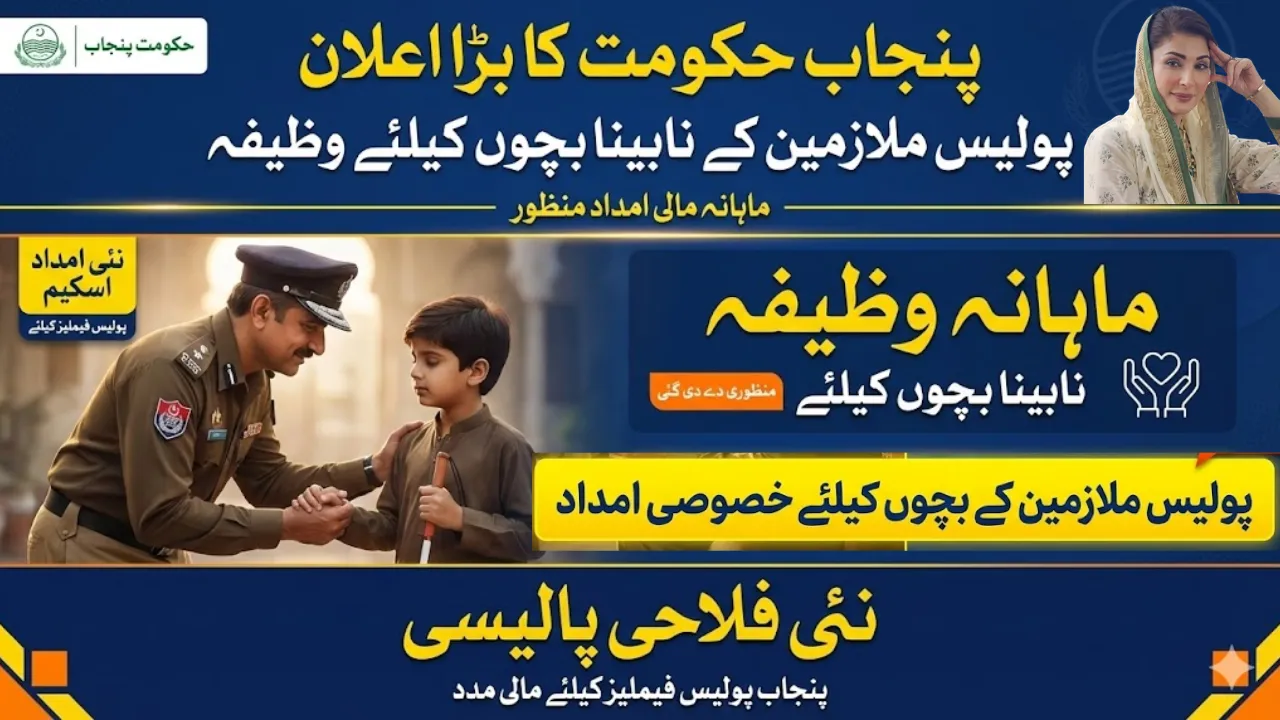
The Punjab Police has initiated a critical welfare measure, approving a Punjab Police Stipend of PKR 20,000 monthly for visually impaired children of police employees. This strategic allocation extends to children of serving, retired, martyred, and deceased personnel, underscoring a calibrated commitment to family welfare within the force. Inspector General Rao Abdul Karim’s directive establishes a baseline for comprehensive support, reinforcing the police force’s operational philosophy as a cohesive family unit.
The Translation: Deconstructing the Stipend Initiative
This directive, officially released by the Additional IG Welfare and Finance, concretely translates into a PKR 20,000 monthly financial aid package. Specifically, this stipend targets children across all categories of police service: active duty, retirement, those martyred in service, and personnel who passed away during their tenure. Consequently, the initiative ensures that systemic support reaches the most vulnerable within the police community, providing consistent financial stability for families facing unique challenges.
The Socio-Economic Impact: Uplifting Pakistani Families
This Punjab Police Stipend fundamentally alters the daily economic calculus for recipient families. For Pakistani households, especially those managing the complexities of visual impairment, a consistent PKR 20,000 monthly income represents a significant reduction in financial strain. It directly impacts access to specialized care, educational resources, and improved quality of life, particularly for students requiring tailored learning environments. Ultimately, this move calibrates societal support, ensuring that those who serve the nation receive essential backing for their dependents.
The Forward Path: A Momentum Shift
This development undeniably represents a Momentum Shift. The strategic expansion of welfare programs beyond existing provisions for Thalassemia and Cerebral Palsy demonstrates a progressive, data-driven approach to employee well-being. Furthermore, it sets a precedent for comprehensive support within public service sectors. IG Punjab Rao Abdul Karim’s emphasis on the police force as a family unit is not merely rhetorical; it is now structurally reinforced by a tangible and impactful financial commitment.

Expanding the Scope of Essential Support
The approval for visually impaired children builds upon an established framework of welfare initiatives. Previously, the police force allocated PKR 30,000 monthly for children affected by Thalassemia and PKR 20,000 for those with Cerebral Palsy. Additionally, substantial financial assistance is strategically deployed for children of police employees suffering from other serious illnesses. This holistic approach signifies a commitment to comprehensive family welfare, reflecting a disciplined and empathetic organizational structure.








