
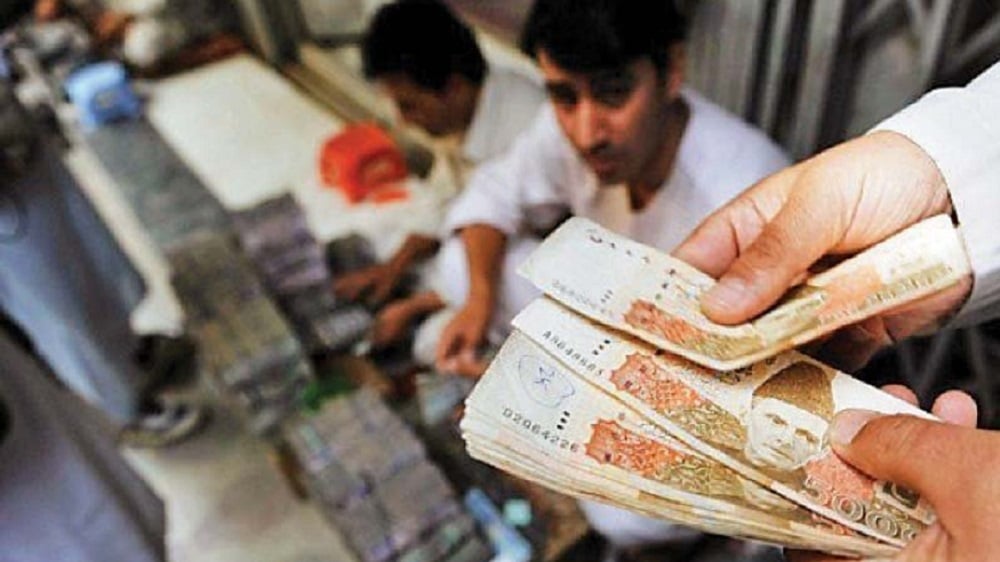
Precision in Progress: Pakistani Rupee Gains Traction
Pakistan’s economic landscape witnesses a significant structural shift as the Pakistani Rupee gains consistent strength against the US Dollar, marking its 112th consecutive day of appreciation. This calibrated movement, coupled with a substantial global decline in gold prices, signals a potential re-calibration of domestic financial dynamics. Consequently, understanding these shifts is crucial for assessing Pakistan’s forward economic trajectory.
The Translation (Clear Context)
This sustained appreciation means the Pakistani Rupee (PKR) now holds a firmer position relative to the US Dollar (USD), closing at 279.42 after gaining three paisas on Wednesday. Furthermore, this trend extends to other major currencies, with the PKR demonstrating gains against most. Conversely, the price of gold per tola has sharply decreased by Rs. 10,000, settling at Rs. 539,962. Globally, gold’s international rate also dropped by $100 to $5,172 per ounce. This dual movement reflects broader shifts in global commodity and currency markets, compelling investors to re-evaluate traditional asset allocations.

Forex Market Dynamics: Navigating Global Shifts
The recent devaluation of gold and other precious metals has introduced volatility for international investors. Simultaneously, significant fluctuations are observed in the forex market, particularly impacting Western currencies. This development strategically benefits Asian currencies, including the PKR and the Indian Rupee. As a result, these nations gain flexibility in sourcing energy products, shifting away from traditional Middle Eastern suppliers, as reported by market analysts.
Detailed Currency Performance
Beyond the US Dollar, the PKR demonstrated specific movements against other key currencies:
- It gained four paisas against the UAE Dirham (AED).
- A gain of one paisa was recorded against the Saudi Riyal (SAR).
- Conversely, the PKR experienced a loss of 59 paisas against the British Pound (GBP).
- Significantly, it gained Rs. 1.06 against the Euro (EUR).
- Furthermore, the PKR appreciated by Rs. 1.43 against the Australian Dollar (AUD).
- However, it lost 24 paisas against the Canadian Dollar (CAD).
Interpreting Exchange Rate Data
The table below provides a granular view of currency exchange rates over three days, highlighting the incremental yet consistent improvements for the Pakistani Rupee. This data illustrates the precise movements underpinning the overall strengthening trend.
| Currency | 02-Mar-2026 | 03-Mar-2026 | 04-Mar-2026 | Change (+/-) |
|---|---|---|---|---|
| USD | 279.4609 | 279.4518 | 279.4231 | 0.0287 |
| EUR | 327.4723 | 325.3658 | 324.2985 | 1.0673 |
| GBP | 373.5694 | 372.5233 | 373.1137 | -0.5904 |
| AUD | 197.3553 | 197.6702 | 196.2389 | 1.4313 |
| MYR | 71.1550 | 70.9449 | 70.8477 | 0.0972 |
| CNY | 40.6049 | 40.5155 | 40.4284 | 0.0871 |
| CAD | 204.6209 | 204.2403 | 204.4809 | -0.2400 |
| AED | 76.0925 | 76.0806 | 76.0718 | 0.0088 |
| SAR | 74.4495 | 74.4689 | 74.4205 | 0.0484 |
The Socio-Economic Impact: Daily Life Repercussions
A stronger Pakistani Rupee gains directly translates to tangible benefits for Pakistani citizens. For households, imported goods, including essential commodities and electronics, become more affordable, potentially easing inflationary pressures. Students pursuing international education may find tuition fees and living expenses abroad marginally less burdensome when converted from PKR. Professionals and businesses engaged in international trade will experience improved purchasing power for imported raw materials or machinery. Consequently, this calibrated currency strength contributes to a baseline of economic stability, fostering greater predictability in financial planning across urban and rural sectors.
The “Forward Path” (Opinion): Momentum Shift or Stabilization Move?
This consistent strengthening of the PKR, coupled with strategic shifts in global commodity markets, represents a clear Momentum Shift for Pakistan’s economic trajectory. It is not merely a stabilization move; rather, it signifies a deliberate and effective calibration of fiscal and monetary policies. The nation demonstrates enhanced resilience against external economic pressures, opening new avenues for trade and investment. This trajectory, if maintained with precision, positions Pakistan for sustained economic advancement and greater systemic efficiency.








