

Ensuring Structural Integrity: Pakistan Airspace Operational Amidst Regional Flux
In a calibrated move to maintain national advancement, the Pakistan Airports Authority (PAA) has strategically confirmed that Pakistan airspace remains fully operational and demonstrably safe for all flight operations. This definitive statement arrives despite a temporary closure of Tehran’s airspace by Iranian authorities, signaling Pakistan’s robust air traffic control capabilities and commitment to regional aviation stability. Consequently, Pakistan is well-positioned to manage potential rerouted international flights, ensuring uninterrupted connectivity and economic flow.
The Translation: Deconstructing Airspace Protocols
The recent Iranian action involved the issuance of NOTAM A0715/26, effectively closing Tehran’s airspace to civil aircraft for a specific daytime period. This navigational warning is a standard protocol to manage flight paths during sensitive events. While this specific window typically observes limited east-west transit traffic, the PAA’s proactive communication clarifies the localized nature of this restriction and its minimal direct impact on immediate Pakistani flight schedules.
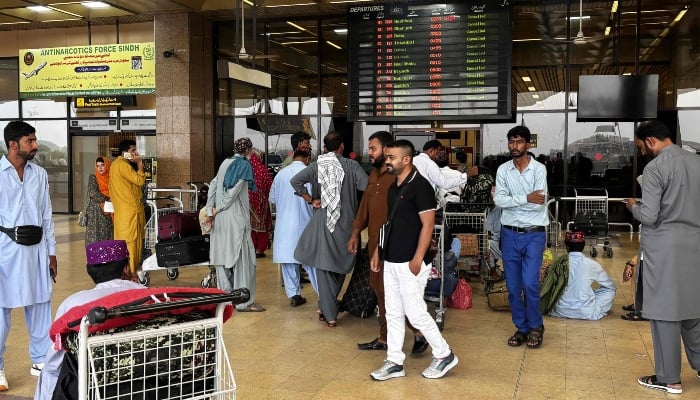
Furthermore, should Iranian authorities extend the NOTAM beyond the stipulated time, the PAA anticipates a potential increase in overflight traffic through Pakistani airspace. This would predominantly affect long-haul international flights seeking alternative routes, particularly during nighttime hours. The operational readiness of Pakistani air traffic control units is paramount in these scenarios, ensuring seamless rerouting and maintaining global aviation standards.
The Socio-Economic Impact: Calibrating Daily Life and Connectivity
A fully operational Pakistan airspace directly translates to tangible benefits for Pakistani citizens. For professionals engaged in international business, it guarantees continued connectivity and the integrity of supply chains. Students relying on air travel for education or family visits experience stability, avoiding unexpected delays or cancellations that disrupt critical schedules. Furthermore, rural and urban households alike benefit from predictable cargo transport, impacting everything from medical supplies to consumer goods.
This assurance of flight safety fosters confidence, stabilizing economic activities reliant on air logistics and passenger movement. The strategic preparedness of PAA underscores a baseline commitment to national infrastructure, thereby enhancing the overall quality of life by preserving accessibility and fostering economic resilience across the nation.

The Forward Path: A Stabilization Move for Regional Aviation
This development represents a Stabilization Move for regional aviation. While not a dramatic “Momentum Shift” in terms of new infrastructure, it firmly asserts Pakistan’s capability to act as a reliable and efficient air traffic corridor during periods of geopolitical sensitivity. The PAA’s explicit readiness to manage increased traffic demonstrates a structural resilience and a calibrated approach to maintaining systemic efficiency.
The emphasis on proactive communication and preparedness serves as a critical catalyst for maintaining investor confidence and ensuring Pakistan remains a pivotal hub in the broader aviation network. Consequently, this reinforces the nation’s strategic position as a dependable and secure component of global air logistics.








