

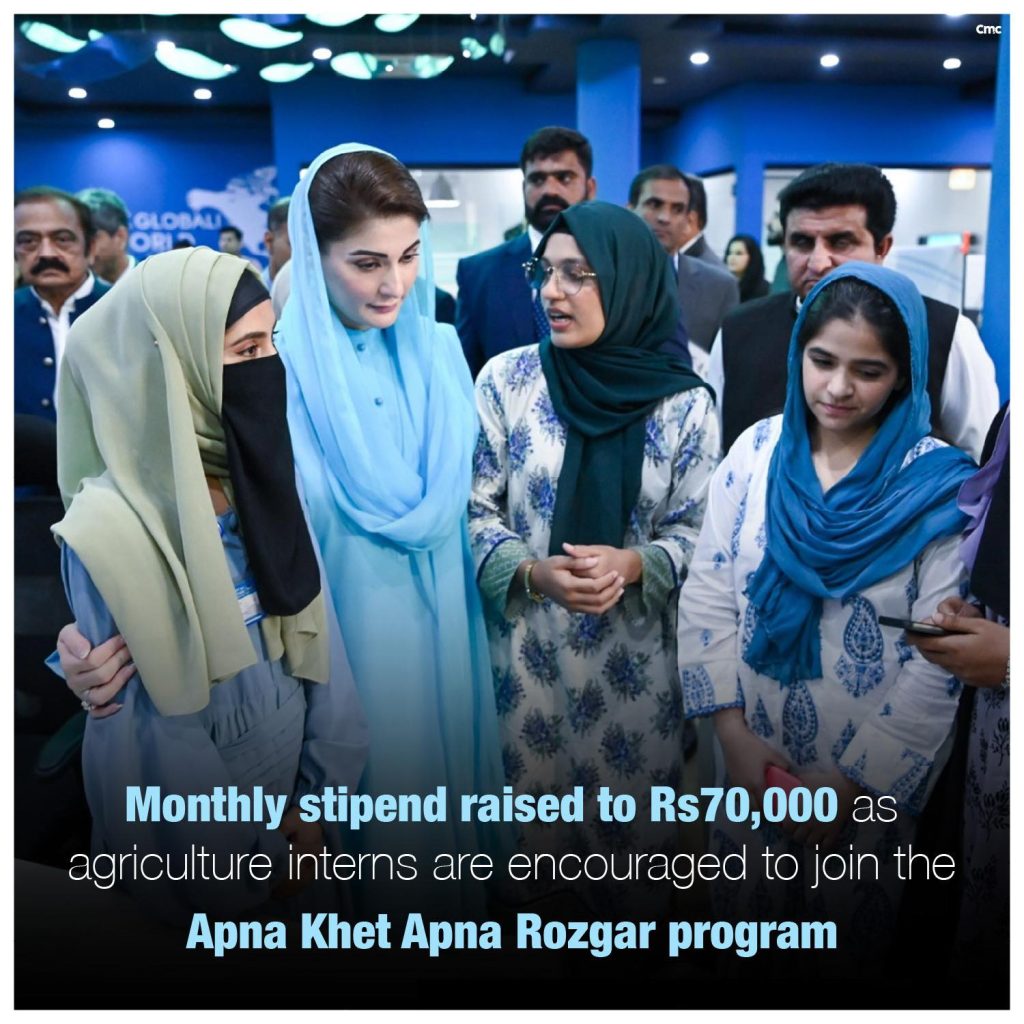
Punjab is initiating a significant paradigm shift in its agricultural sector, strategically focusing on **Punjab Agriculture Modernization** through youth empowerment and technological integration. Chief Minister Maryam Nawaz Sharif has approved a substantial monthly stipend of Rs. 70,000 for agriculture interns, a crucial move designed to attract young talent and infuse modern practices into farming. Furthermore, comprehensive initiatives ranging from rooftop hydroponic farming to widespread solarization of tube wells and advanced mechanization are poised to redefine agricultural productivity and environmental sustainability across the province. This calibrated approach targets both immediate uplift and long-term structural advancement.
Empowering Youth: The Catalyst for Agricultural Evolution
The provincial administration has launched the ambitious “Apna Khet, Apna Rozgar” program. This initiative specifically links young professionals with the agricultural sector, providing practical training and direct experience in farm management and innovation. Consequently, interns will gain invaluable hands-on skills while actively contributing to modern agricultural initiatives.
The Translation: Securing Future Agricultural Leadership
This program translates directly into a tangible investment in human capital. By offering a competitive stipend, the government incentivizes bright young minds to consider agriculture as a viable and rewarding career path, rather than an archaic profession. It is a structural commitment to cultivating a new generation of agricultural leaders equipped with contemporary knowledge and practical expertise.
Socio-Economic Impact: Direct Benefits for Emerging Professionals
For Pakistani students and young professionals, this represents a significant economic opportunity. A Rs. 70,000 monthly stipend offers financial stability, enabling deeper engagement and innovation within the sector. This directly impacts household incomes and career prospects, particularly for those in rural areas seeking pathways to professional growth and improved livelihoods.

Strategic Technological Integration for Enhanced Yields
Beyond human capital, Punjab is integrating advanced technologies to optimize output and resource utilization. The introduction of rooftop hydroponic farming projects, initially piloted in Lahore, marks a critical step. These systems allow for high-density plant growth in minimal urban spaces, showcasing a commitment to scalable, efficient food production.
Precision Farming: Expanding Cultivation Footprints
Rooftop hydroponics enables urban dwellers to cultivate up to 350 plants on a two-marla rooftop. This significantly expands the province’s overall cultivation capacity, introducing a decentralized food production model. Consequently, it diversifies agricultural methods and enhances food security.
Sustainable Energy & Mechanization: A Dual Approach
The government’s dual focus on sustainable energy and advanced mechanization underscores its holistic strategy for **Punjab Agriculture Modernization**. The solarization of 10,000 diesel tube wells across Punjab will drastically reduce operational costs and environmental impact. Furthermore, the distribution of 28,000 super seeders by 2028 under the Punjab Agriculture Mechanization Project aims to improve crop residue management and mitigate pollution.

Upgrading Infrastructure: Calibrated for Efficiency
The Green Tractor Program, now in Phase IV, provides enhanced subsidies for both high and low-horsepower tractors. Specifically, subsidies for high-horsepower models reach Rs. 1.5 million, while low-horsepower subsidies increased to Rs. 700,000. This strategic investment in modern machinery directly boosts farm productivity and operational efficiency across the province.
Socio-Economic Impact: Reducing Farmer Burden, Increasing Output
These initiatives collectively reduce the financial burden on farmers, particularly through lower energy costs and accessible modern equipment. This directly translates to increased crop yields and higher profits for agricultural households. Moreover, cleaner farming practices improve public health and environmental quality, benefiting all citizens.

Water Resource Management: Innovating for Resilience
In a groundbreaking move, Punjab will introduce ground recharge wells for on-farm rainwater harvesting. This innovative approach ensures that valuable rainwater is captured and stored, significantly improving water availability for agricultural purposes. It represents a proactive measure to enhance water resilience in the face of climatic variability.
The Forward Path: A Momentum Shift Towards Sustainable Growth
These comprehensive agricultural reforms represent a significant momentum shift for Punjab. They are not merely maintenance efforts but strategic, multi-faceted interventions designed to build a more resilient, productive, and environmentally conscious agricultural system. The focus on youth, technology, and sustainability creates a robust baseline for future economic stability and food security.








