
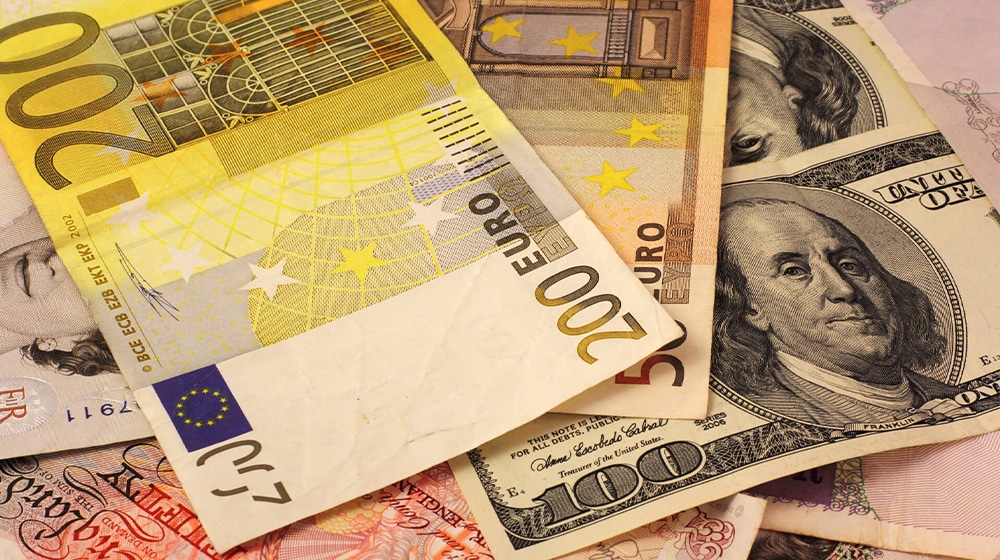
National advancement is intrinsically linked to economic stability, a principle underscored by the recent performance of the **Pakistani Rupee (PKR)**. The PKR has achieved a remarkable milestone, closing in positive territory against the **US Dollar (USD)** for an unprecedented 109th consecutive day. This sustained period of **Pakistani Rupee strength** marks a significant structural calibration in the nation’s financial posture, demonstrating robust gains against a majority of popular global currencies throughout the week.
The Translation: Calibrating the Currency Momentum
This consistent upward trend indicates a strategic shift in the market dynamics influencing the PKR. Specifically, on Friday, the PKR concluded its session at 279.47 against the USD, registering a precise gain of three paisas. This incremental yet persistent appreciation provides a clear baseline for evaluating the currency’s resilience in the global financial arena.

Beyond the primary USD pairing, the PKR showcased a nuanced performance against a basket of international currencies. While experiencing a slight depreciation against the UAE Dirham (AED) and the Australian Dollar (AUD), the currency demonstrated substantial gains elsewhere. For instance, it appreciated by Rs. 1.77 against the British Pound (GBP) and secured an additional seven paisas against the Euro (EUR).
Global Market Dynamics: PKR’s Performance Spectrum
A detailed analysis of Friday’s closing figures illuminates the varied impact across key economic partnerships. The PKR’s performance against these currencies provides critical insights into Pakistan’s evolving trade and financial relationships:
- Against the US Dollar (USD): The PKR registered a gain of 0.0302, closing at 279.4717.
- Against the Euro (EUR): The PKR saw an increase of 0.0778, settling at 329.9441.
- Against the British Pound (GBP): A significant appreciation of 1.7736 was observed, with the PKR closing at 376.6300.
- Against the Australian Dollar (AUD): The PKR experienced a minor loss of 0.1183, ending at 199.0258.
- Against the Malaysian Ringgit (MYR): A gain of 0.0447 brought the PKR to 71.8529.
- Against the Chinese Yuan (CNY): The PKR strengthened by 0.0933, closing at 40.7678.
- Against the Canadian Dollar (CAD): A gain of 0.0520 was recorded, with the PKR at 204.4192.
- Against the UAE Dirham (AED): The PKR saw a minimal loss of 0.0011, closing at 76.0964.
- Against the Saudi Riyal (SAR): The PKR appreciated by 0.0041, settling at 74.5178.

The Socio-Economic Impact: Calibrating Daily Life with Pakistani Rupee Strength
This consistent demonstration of **Pakistani Rupee strength** directly translates into tangible benefits for the average Pakistani citizen. A stronger rupee effectively reduces the cost of imports, which can lead to lower prices for essential goods such as fuel, food items, and raw materials for local industries. Consequently, households will experience reduced inflationary pressures, allowing for more disposable income and improved living standards.

For students and professionals, a stable or appreciating currency means that foreign education and international trade become more accessible and affordable. Furthermore, a robust PKR enhances investor confidence, potentially attracting greater foreign direct investment and fostering job creation across urban and rural sectors. This creates a positive feedback loop for economic growth.

The “Forward Path”: Sustaining Pakistani Rupee Strength for Growth
This period of sustained **Pakistani Rupee strength** represents a clear “Stabilization Move” rather than a fleeting “Momentum Shift.” The methodical and consistent gains, particularly against the US Dollar over such an extended duration, indicate underlying structural improvements in fiscal management and external account balances. While incremental, these precise adjustments are foundational to long-term economic resilience.

The strategic imperative now is to leverage this baseline stability for accelerated economic reforms and enhanced productivity. Sustaining this trajectory will require disciplined policy implementation and a calibrated approach to managing both internal and external economic variables, ultimately paving the way for more significant national advancement.









