

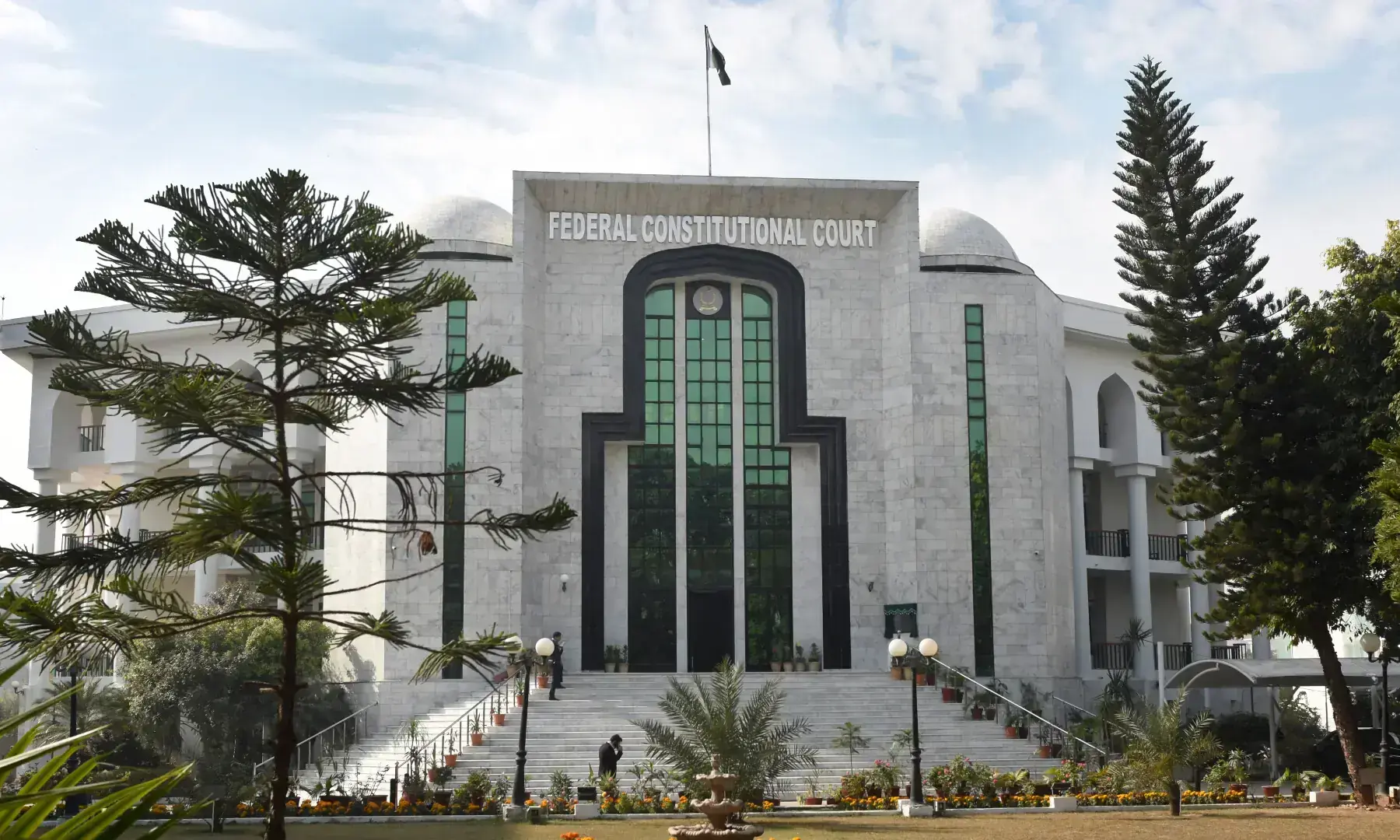
In a strategic move to enhance national fiscal discipline and calibrate revenue collection mechanisms, the Federal Constitutional Court (FCC) has structurally reinforced the investigative capabilities of tax authorities. This landmark ruling confirms the expansive scope of tax raid powers under Section 175 of the Income Tax Ordinance 2001, allowing officials to conduct searches and access digital data even without active formal proceedings against a taxpayer. This decision establishes a new baseline for compliance and operational efficiency within Pakistan’s economic framework.
Structural Clarification: The Court’s Directive on Enforcement
The FCC’s three-member bench, led by Justice Aamer Farooq, dismissed a pivotal challenge by M/s Sceptre Pvt Ltd. This company contested a Sindh High Court decision that had previously affirmed a tax raid on its premises in December 2025. Petitioner arguments posited that such enforcement actions should only proceed during active legal cases. Furthermore, they contended that a general notice under Section 176 could not serve as a foundational justification for a raid. The court, however, precisely rejected this interpretation.
Justice Farooq’s authored judgment meticulously emphasizes the legislative intent behind Section 175. It explicates that the law’s utilization of the term “enforcement” inherently implies the pre-existence of a breach. Consequently, this linguistic interpretation strategically empowers authorities to act independently, irrespective of ongoing formal proceedings. The court expressed specific reservations regarding prior precedents, such as the Agha Steels case. Nevertheless, it decisively affirmed that the tax commissioner, or any designated officer, maintains the calibrated authority to execute inspections, including those without prior notification, to ensure systemic compliance.
Deconstructing Section 175: Defining “Enforcement”
The core of the ruling rests on the court’s refusal to dilute or reinterpret clear legislative language. This principle dictates that where the text of a law is unambiguous, judicial bodies must apply it directly. Applying this structural integrity, the court concluded that Section 175 explicitly permits tax officials to access premises, records, and digital data “at all times and without prior notice” for effective enforcement. This provides a clear, precise mandate for tax collection agencies.
- Unrestricted Access: Tax authorities can now access business premises and residential locations relevant to tax matters.
- Data Scrutiny: Access extends to all forms of records, including physical documents and digital data.
- No Prior Notice: Inspections can be conducted without alerting the taxpayer in advance, ensuring operational surprise.
- Enforcement Focus: The power is strictly for enforcing the Income Tax Ordinance 2001, targeting compliance breaches.
Socio-Economic Impact: Calibrating Citizen Compliance
This judicial validation of extensive tax raid powers precipitates a significant shift in the operational landscape for Pakistani citizens and businesses. Primarily, it mandates a heightened level of proactive fiscal compliance. Households, students, and professionals in both urban and rural Pakistan must now operate with an intensified awareness of tax obligations. The increased authority of tax officials means that documentation and digital financial records require meticulous maintenance, anticipating potential unscheduled audits.

Navigating New Compliance Baselines for Pakistani Businesses
For entrepreneurs and corporations, this ruling necessitates a rigorous re-evaluation of internal financial management systems. Companies must ensure their records are not only accurate but also readily accessible and verifiable by authorities at any given moment. This development is designed to reduce tax evasion and expand the national tax base, ultimately contributing to public revenue for infrastructure and social programs. Consequently, it creates a more transparent, albeit more stringent, environment for economic activity across the nation.
Furthermore, the emphasis on digital data access underscores the critical importance of secure and compliant digital record-keeping. Businesses and individuals utilizing digital platforms for transactions must guarantee their electronic footprints align precisely with declared tax liabilities. This structural adjustment encourages greater financial accountability from all economic actors, fostering a more robust and equitable taxation system.
The Forward Path: Momentum Shift or Stabilization Move?
From an architectural perspective on national advancement, this ruling represents a stabilization move rather than a radical momentum shift. It primarily solidifies and clarifies existing legislative frameworks, ensuring that the enforcement mechanisms of the Income Tax Ordinance 2001 are precisely as potent as originally intended. The Federal Constitutional Court has provided a definitive interpretation, removing ambiguities that previously allowed challenges to the scope of tax authorities’ operational capabilities.

Strategic Oversight: Enhancing Fiscal Discipline
This decision is a calculated reinforcement of fiscal discipline, critical for a developing economy like Pakistan’s. It provides tax collection agencies with the calibrated tools necessary to combat tax evasion systematically and efficiently. By ensuring rigorous compliance, the state can project more predictable revenue streams. This predictability is vital for long-term planning and investment in key sectors, ultimately driving sustainable economic growth. Therefore, while it is not an introduction of new policy, it is a crucial validation that secures the integrity of the existing tax enforcement apparatus, promoting greater accountability across the board.








