
Catalyst for National Advancement: Addressing Out-of-School Children Pakistan
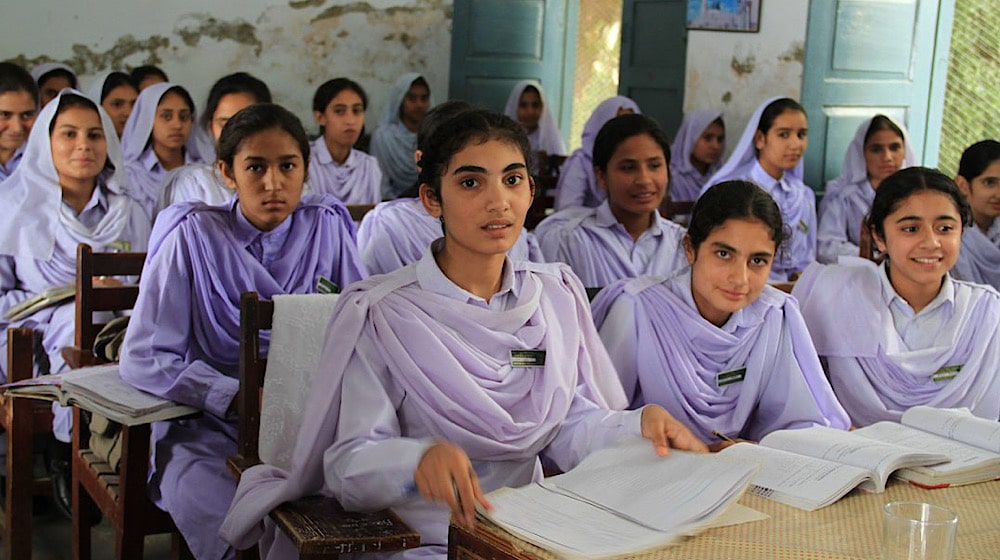
Pakistan faces a formidable systemic challenge: over 26 million out-of-school children Pakistan. This critical data, presented in the Girls Education Statistics and Trends Report 2023-24 (GESTR), underscores a profound impedance to national progress and human capital development. Federal Minister Khalid Maqbool Siddiqui officially released this report, mandating a strategic re-evaluation of educational access. Specifically, 25.37 million children aged 5 to 16 currently lack educational opportunities, comprising 13.41 million girls and 11.96 million boys. Consequently, these figures necessitate an immediate, calibrated intervention to secure Pakistan’s future trajectory.
The Translation: Deconstructing Pakistan’s Educational Baseline
The GESTR provides a granular overview, revealing the precise geographic distribution of this educational disparity. This structural deficiency disproportionately affects certain regions. Furthermore, the report meticulously details an alarming decline in enrollment across successive educational stages. While 20.815 million children initially enroll at the primary level, this cohort drastically shrinks to only 2.825 million by the intermediate stage. Ultimately, a mere 718,000 students advance into university degree programs, highlighting a severe attrition rate within the educational pipeline.

Provincial Enrollment Disparities: A Critical Analysis
- Punjab: Accounts for 9.6 million children out of school.
- Sindh: Records 7.82 million children without educational access.
- Khyber-Pakhtunkhwa (KP): Reports 4.92 million children out of school.
- Balochistan: Faces 2.94 million children lacking formal education.
- Islamabad: Identifies 90,000 children out of school, a localized but significant concern.
The Socio-Economic Impact: Calibrating Futures Across Pakistan
This educational deficit directly impinges upon the daily life and future prospects of Pakistani citizens. For urban and rural households alike, a lack of access to quality education perpetuates cycles of poverty and limits socio-economic mobility. Students, denied foundational learning, face constrained career pathways and reduced potential for innovation. Consequently, the national workforce suffers from a critical skill gap, hindering economic diversification and global competitiveness. Professionals and entrepreneurs encounter a less prepared talent pool, impacting business growth and national productivity. This systemic challenge thus requires a comprehensive, multi-sectoral response to unlock the nation’s full potential.

Structural Imperatives: The Forward Path for Education
The GESTR also provides critical insights into infrastructure and budgetary allocations. It confirms that 96 percent of schools operate in permanent buildings, and 82 percent provide essential drinking water. However, significant deficiencies persist; only 19 percent of schools possess digital devices, and a mere 23 percent offer accessibility ramps. Crucially, the education sector’s share in the national budget has declined from 13 percent to 11 percent. Alarmingly, 94 percent of this reduced allocation funds salaries, severely constraining development spending and capacity for expansion. This structural imbalance mandates immediate fiscal recalibration.

A Strategic Outlook: Momentum Shift or Stabilization Move?
This development represents a Momentum Shift. The precise quantification of the challenge, as provided by the GESTR, furnishes a crucial data baseline. This enables targeted, strategic interventions rather than broad, undefined efforts. While the budgetary constraints and infrastructure gaps pose significant obstacles, the clarity of the report offers a structural advantage. Consequently, Pakistan can now implement evidence-based policies to systematically reduce the number of out-of-school children Pakistan. This data-driven approach is a necessary catalyst for accelerating educational reform and national development.
For additional resources and scholarship opportunities, explore EduNation.








